






































Uzbek Knives from Chust: A Masterpiece of Craftsmanship
When speaking of the rich culture of Central Asia, Uzbek knives from Chust hold a very special place.
In Uzbekistan, a knife is much more than just a simple kitchen cutting tool; it is an indispensable work tool, a symbol of masculinity, and an artful masterpiece.
Already in the Middle Ages, these blades—specifically crafted in Central Asia—were of exceptionally high quality and were highly prized by rulers, merchants, spies,
and the military. Join DOCA TOURS on a journey into the Fergana Valley to discover the fascinating world of traditional knife making.
The Historical Centers: Chust and Shahrixon
In Uzbekistan, there are nearly 20 different centers for knife making, but the best and most famous blades originate from the ancient cities of
Chust in Namangan Province and Shahrixon in Andijan Province. These two forging schools have achieved legendary status.
The city of Chust is one of the oldest centers in the Fergana Valley with a history spanning over 3,500 years.
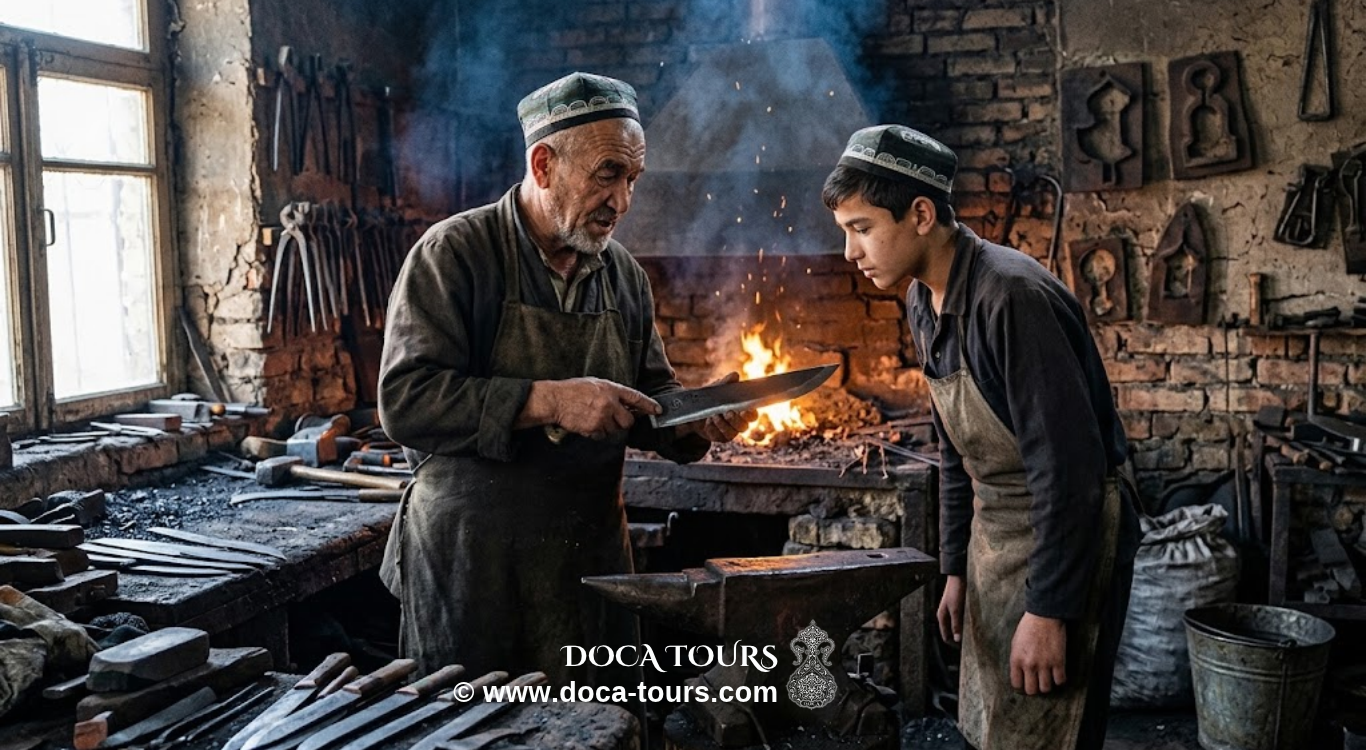
The craft of knife making has been passed down here from generation to generation since ancient times via the traditional master-apprentice method (ustoz-shogird).
In some families, this knowledge has been preserved for seven or eight generations.
Structure and Types of Traditional Knives
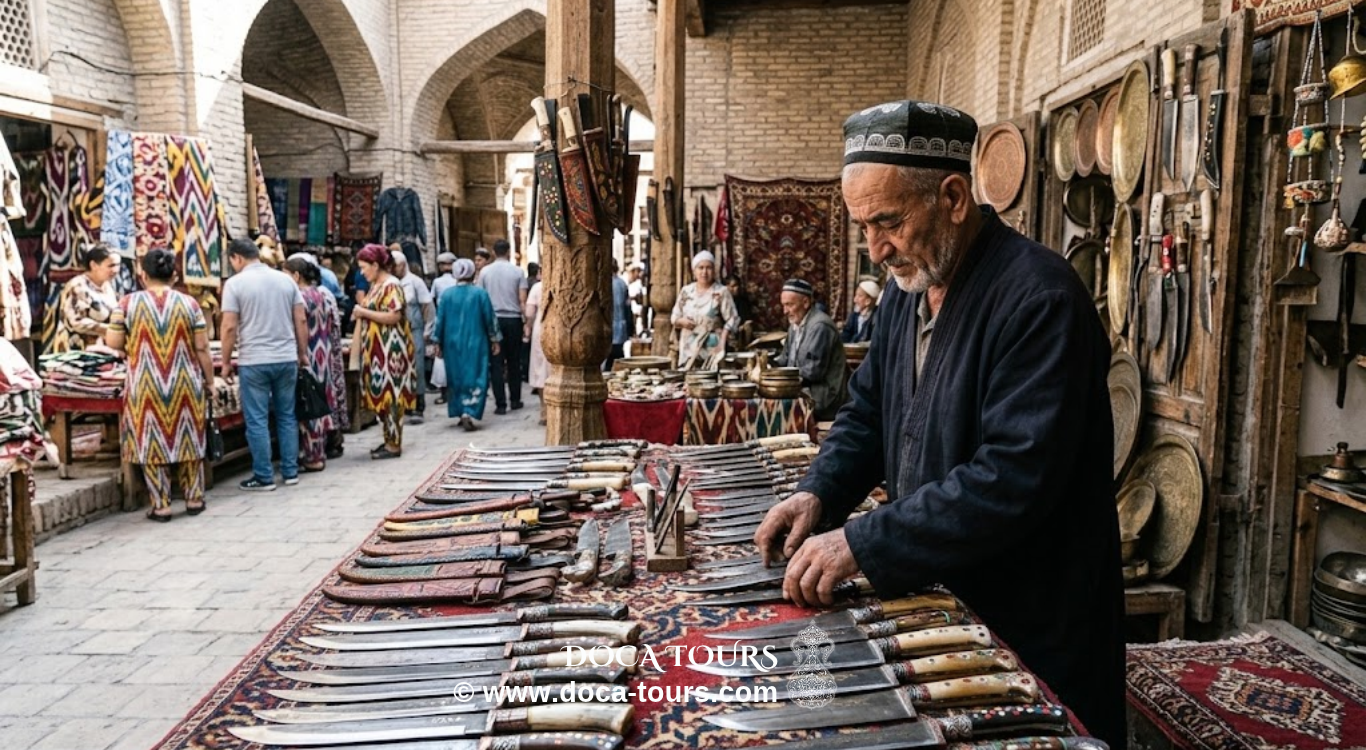
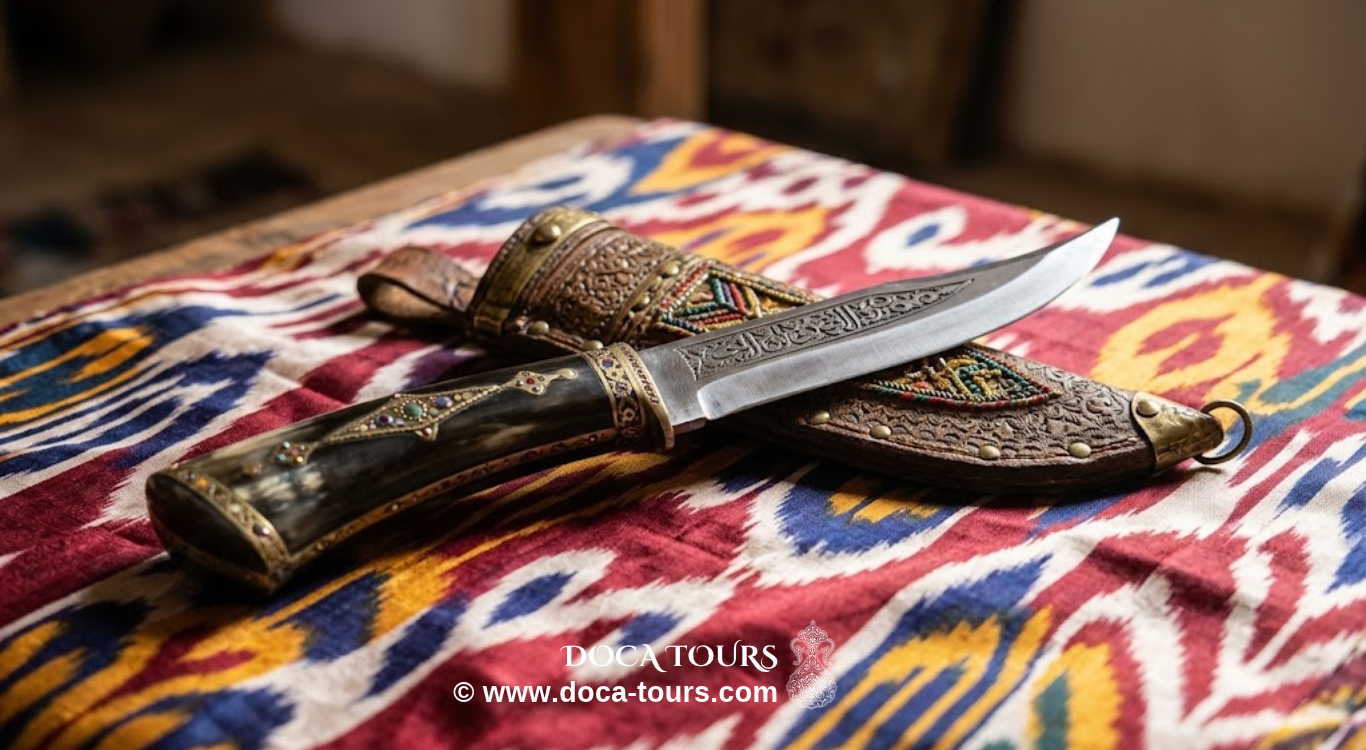
Every traditional Uzbek knife (pichoq) consists of three main parts: the blade (tig), the handle (dasta), and the special sheath (qin) in which the knife is safely stored.
Depending on the intended use, the masters craft different shapes: Oshpichoq: The classic kitchen knife for food preparation.
Sallohi: A specialized knife used by butchers. Mardona: A men's knife traditionally worn on the belt.
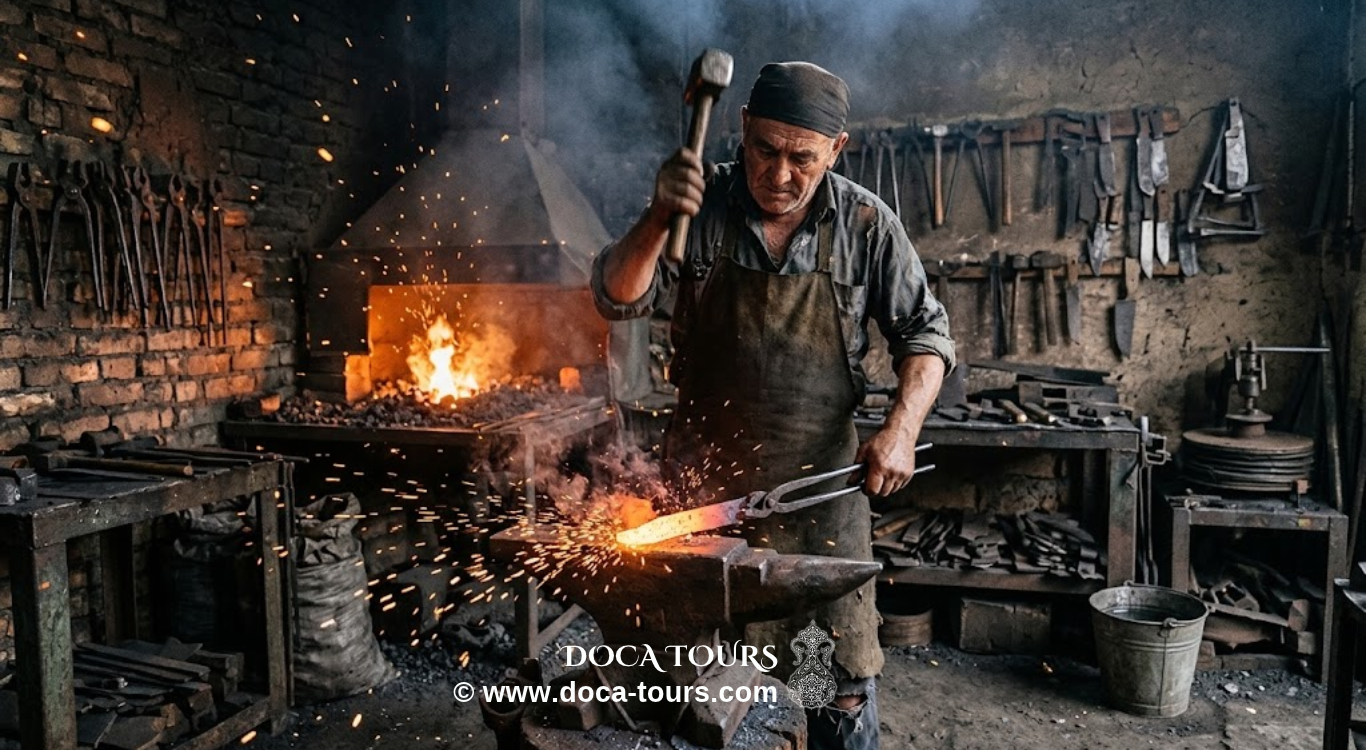
Xarbo'zi: A knife specially designed for cutting melons. The blades are forged from high-quality carbon steel,
with modern masters sometimes recycling automotive valves or ball-bearing steel to achieve extreme hardness.
Artistic Handles and the Master's Stamp
The handles (dasta) make every knife unique. They are crafted from a variety of materials such as bull horn, deer antler, ivory, wood, or, in modern times, plastic.
They are often richly decorated with copper, brass, or silver and adorned with traditional ornaments.An unmistakable quality feature is the master's stamp (tamga).
This is hammered into the still-hot blade and indicates which smith forged the knife or from which region it originates.
Cultural Significance: Amulet and Gift
Uzbek knives from Chust are not only practical tools but also hold a deep spiritual and cultural significance.
They are often cherished as amulets; for instance, people place the knife under the bed, as it is attributed with healing and protective properties.
As a valuable gift, they serve as a strong token of respect and friendship. There is also an old tradition:
when a knife is given as a gift, it is often symbolically exchanged for an Uzbek headwear (do'ppi).
Frequently Asked Questions (FAQ) about Uzbek Knives
How do I recognize a genuine knife from Chust? Authentic Chust knives are characterized by their noticeable lightness, excellent sharpness, and typical design:
the blade is slightly tilted to the right, while the handle points somewhat downward. Furthermore, they bear the stamped master's mark (tamga) on the blade.
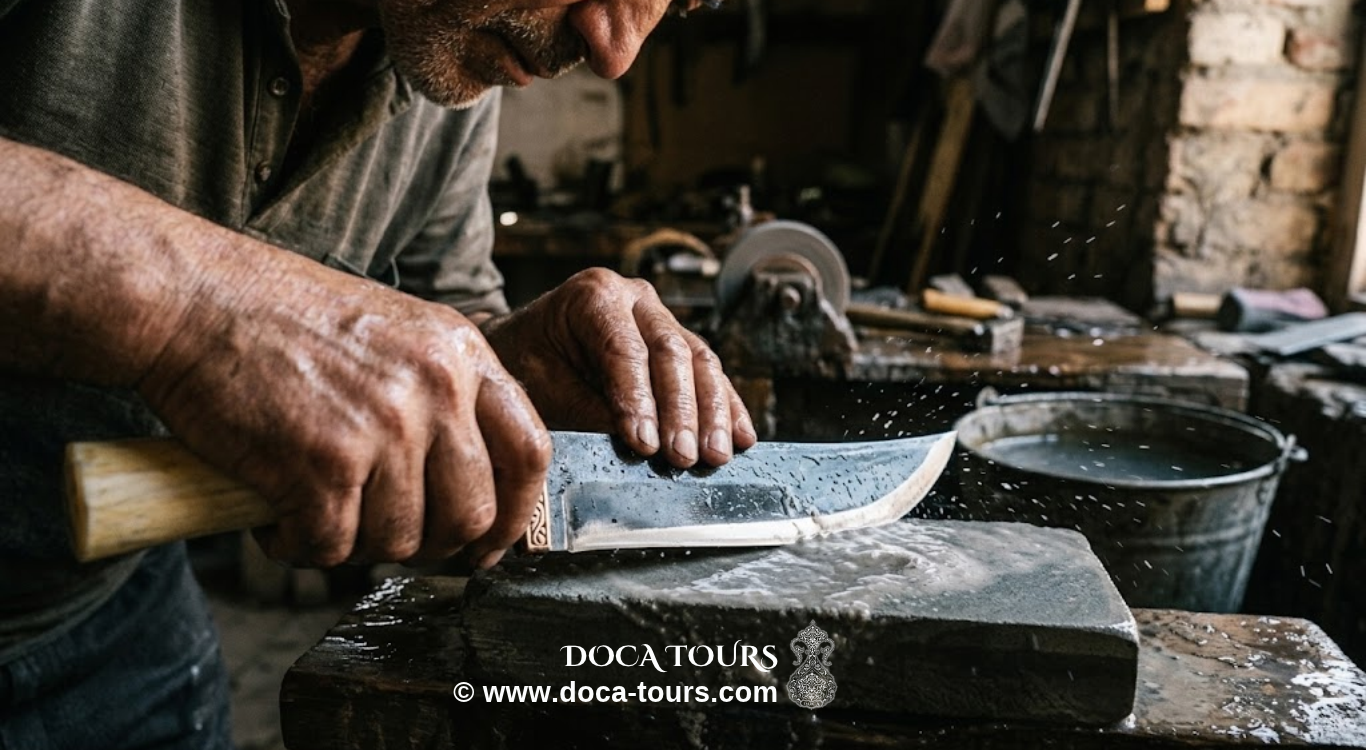
What material are the blades made of? Traditional masters primarily use high-quality carbon steel, which is made extremely sharp
and durable through special hardening processes.
Are these knives a good souvenir? Yes, they are considered a symbol of Uzbek craftsmanship and are highly valued as a precious gift.
When purchasing, you typically receive a certificate so that there are no issues during customs inspection.
Planning your private tour? DOCA TOURS organizes authentic experiential journeys deep into the heart of Central Asian craftsmanship for you.
Contact us for your individual travel program!