


































Uzbek Ceramics: The Soul of Craftsmanship
Uzbek ceramics, known as Kulolchilik, are much more than just a traditional craft; they are an art form closely intertwined
with the history, culture, and worldview of the people.
Since antiquity, pottery has been famous for its enormous variety and uniqueness.
In Uzbekistan, each region contributes to the country's great cultural mosaic through its own
styles passed down from generation to generation. When you travel through Central Asia with DOCA TOURS,
you will experience the unmistakable beauty of these masterpieces firsthand in local workshops.
The Most Famous Pottery Schools of Uzbekistan
Uzbekistan is home to many significant centers of pottery, including Rishton, Gurumsaroy, Khorezm, Samarkand, Bukhara, Gijduvan, Shahrisabz, and Tashkent.
Each of these schools interprets traditional styles and patterns in its own unique way.
Khorezm: The products impress with their dark green and turquoise color palette.
Strict geometric patterns reflect the strong influence of Islamic culture and architecture here.
Gijduvan: This school is characterized by dark brown tones combined with light and dark green. Plant motifs serve as a deep symbol of fertility and rebirth.
Samarkand: Pottery has existed here since the Neolithic period and experienced its heyday between the 9th and 12th centuries.
Classical compositions combine stylized plant patterns with six- and eight-pointed stars, representing cosmic symbolism and eternity.
Tashkent: The masters of this region place special emphasis on the double engobe technique to create complex,
multicolored ornaments on contrasting backgrounds.
Rishton: The Heart of Blue Ceramics
A special highlight of Uzbek ceramics (Kulolchilik) is located in the Fergana Valley, in the city of Rishton.
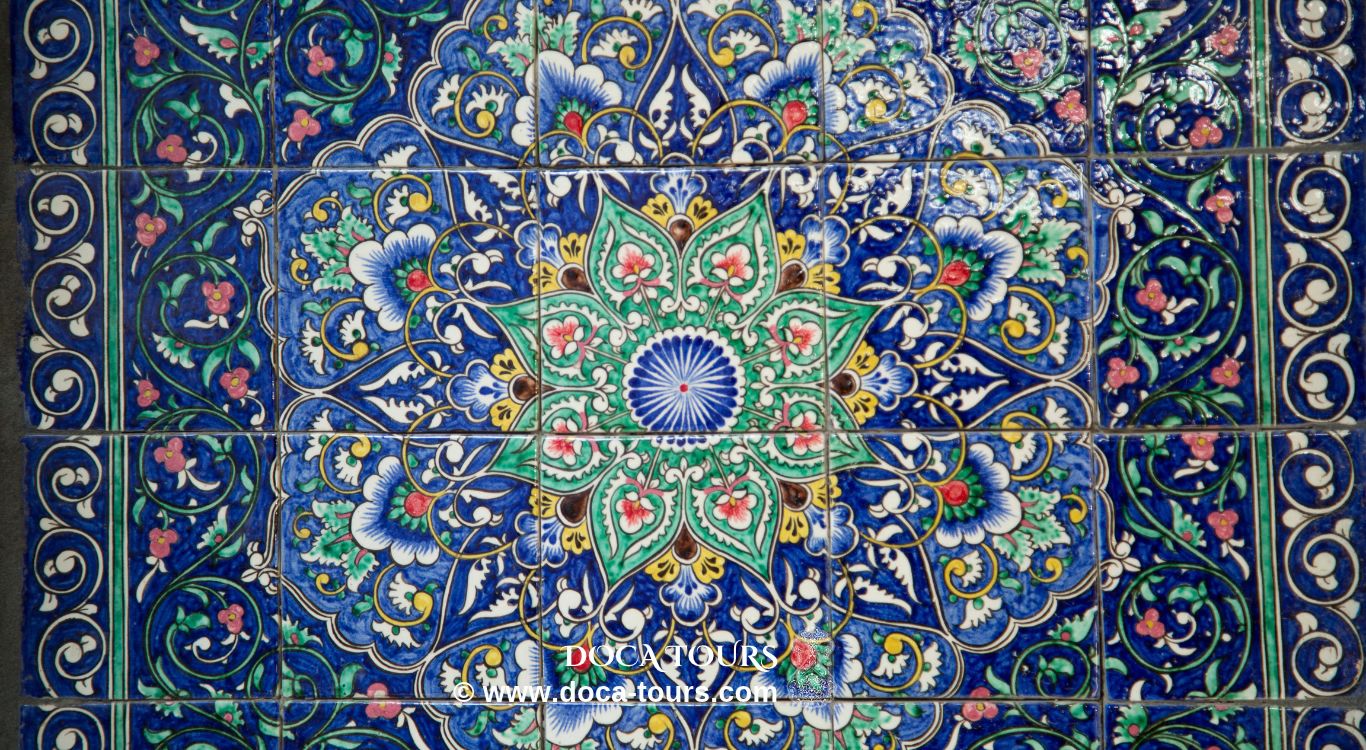
Over time, Rishton has developed into the largest center for glazed ceramics in Central Asia.
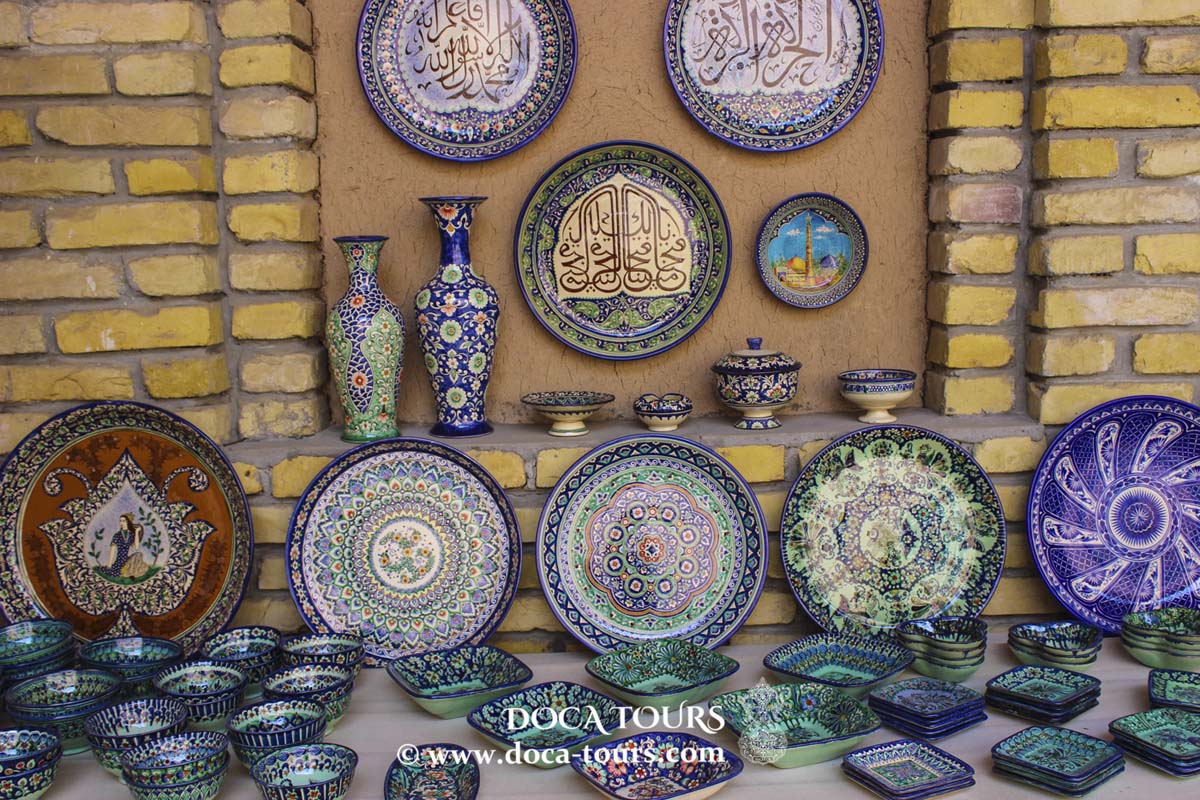
The masters from Rishton are famous for their distinctive sea-blue and turquoise colors (Feruza).
A major secret to their success is the local reddish clay called "hoki surkh."
This clay is of such outstanding quality that it can often be processed directly without elaborate preparation.
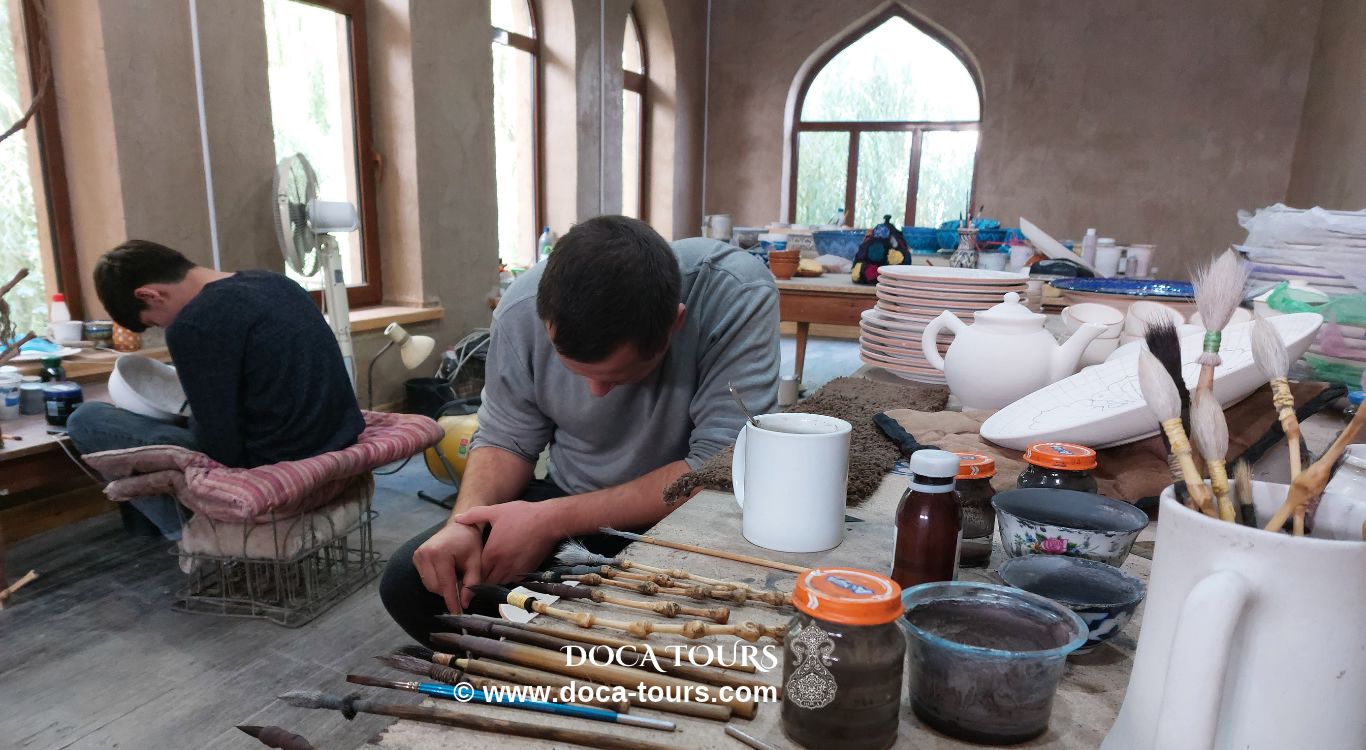
The elegantly painted plates (Lagan) and filigree patterns bear witness to the highest craftsmanship and a deep understanding of nature.
Production and Natural Materials
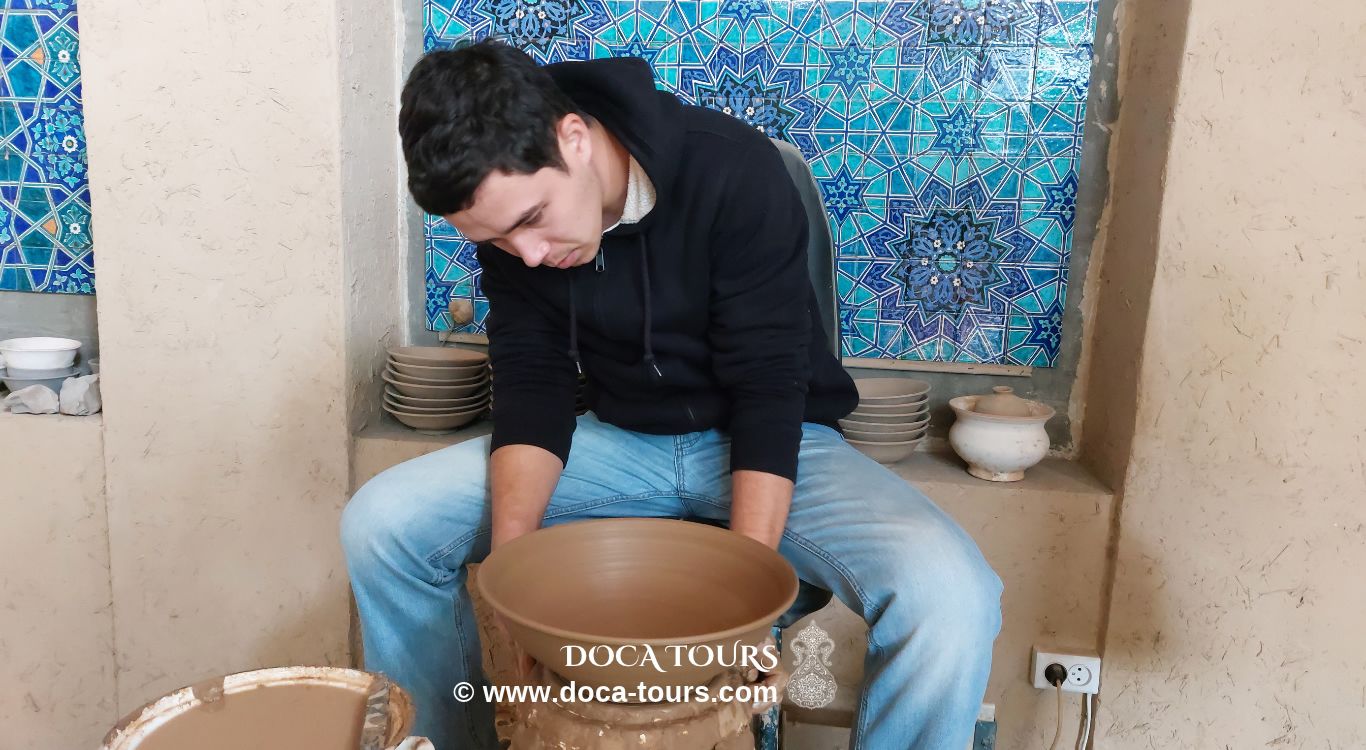
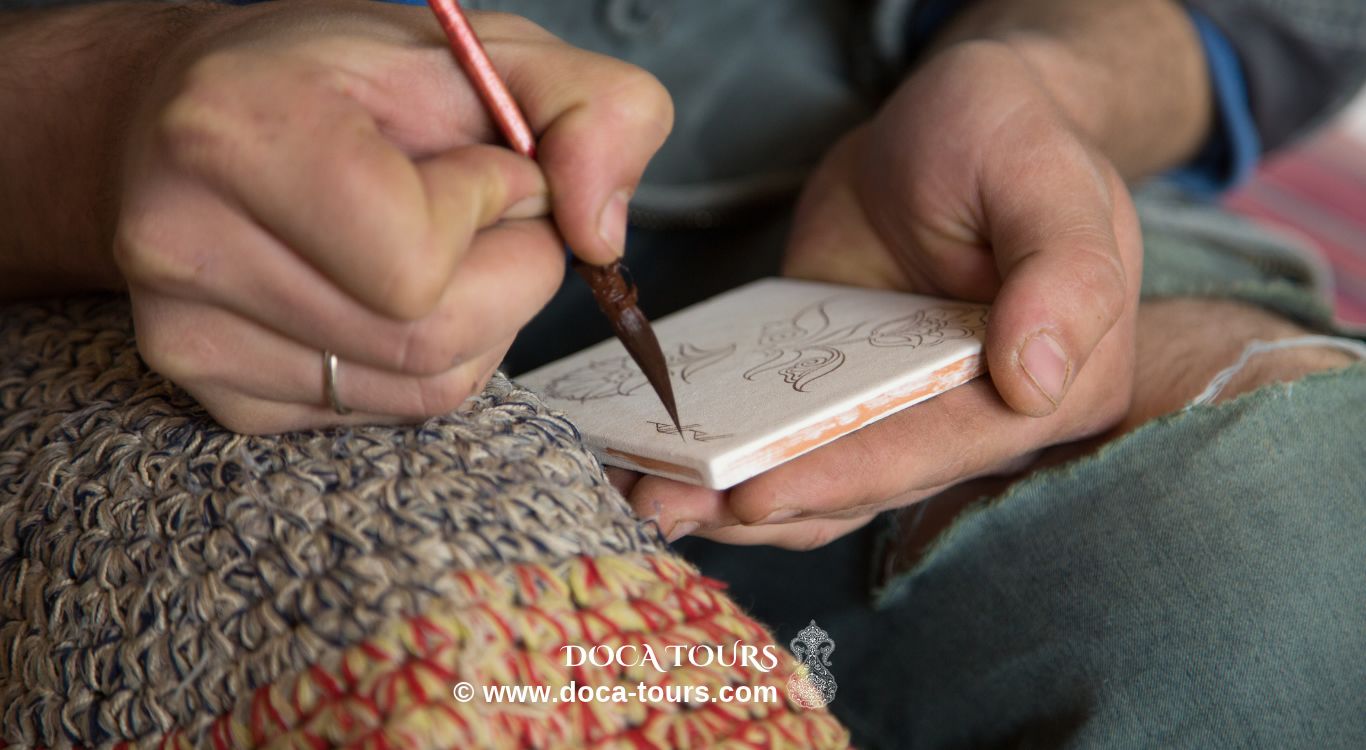
The fundamental raw material for Uzbek ceramics (Kulolchilik) is natural clay.
The better and more intensively the clay is kneaded and prepared, the higher the final quality of the ceramics.
In ancient times, artisans made enormous progress in shaping and firing techniques.
With the traditional "angob" (engobe) technique, a fine layer of the best clay body is applied to the vessel, giving the ceramics vibrant,
luminous colors and a dense structure after firing.
Modern masters also often use a special "ishkor" glaze, the complex production of which is based on natural plant ashes.
Frequently Asked Questions (FAQ) about Uzbek Ceramics Kulolchilik
What does Kulolchilik mean? Kulolchilik is the traditional Uzbek term for the art of pottery, in which a wide variety of everyday objects, vessels,
and architectural ceramics are crafted from clay.
What distinguishes the ceramics from Rishton? They are world-famous for their deep blue and turquoise patterns as well as the use of the high-quality local
reddish clay "hoki surkh."
Do the patterns on the ceramics have a meaning? Yes, absolutely. For example, plant motifs in Gijduvan represent fertility,
while the stars and circles of the Samarkand school symbolize deep cosmic meanings and eternity.