






































Video: https://www.youtube.com/watch?v=8JaMyIj9xiU
According to archaeological data, the earliest and most obvious evidence of horse domestication belongs to the so-called Botay culture – this is the territory of modern Kazakhstan. There are many caves and rocks in the world where ancient people depicted horses. On some of them, the horse is the object of the hunt, while on others, the person is already riding the horse – which is proof of its domestication. In ancient tombs of the Middle East, images of chariots with horses have been preserved, which date back to the 20th century BC.
These facts indicate that the horse has been faithfully serving man for many centuries. Scientists believe that the domestication of the horse is a revolutionary event in human history. Thanks to the horse, man has become more mobile. Long distances on horseback were covered much faster. The cavalry made the armies stronger and any information reached the addressee many times faster. No wonder the power of motors is still calculated in horsepower.
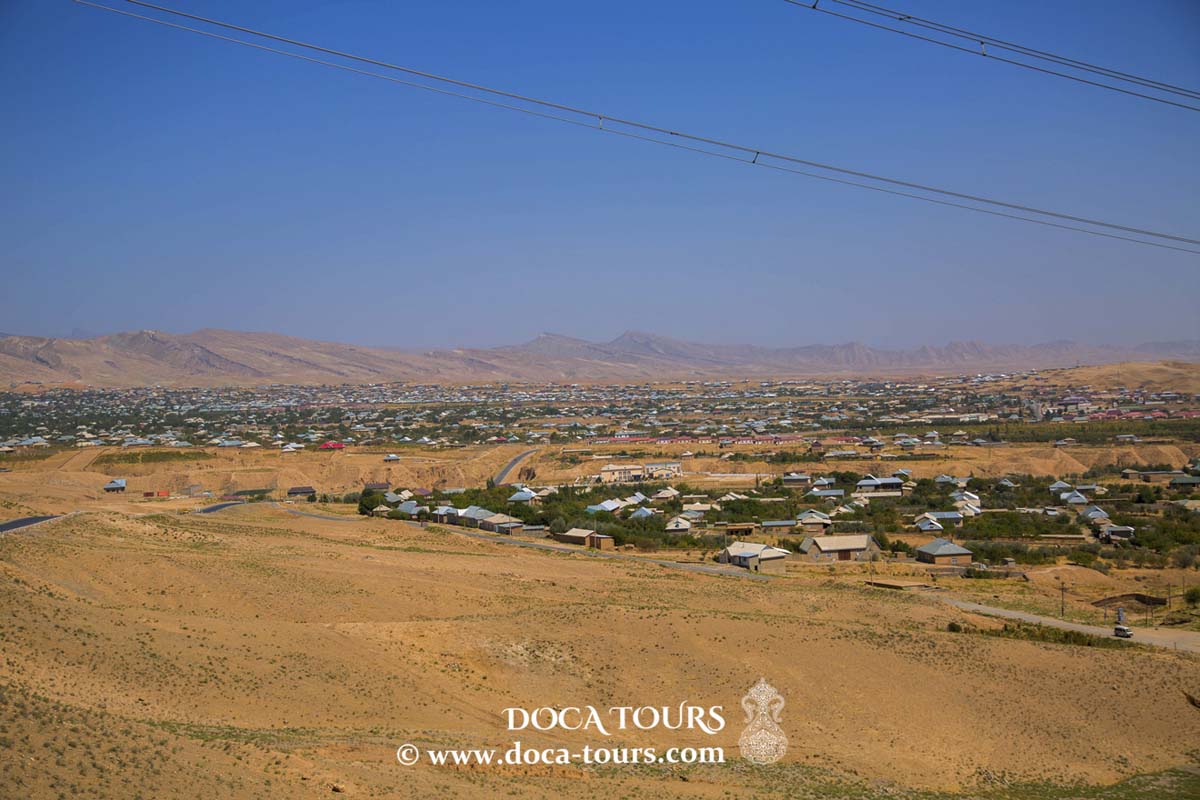
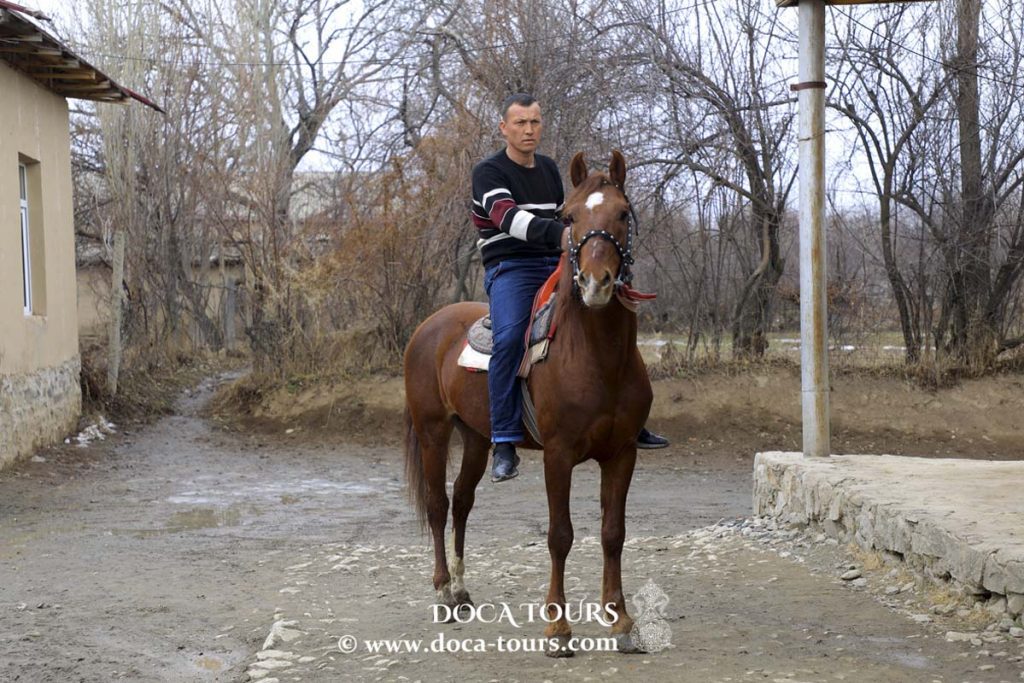
Today I would like to tell and show you how a saddle is produced in Uzbekistan – one of the most important attributes associated with a horse and riding. For this, we visited a place called Bakhmal. This settlement is located about an hour and a half drive from Samarkand to the North.
The ancestors of almost all the indigenous peoples of Central Asia were nomads. The horse was one of the most important pets for them. You could move quickly on it and plow the land. And in some countries, horse meat is still a delicacy. Horses are slaughtered on special occasions, such as at weddings or funerals.
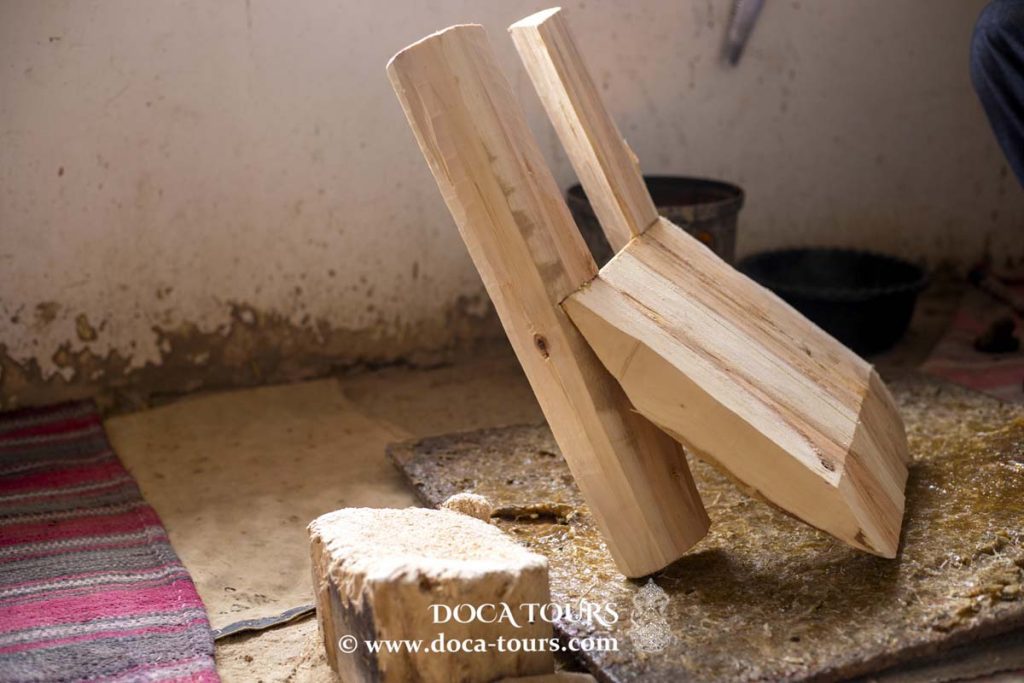
In rural areas of Uzbekistan, Kazakhstan, Kyrgyzstan, horses are still bred. Horseback riding in these countries is still seen as a symbol of courage and strength.
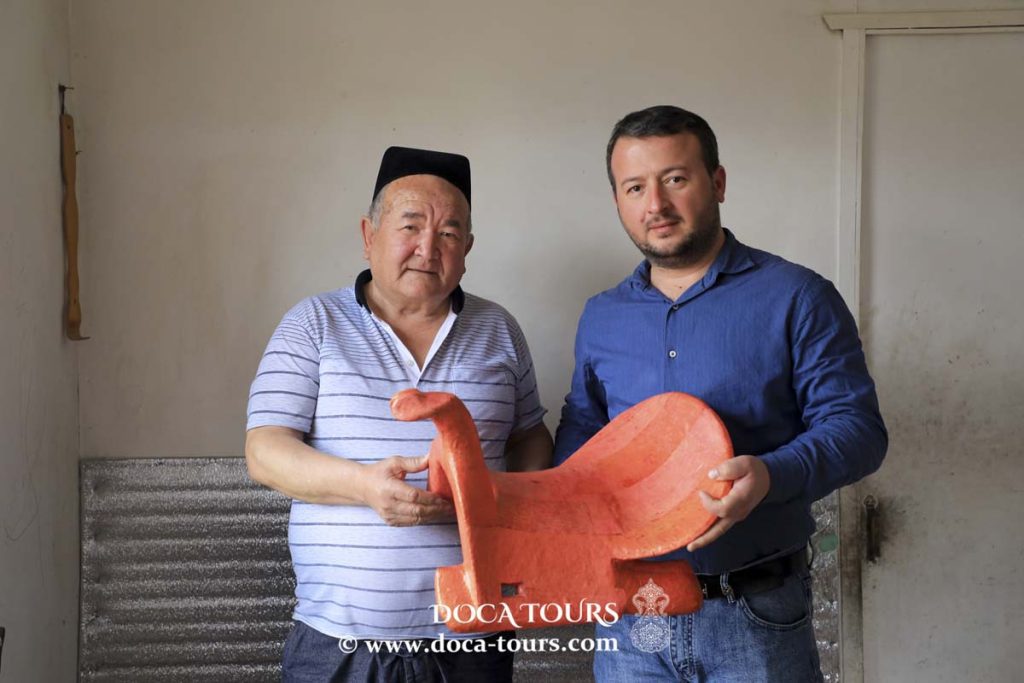
Master Tursunboy Askarov is the fourth generation saddle specialist. All of his saddles are painted red, this is their family brand.
The craftsman uses local willow wood to make the saddle. It is a soft material that is easy to process. The tendons of cows and sheep are used, as well as the bark of birch.
Sometimes there are special orders for walnut wood saddles. Such saddles are much more expensive than ordinary ones, since the wood itself is expensive, and the work is very laborious due to the hardness of this tree. Such orders only come from very wealthy people.
The wood is sanded with special hacksaws and leveled with a special hoe.
Usually, before taking the order, the master invites the customer to his home and asks him to bring photos and videos of his horse with him. Also asks about the breed, age and other characteristics of the animal. Of course, the characteristics of the riders themselves and their special preferences are also taken into account. No 3D models are created on the computer. This master does the entire production process by hand. All sizes, angles and shapes are taken from years of accumulated experience and knowledge passed on to them by their ancestors.
After the saddle frame is assembled and sanded, the craftsman moves on to the next stage. The parts are first glued together with ordinary wood glue.
After glueing, the master makes a control grinding with a hacksaw and proceeds to the next stage. Tendons of cows and sheep are specially bought for it from Samarkand butchers.
The grandson of Tursunboy aka crushes the tendons of animals with a hammer, which eventually turns into a white material that looks like cotton or silk fibers. This material is needed for the surface of the saddle to make it stronger. Of course, today, there are many other artificial, synthetic substances for saddle upholstery, but craftsmen use traditional material that nomads always had enough of due to cattle breeding.
The animal origin of this material is felt even after processing. The natural smell lasts for a long time.
Tendons of twenty cows or forty rams are used to make one saddle. The processing is in two layers.
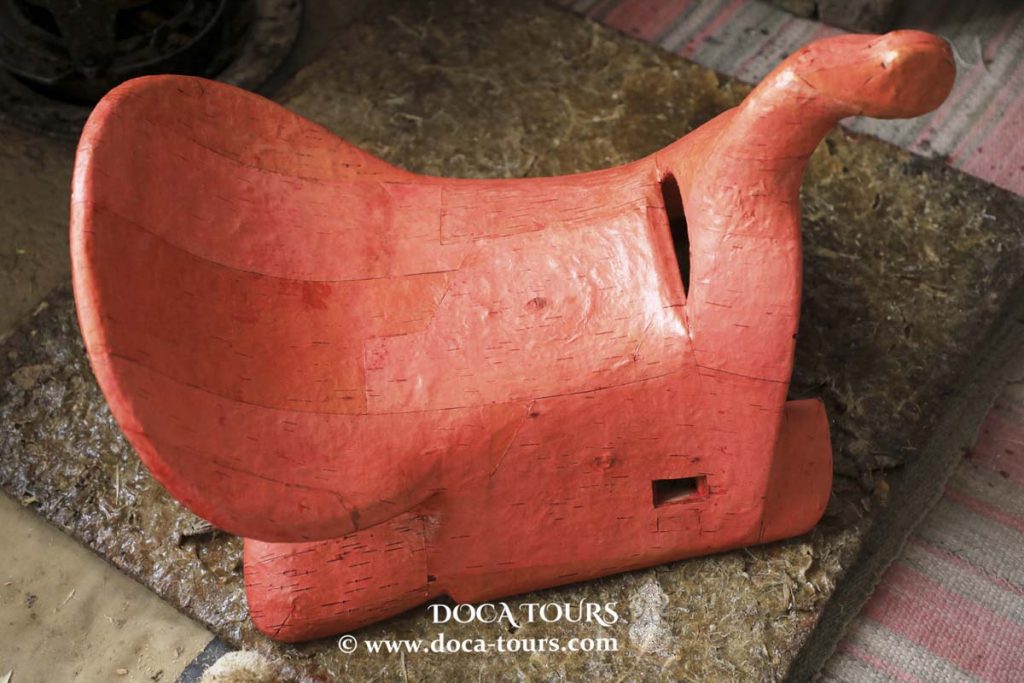
After covering the saddle with two layers of a tendon, the craftsman glues the entire saddle with birch bark and paints it red. Birch bark is delivered to the master from Bukhara. Thus, the saddle becomes very durable. Even very high and low air temperatures cannot damage such a saddle. It is made from 100% natural materials.
And yet, I would like to note that in the video we see a demo version of the manufacture of a traditional Bakhmal saddle. If we go to numbers, then one saddle takes from 30 to 35 days of time.
After the saddle frame is assembled by the craftsman and the individual parts are glued to each other, it dries within 15 days.
The saddle is then covered with a two-layer tendon and left on for 12 days. And only after that it is pasted over with birch bark and painted.
The main tools are a hoe, various hacksaws and a saw.
The craftsman makes 4-5 saddles every month, regardless of whether there is a specific order or not. He knows for sure that there will always be a client for his quality saddles.
His main buyers are horsemen who take part in kupkari, an ancient traditional game of nomads that is still played in Central Asian countries, mainly in the spring, for example, in honor of the National holiday – Navruz.
Tursunboy aka saddles are designed for such horse breeds as Korabayir, Akhal-Tekin and Kyrgyz horses.
Thank you very much for your attention.
Subscribe to the channel and don’t forget to like our videos.
#handmadesaddles #horse #horseriding #saddles #kupkari #horsebackriding #nomad #horses #horsedomestication #horsemen #akhaltekin #handmade #botay #uzbekistan #samarkand #docatours #oybekostanov