
























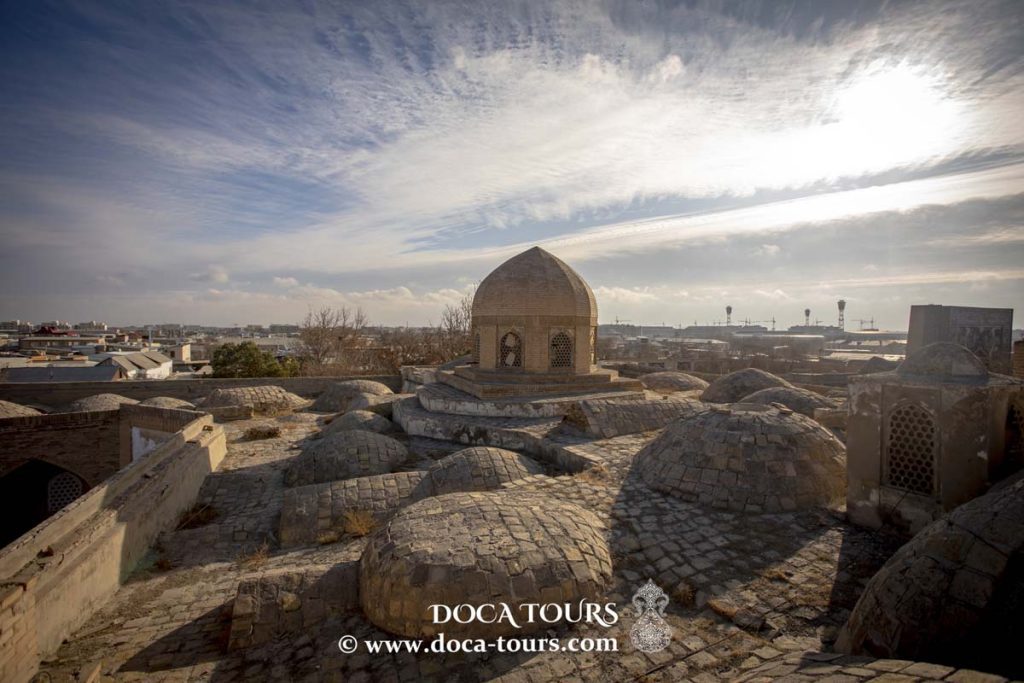
The journey of Arminius Vambery through Central Asia
Video: https://www.youtube.com/watch?v=QSnwJNcmN9I&t=137s
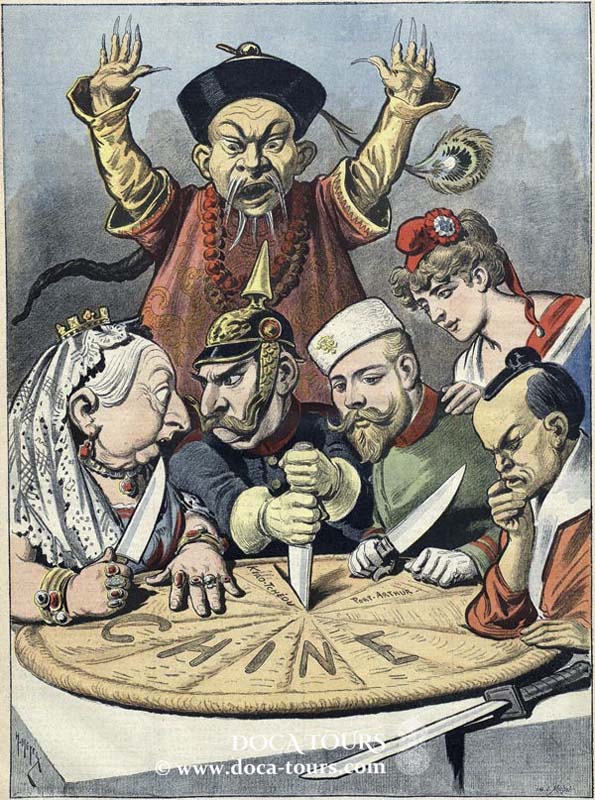
The 19th century went down in world history as a period when the gazes of European politicians, scientists, entrepreneurs were riveted to the unexplored and inaccessible corners of Asia. Special attention was paid to the study of natural conditions, history, ethnography, religion and culture of the peoples of Central Asia. Interest in this mysterious region was fueled by rumors about its untold riches, native gold, outlandish markets, slave trade, original customs, nomadic freemen, fanatical despots of Khiva, Bukhara, Kokand. Of course, the great importance was the geographical and strategic position of the region bordering on Russia and the Indian colonial possessions of Great Britain.
Exactly during this difficult period, the hero of our today’s release Arminius Vambery as the first European made his journey through Central Asia and returned safely from there. In 1864, Vambery published a book about his travels which was called “A Journey through Central Asia” which aroused tremendous interest in Western Europe, Russia and North America. It has been translated into almost all European languages. We decided to devote our today’s video to the biography of the great traveller, as well as to his book “A Journey through Central Asia”. Watch the video until the end, a lot of interesting facts are waiting for you. Let`s start…
Most encyclopedic publications indicate that Arminius Vambery was born on March 19, 1832 on the Danube, in the village of Duna-Sherdageli, on the island of Shutt. However, in an autobiographical book written by him later, it was said that he was born in the small town of Saint-Georgen, in the Presburg committee.
Vambery was a man of amazing destiny; he went through a hard and difficult life path. He lost his father early. As a child, he suffered a serious illness, as a result of which he remained lame for life. This physical disability caused him a lot of torment, especially during his travels.
He received his primary education at a Jewish school in Duna-Sherdageli, where his family moved after his mother’s second marriage. He continued his studies at the college of the monastic Catholic order of piarists in Saint-Georgen. Then he went to the college of Benedictine monks in Pressburg. It was very difficult to study without means of livelihood on a half-starved stomach. Therefore, the young man had to engage in self-education and earn money by teaching languages to the offspring of wealthy parents.
From childhood, Vambery knew Hungarian, German, Slovak and Hebrew, and later studied Latin, French, English, Spanish, Italian, Danish and Swedish. At the age of twenty, he also mastered Russian, ancient Greek, began to study Turkish, Arabic and Persian.
A passionate love for oriental languages and a natural inclination to wanderlust gave birth to the dream of traveling to distant countries. In 1857 Arminius boarded a steamer in Galati and headed for Istanbul. He listened with delight to the multilingual hubbub of the Turkish capital. He had to earn his living there by reciting Turkish folk novels in small smoky coffee houses. Gradually, he became a teacher and scholar in the homes of Ottoman officials, aristocracy, and European diplomats.
Living for four years in Istanbul, he studied oriental manuscripts, began to publish correspondence in European newspapers and magazines, and publish scientific works. In 1861 he was elected a Corresponding Member of the Hungarian Academy of Sciences and set out to make a trip to distant Central Asia, where, according to the instructions of his colleagues, he was to study, among others, “the question of the origin of the Magyar language.”
The entire vast territory of Central Asia was divided by khans and emirs into their possessions and was closed for Europeans. The appearance there of frang (the contemptuous nickname of the Europeans) threatened them with painful death. Before Vambery, two Englishmen who entered Bukhara were publicly executed after torture in the emir’s dungeons and their heads were exposed for public viewing.
Only “holy pilgrims” – dervishes could freely move around the cities of Central Asia. For pilgrimage, they usually united in caravans led by a caravanbashi (the leader of caravan), whose orders were unquestioningly carried out. Dervishes could enter any house, and even the all-powerful emir asked their blessings.
Vambery decided to join one of the caravans returning from Mecca to Bukhara, and under the guise of a dervish, make his journey. It was not possible to dissuade him from the dangerous plan, and the Turkish ambassador issued him a passport in the name of Hadji-Mehmed-Reshid-Efendi. The passport was sealed and signed by the Sultan, to whom Muslims treated with special respect.
In addition to Turkish and Persian, Vambery mastered Uzbek, Turkmen, Kyrgyz and Tatar; he knew the rituals and customs of Muslims as well as any mullah. In addition, one had to remember the Mohammedan prayers, be able to read and sing them, make obeisances, raise their hands to the sky, roll their eyes, bless, know the rituals… To master all these wisdom, Vambery, the first foreigner who did not formally accept Islam, was allowed to attend madrasah, a high school for the study of the Koran. He was helped in this by Rifat Pasha, a former foreign minister, in whose house Vambery taught history, geography and French.
He was quite ready to start a journey to the cherished goal – to Central Asia, to the “noble” Bukhara and the “shining point of the globe” Samarkand.
At the end of March 1863 Arminious Vambery under the name of the Turk Reshid-effendi set out from Tehran to the steppe of Turkmenistan with a caravan of Muslim pilgrims (hajji) returning from Mecca. The clothes of the newly made dervish consisted of rags tied at the waist with a rope, a patched felt jacket (jubba), and a large turban. The wanderer’s legs were wrapped in patches of dirty cloth, and on his neck, as befits a real hajji, hung a bag with the Koran. In such a dress, Vambery hoped to merge with the crowd of ragged pilgrims, of whom (in addition to merchants and other travelers) almost the entire caravan consisted.
Muslim pilgrims, suffering from impassability, headed through Mazandaran to the southeastern coast of the Caspian Sea. The further path of the imaginary Turkish pilgrim lay through Gurgen and Atrek, along the Big and Small Balkans and the Karakum desert to the Khorezm oasis. Having visited the center of the Khiva Khanate, he sailed along the Amu Darya to Kungrad, from where he returned to Khiva. Vambery then crossed the hot sands of the Kyzylkum desert with tremendous torment and risk to his life and arrived in the sacred Bukhara. The road back to Iran passed through Karshi, Samarkand, Kerki, Andkhoy, Meimene, Herat and Mashhad to Tehran. In March 1864, a year after starting his journey, he reached the capital of Iran, from where he returned to Istanbul, and then to Pest (Budapest).
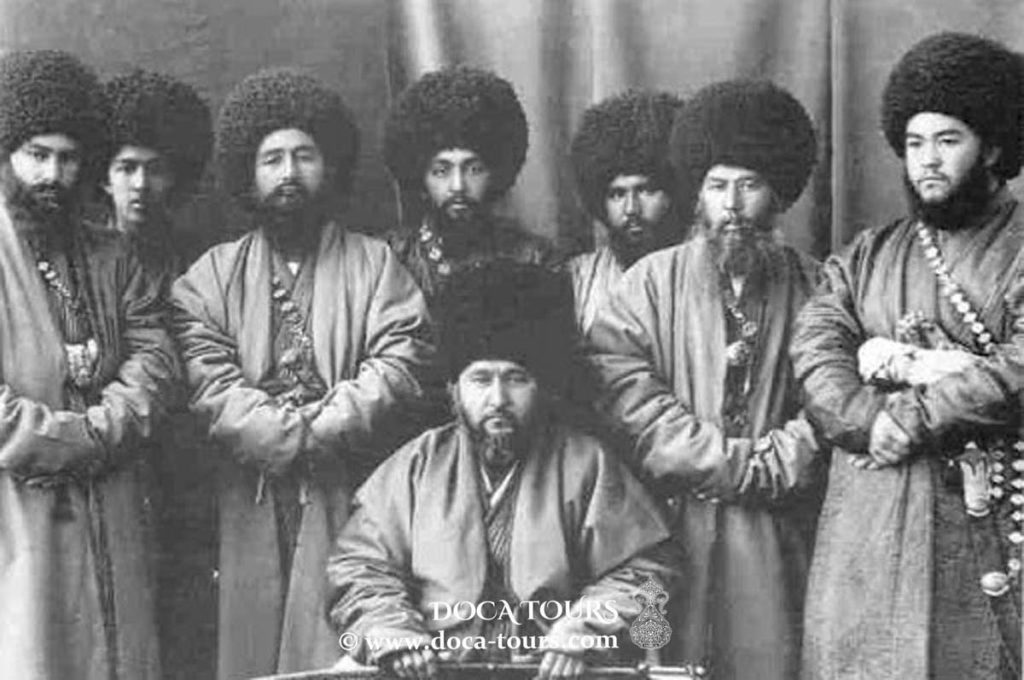
Natural disasters, an earthquake and a sandstorm that covered the fallen people and camels with a thick layer of sand and filled up wells, lack of water during unbearable heat, robbery attacks on a caravan, ritual ablutions before prayer, in which water was replaced with sand, food from a common cauldron with dirty hands, sometimes covered with ulcers – these and other pictures of the caravan life are described in detail by the traveler.
But the most terrible threat to Vambery was the threat of exposure. His complexion did not look like a Muslim, he was constantly watched, and the slightest carelessness could ruin him.
In the middle of the last century, the bulk of the territory of Central Asia was part of three large states – Khiva, Bukhara and Kokand. The lands of the eastern coast of the Caspian Sea, the Kopetdag regions, the Atrek, Gurgen and Murghab valleys were occupied by the Turkmens.
The Khiva state was going through a difficult period of its history, characterized by continuous popular unrest and internecine strife. Uzbek, Turkmen, Karakalpak tribal leaders and nobles sought to seize political power and establish their rule over the khanate.
The growth of large-scale land ownership, the merciless exploitation of peasants and artisans in Khiva provoked numerous protests, which resulted in major revolts. The struggle against the khan’s power of the Turkmen-Yomuts, whose leader Ata Murad in the 50-the 60s of the 19th century, was stubborn in nature and moreover he once applied to St. Petersburg with a request for acceptance into Russian citizenship. Such was the situation in the Khiva Khanate under Seyid Muhammad Khan (1856 – 1864) during whose reign Vambery had been there.
Vambery understood that the ruler of each city, where the caravan entered, would be sure to report on the “learned dervish” from Turkey. In order to prejudge all kinds of rumours and accidents, he decided first of all to visit the ruler himself and his high-ranking nobles.
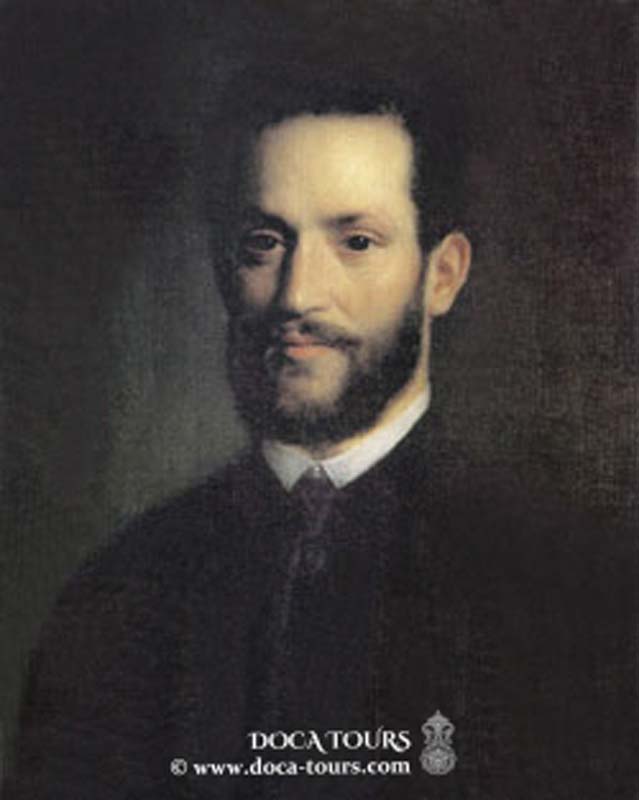
As soon as he entered the gates of Khiva, Vambery went to the khan’s advisor, the old Shukrullah-bey, who had been to Istanbul and loved this city. The old man was glad to talk, they quickly found a common language and even mutual acquaintances. The adviser introduced the imaginary dervish to the khan.
Vambery had already heard about the cruelty of the khans. A conversation with them should have begun and ended with an expression of joy at the contemplation of the “blessed beauty and wisdom” of the ruler. Khan graciously accepted the blessing from the holy dervish, presented him with a small amount of money and a gift.
The flattering speeches of Vambery were to the liking of the khan, he offered him money and a donkey. The “dervish” did not take money, but willingly accepted the donkey – it should have greatly facilitated the movement and acquaintance with distant villages.
The reception of the “dervish” by the khan contributed to his extraordinary popularity among the inhabitants of Khiva. He was greeted on the streets, invited to visit and generously treated, he had to eat a lot because he was not supposed to refuse.
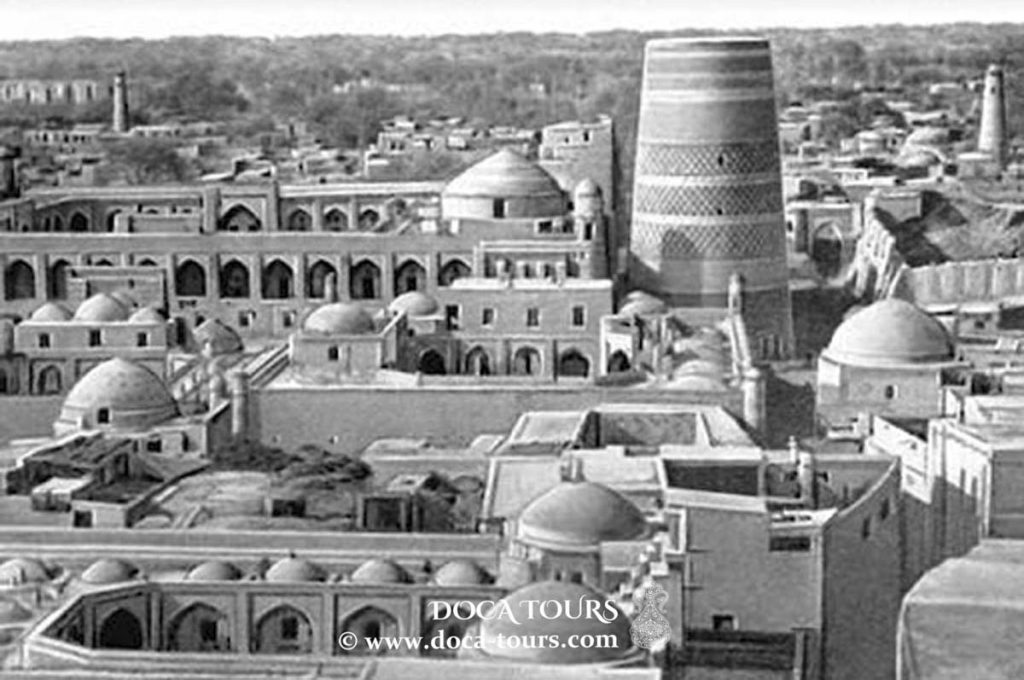
According to his description, the Amu Darya River was distinguished by the most delicious water, and along its banks, the remains of ancient fortress walls have been preserved; on one side there was a desert with its flora and fauna, on the other – virgin forests. He saw the blossoming gardens of oasis cities and dirty water in their reservoirs – a source of disease; luxurious palaces of rulers and casemates dug into the ground nearby, where they threw those who aroused the ruler’s wrath and where he himself risked getting.
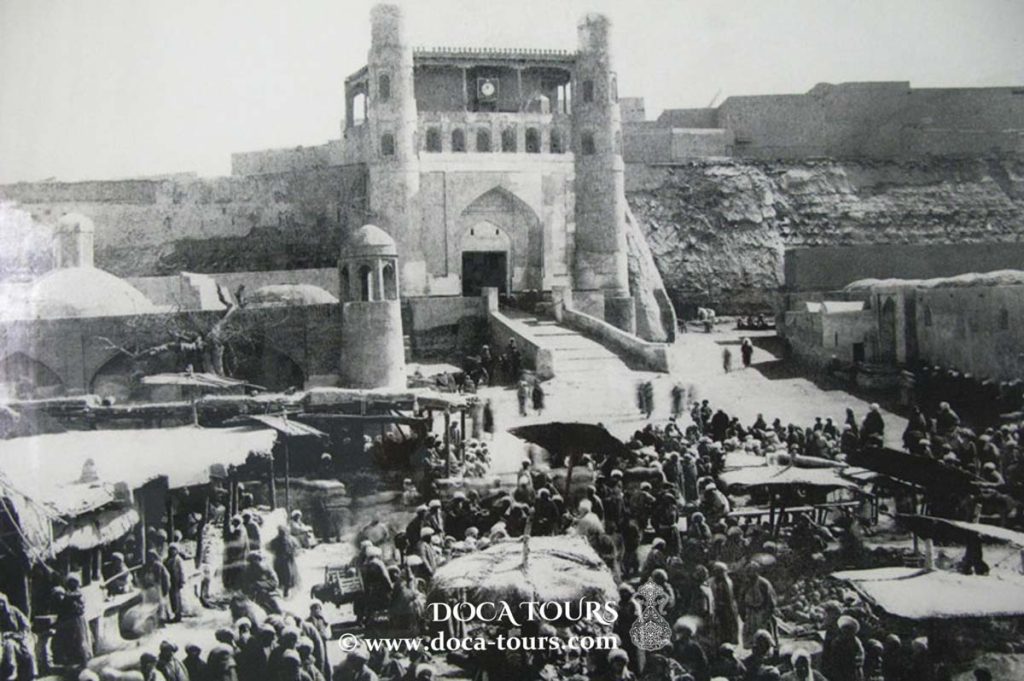
In Khiva, Vambery notes: there are many nightingales, but no storks, in Bukhara – on the contrary. “The storks are beating you with their beak, that’s the whole nightingale song,” the Khivians used to say to the Bukharin’s. Oriental bazaars are amazing with their exoticism, in particular, the main bazaar in Bukhara with its numerous domes, under each of which a certain product is sold.
Only in Bukhara and Samarkand, there were hundreds of holy places that attracted pilgrims. Visiting the tombs of the holy Muslims, Vambery danced frantically around them and loudly recited prayers along with other dervishes, as required by the rite. He also studied inscriptions on tombs and walls; some, to his surprise, turned out to be poetry. These saints were poets, and their wishes were taken into account when buried.
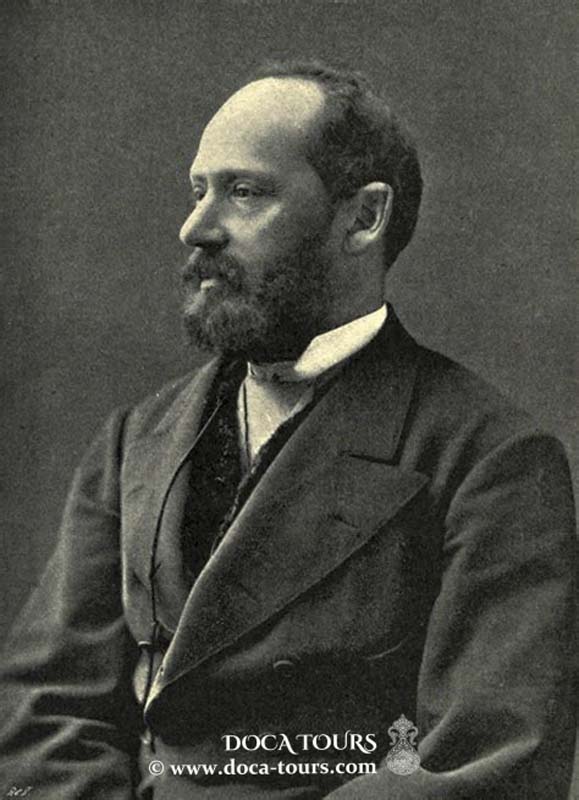
The middle part of Vambery`s book is occupied by the description of the Bukhara Emirate. Its territorial core consisted of the fertile lands of the Zeravshan and Kashkadarya valleys. The Khanate also included the left bank of the Amu Darya in its middle reaches, some areas of Afghan Turkestan and part of present-day Northern Tajikistan. The Mangyt dynasty, which ruled in Bukhara, hardly kept the population of its vast domains in obedience. In fact, the governors and beks of Shakhrisabz, Gissar, Jizzak, Ura-Tube, Balkh, Meimene, Andkhoy were independent or semi-dependent.
The Bukhara Khanate was inhabited mainly by Uzbeks and Tajiks, as well as Turkmen and Syr Darya Kazakhs. Less significant groups of the nomadic and sedentary population were the Karakalpaks, who occupied the steppe expanses in the north of the khanate.
The population of Bukhara, like the population of Khiva, was mainly engaged in agriculture and cattle breeding. About half of the residents were sedentary. The basis of agricultural production was the labor of peasants exploited by the feudal lords and the state, although slave labor was also used in agriculture. Vambery reports on a significant number of slaves in Bukhara and Khiva and their descendants who were set free.
Vambery writes: Everything that was associated with the legendary conqueror Timur (Tamerlane), especially his mosque and tomb, was distinguished by the greatest splendor in Samarkand. On its tomb of dark green jade, Arabic letters were applied and an ancient manuscript of the Holy Quran was kept.
In the bookstores, Vambery bought unique ancient manuscripts, which he hid in the folds of his robe. Nobody even suspected their existence in Europe. He often heard Hungarian words, especially from Tajiks and Persians. He could not explain this at that time.
During Vambery’s stay in Bukhara, the emir was not there. He was resting after another campaign in Samarkand. Instead, the traveller was received by the dignitary Rakhmet-bey, who immediately suspected an imaginary hajji. But in the course of the conversation, the love of both interlocutors for poetry became clear, common favorite poems were found, and Rakhmet-bey not only removed his suspicions but even gave Vambery cover letters to Samarkand and Kerki.
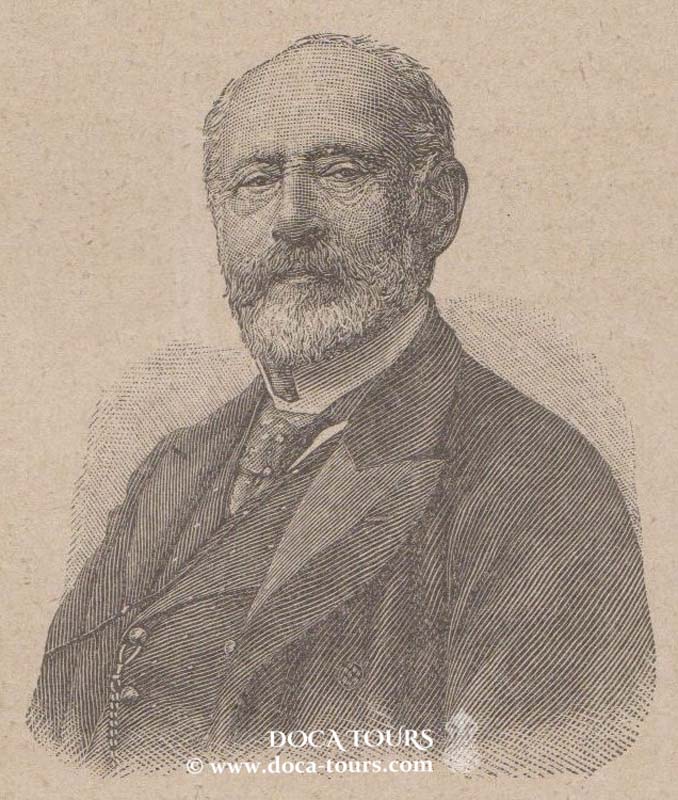
A short meeting with the cruel and domineering emir took place in Samarkand. The Emir was surprised that the lame dervish would make such a difficult pilgrimage. Vambery referred to Timur who was also lame and conquered half the world. The emir, like the Khiva khan before, liked the dervish’s flattery, he accepted his blessing, rewarded him with money and a robe. Even in a nightmare, the khan and the emir could not dream that they would receive a blessing from a European, and furthermore from a Jew.
The Bukhara Emirate bordered in the east with another large Central Asian state – the Kokand Khanate. Formed in the XVIII century feudal possession had its political and economic center in Fergana Valley. By the middle of the XIX century, the Kokand Khanate gradually expanded its territory to the Pamir, the middle reaches of the Syrdarya, the valley of the Ili River, the western Tien Shan and the borders of Kashgar. A fierce and stubborn struggle was going on between the Kokand and Bukhara rulers for the possession of Khujand and the adjacent regions – Ura-Tube and Jizzak.
The population of the khanate consisted of sedentary and nomadic peoples: Uzbeks, Tajiks, Kazakhs, Dungans, Kyrgyz, Karakalpaks. Besides Kokand, large cities were Andijan, Namangan, Margilan. The inhabitants of the Fergana Valley and the Syr Darya regions were mainly engaged in agriculture, the nomads of South Kazakhstan, Semirechye, the plain and mountain regions of the Pamir region – cattle breeding. The population of the khanate was engaged in lively trade with Kashgar, Western Siberia, Bukhara, Afghanistan.
Such was, in the most general outline, the historical panorama of Central Asia during the Vambery journey.

Obviously, long before Vambery, many foreigners visited Central Asia, among whom the first place belongs to Russian travellers, merchants, diplomats, and scientists. Suffice it to note that in the 40-the 50s of the XIX century, on the eve of his trip, N. V. Khanykov, G. I. Danilevsky, N. Ignatiev visited the Khiva Khanate and the Bukhara Emirate.
Despite the acquaintance of Europe and Russia with Central Asia, A. Vambery’s book received worldwide fame. The author himself explained the reason for such a great success by the fact that he had no “predecessors either in terms of the length of the path or in the way of overcoming it.” Vambery was the first European traveller to travel around and describe almost all of Central Asia. The inquisitive wanderer managed to enter the remote corners of the East and tell about it in a fascinating way.
A. Vambery’s notes about his travels were so unique that he was even suspected of forgery. The verdict so easily passed by some of his critics was later refuted by the testimony of other European and Russian travellers. Gradually it became clear that almost everything he saw with his own eyes was worthy of the reader’s confidence.
A. Vambery made a significant contribution to the study of the past of the peoples of Central Asia based on the materials of written sources. Of the greatest scientific significance are his works on the Chagatai and Uighur languages, on the Turkic-Tatar and Finno-Ugric lexicography.
Arminius Vambery wrote: “True satisfaction can be given to a person only by the consciousness that with his labors he contributed at least a little to the progress of mankind.” He himself contributed to the progress more than “a little”.
Thank you very much for your attention.
Subscribe to the channel and don’t forget to like our videos.
#arminius, #history, #germany, #monument, #landmark, #detmold, #statue, #architecture, #memorial, #sword, #old, #sky, #building, #forest, #germanic, #hermann, #ancient, #german, #travel, #hermannsdenkmal, #blue, #vintage, #illustration, #engraving, #europe, #helmet, #art, #antique, #drawing, #engraved, #historic, #etching, #romans, #hero, #commander, #tourism, #muscular, #historical, #past, #teutoburger forest, #construction, #big, #battle, #nrw, #weser, #human, #victory monument, #varus battle, #famous, #attraction