




























Video: https://www.youtube.com/watch?v=5DjZg2m8BVg&t=2s
Uzbekistan is an amazing country with beautiful landscapes, ancient architecture, rich history and traditions. The traditions and customs of the Uzbek people have evolved over several millennia, and through all this time they were passed on from generation to generation in almost preserved original form. Traditions created once in ancient times have now become not just a part of the life of these people, but have penetrated their very consciousness and formed their eastern mentality. These rituals include Sunnat tuy – a ritual festival on the occasion of the circumcision of boys.
The celebration of circumcision among Muslims is “the fulfillment of the Sunnah of Islam.” This explains the important role of the holiday of circumcision among the peoples of Central Asia. Along with the wedding, among the Uzbeks, Tajiks, Turkmens, Kyrgyz, Kazakhs and Karakalpaks, this holiday is one of the main family celebrations. The circumcision ritual occurs when a boy turns an odd number of full years, 3, 5, 7 or 9 years old, very rarely – at 11 years old.
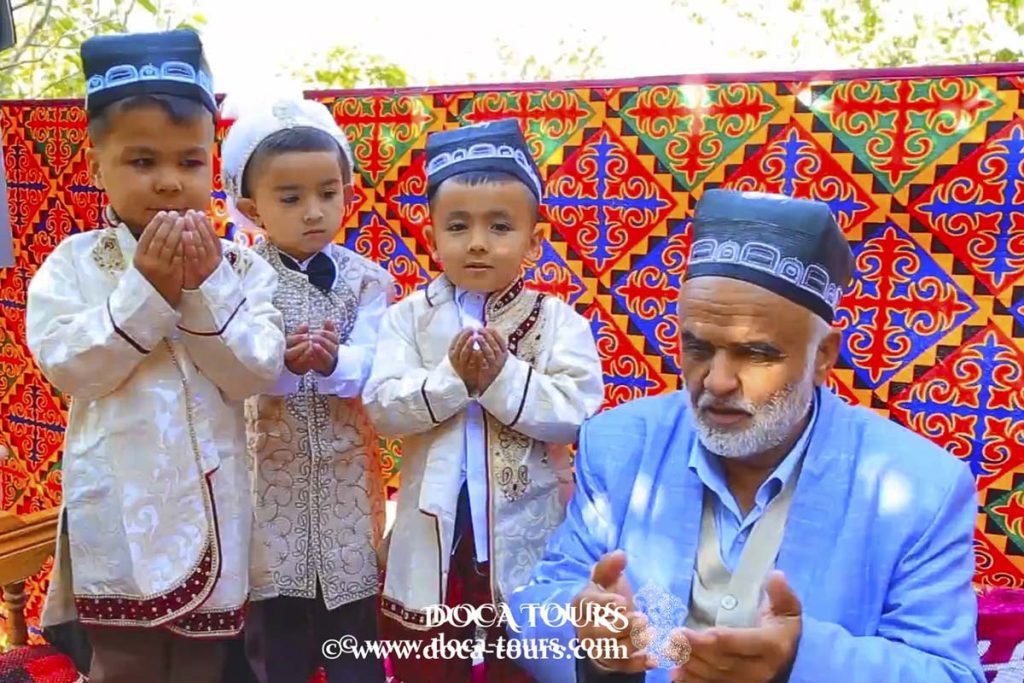
In Uzbekistan, just before the circumcision, representatives of the clergy are invited to the house, who read suras from the Koran that are appropriate for the moment, admonish and bless the boy who will become a real Muslim.
Today, the vast majority of Uzbeks do this operation in modern clinics, where there are all conditions for anesthesia and antiseptics. Previously, circumcision was carried out with the help of a special master – barber, who circumcised depending on the thick or thin was the skin of the child’s genitals.
After circumcision, close relatives of the boy come to congratulate him. They give him various gifts, toys, and also money so that his parents buy him a more valuable gift: for example, a bicycle.
After circumcision, the boy usually recovers within a week. At this time, with the participation of women involving relatives and neighbors, the ritual of folding the bed linens- Joy yigish is performed. On this occasion, a cotton shirt and loose white trousers are sewn, which are comfortable to wear after the circumcision process.
Takhurar is also held – which is the name of the ceremony that is carried out by the mother of the boy and other women guests. Actually, this is the placing of a dowry (sewn blankets) in chests, which will be useful in adulthood for a future man.
The day before the celebration of the great celebration of Sunnat Tuy, a maslahat- council is held with the participation of the elders of the mahalla. At this council, the head of the family, who arranges the celebration, reports to the assembled neighbors from the makhalla how much food has been prepared, how many days the holiday will last, who will be entrusted with the main functions in serving guests. From the point of view of an outside observer, this day could be considered a holiday, but the people, as a rule, do not consider the day of the council to be a holiday.
On the day of the celebration of the Sunnat Tuy, the “hero” of the celebration is participates in festive clothes and with numerous gifts. In the old days, a foal was specially raised for a young horseman, on which the boy was seated to the sounds of the national orchestra. This part of the tradition can still be found today, especially in the countryside.

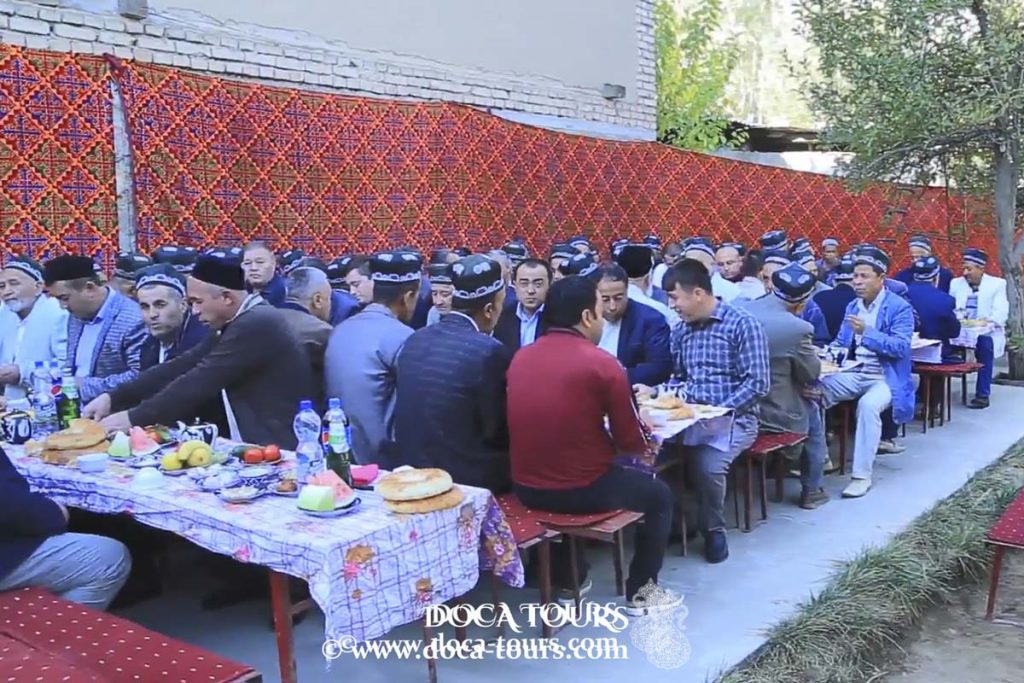
Until the 80s of the 20th century, the Sunnat Tuy event was celebrated in the courtyard, seating the guests on carpets and rugs spread on the ground. Now, this holiday is held in special cafes and restaurants.
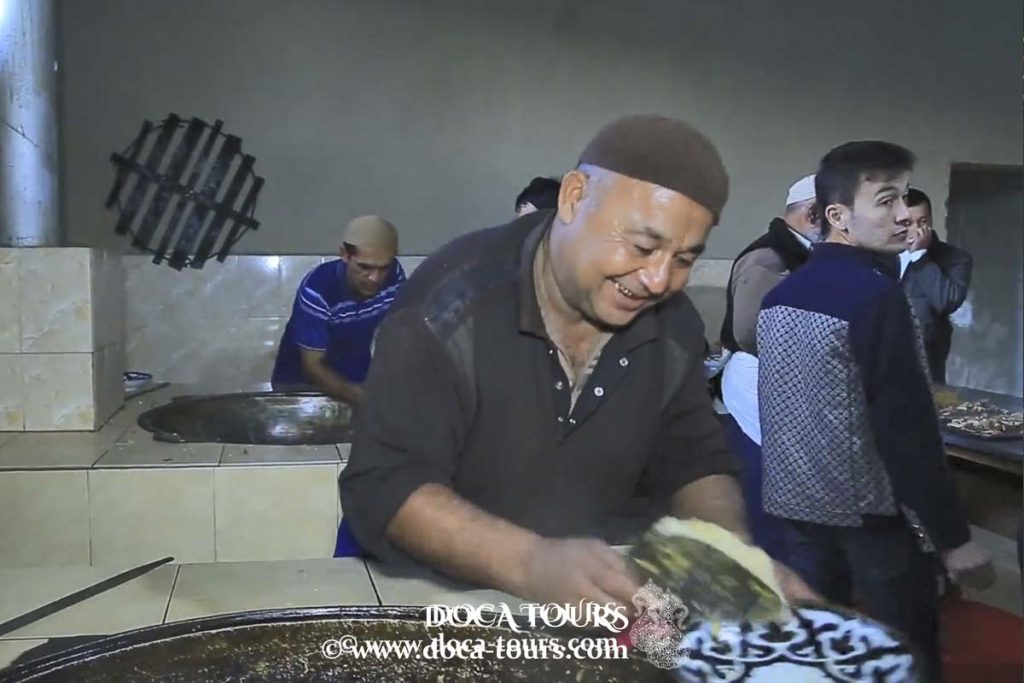
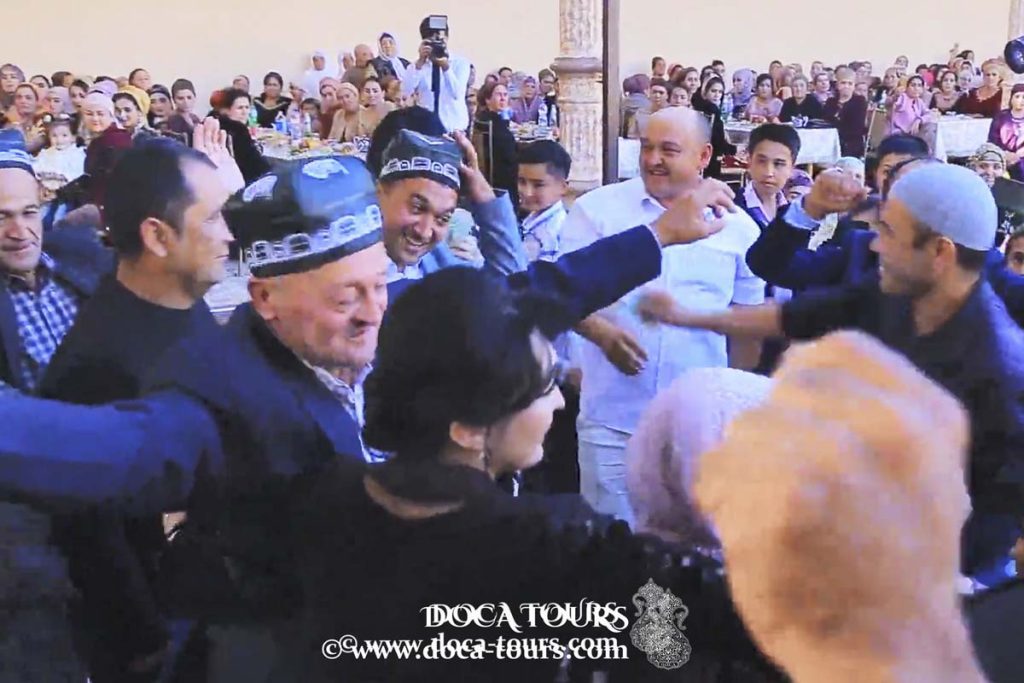
The holiday begins with an abundance of food, music and dancing. Bread, sweets, fruits, dried fruits, pastries, salads; drinks are served on the table. Traditionally, the main dish of the Sunnat Tuy event is the king of Uzbek dishes – Plov.
In the middle of the celebration, the boy comes out to the guests on his father’s shoulder. Guests get out from their seats, approach, congratulate and give gifts and also money to the boy. After that, the boy is taken to a special platform on which the newlyweds sit at the table in traditional weddings. Guests return to their tables and the party continues. From time to time, one of the guests comes to the table, congratulates the boy and gives him gifts.
Sunnat-tuy has long and everywhere been distinguished by an abundance of guests, splendor of treats and a variety of entertainment. Not only relatives, neighbors and residents of the entire makhalla quarter are invited to this holiday, but also a much wider range of people – residents of two, and sometimes four quarters that make up the so-called oshlash.
Each guest who comes to the Sunnat Tuy celebration comes with a gift (tuyona) – money, food or different things. If the kinship (friendship) of the guest is closer to the family of the “owner of the ceremony”, the gift will be more significant. Holiday gifts are loaned help. The gift should be returned over time, that is to say, given the same value or a more expensive gift, when the gift giver himself arranges the holiday. Memory can fail; therefore it is customary to write down in a special notebook who presented what. When the gift is returned, the note is crossed out. According to the general opinion, the first Sunnat-tuy in the family should be organized magnificently, on a grand scale, on the occasion of the circumcision of the firstborn. Sunnat tuy for other sons can be celebrated modestly.
Sunnat-tuy, like a traditional wedding, lasts several hours and ends well after midnight. In the old days, at the end of the ritual, a large fire was kindled in the middle of the courtyard, around which a big kurash-wrestling, tug of war and other national games were held. In the living rooms a feast was held, poetry readings, bakhshis performed excerpts from dastans. On the next day after the festival, kupkari (goat-picking) and other competitions were held in which prizes were awarded to the winners. Today this part of the tradition exists only in some regions of Uzbekistan.
Thanks to a clear organization, on Uzbek holidays always reign peace. This is supported by the general belief that it is the duty of a relative and a neighbor to help the “owner of the tuy” and his family. The ceremony should be held well; this thought determines the attitude of people towards their participation in various kinds of work at the festival. For this reason, each guest who comes to the celebration has a role to play. Both in grief and in joy, relatives and neighbors try to stick together. These qualities embody the national identity of the Uzbek people, which point is a combination of prosperity, kindness and solidarity.
Thank you very much for your attention.

Subscribe to the channel and don’t forget to like our videos.
#circumcision, #traditional, #boy, #white, #culture, #design, #wedding, #ceremony, #people, #child, #islam, #turkey, #clothes, #tradition, #religion, #dress, #blue, #circumcision boy, #outfit, #hat, #istanbul, #sultan hat, #islamic, #beautiful, #young, #islamic traditions, #ottoman, #circumcision gown, #ottoman hat, #eyup, #ottoman sultan outfit, #sitting, #open space, #cape, #jewish, #happy, #outdoor, #space, #gown, #smile, #nature, #green, #model, #park, #tree, #greenery, #grass, #bridge, #summer, #traditional shoes