


























Kurban Hayit (Eid al-Adha) in Uzbekistan: History, Customs, and National Festivities
Celebrated exactly 70 days after Ramadan, Kurban Hayit (known worldwide as Eid al-Adha or the Feast of Sacrifice)
is one of the most significant and largest religious holidays in the Islamic world. Officially recognized as a public holiday in
Uzbekistan since 1991, Uzbekistan, the festival commemorates the deep devotion and willingness of the Prophet Ibrahim (Abraham) to
sacrifice his son in obedience to Allah, before a ram was provided in his place. As the climax of the Hajj pilgrimage to Mecca,
Kurban Hayit is characterized by deep faith, charity, family cohesion, and social harmony. In Uzbekistan,
Islamic traditions blend seamlessly with long-standing national customs.
Customs and Nationwide Festivities
The three-day festival is preceded by careful preparations and shapes public and private life across the entire country:
Preparations on Arafa: The day before the holiday is called "Arafa." During this time, every family prepares traditional
pastries such as kush-tili, bugirsok (sweet dough balls), orama, and chak-chak.
Festive Plov: On the eve or during the holiday, families cook large portions of festive plov, which is served in a large
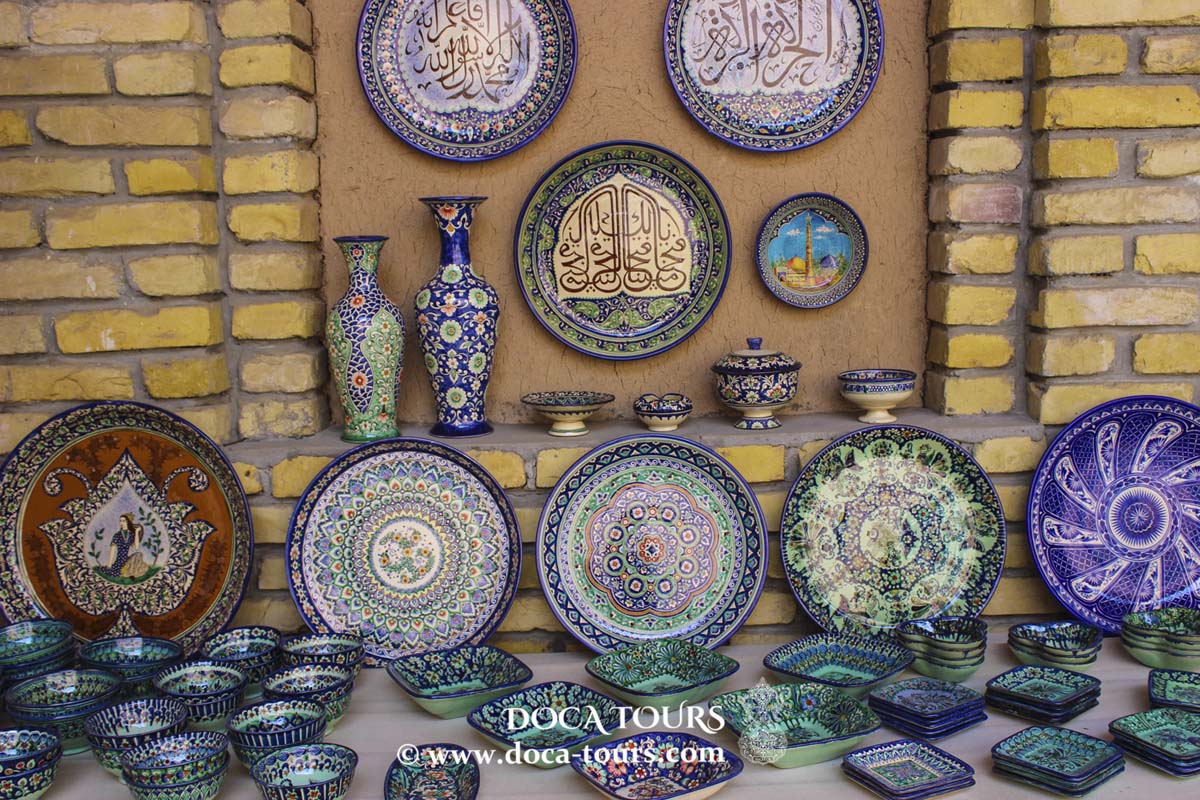
ceramic bowl (kosa), garnished with pastries, and traditionally shared with neighbors.
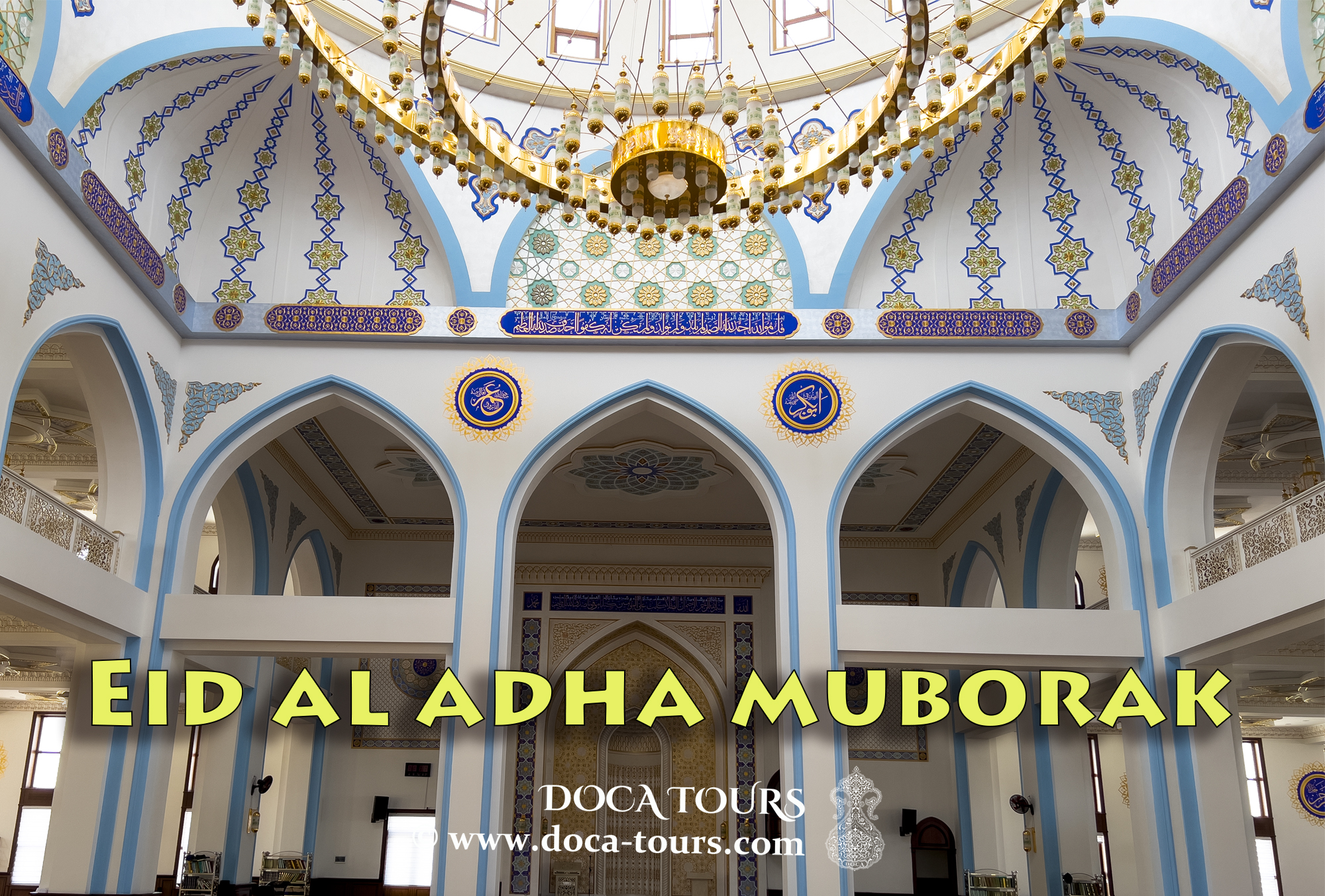
The Morning Hayit-Namaz: On the morning of the holiday, thousands of believers gather in the mosques for the
communal festival prayer (Hayit-namaz).
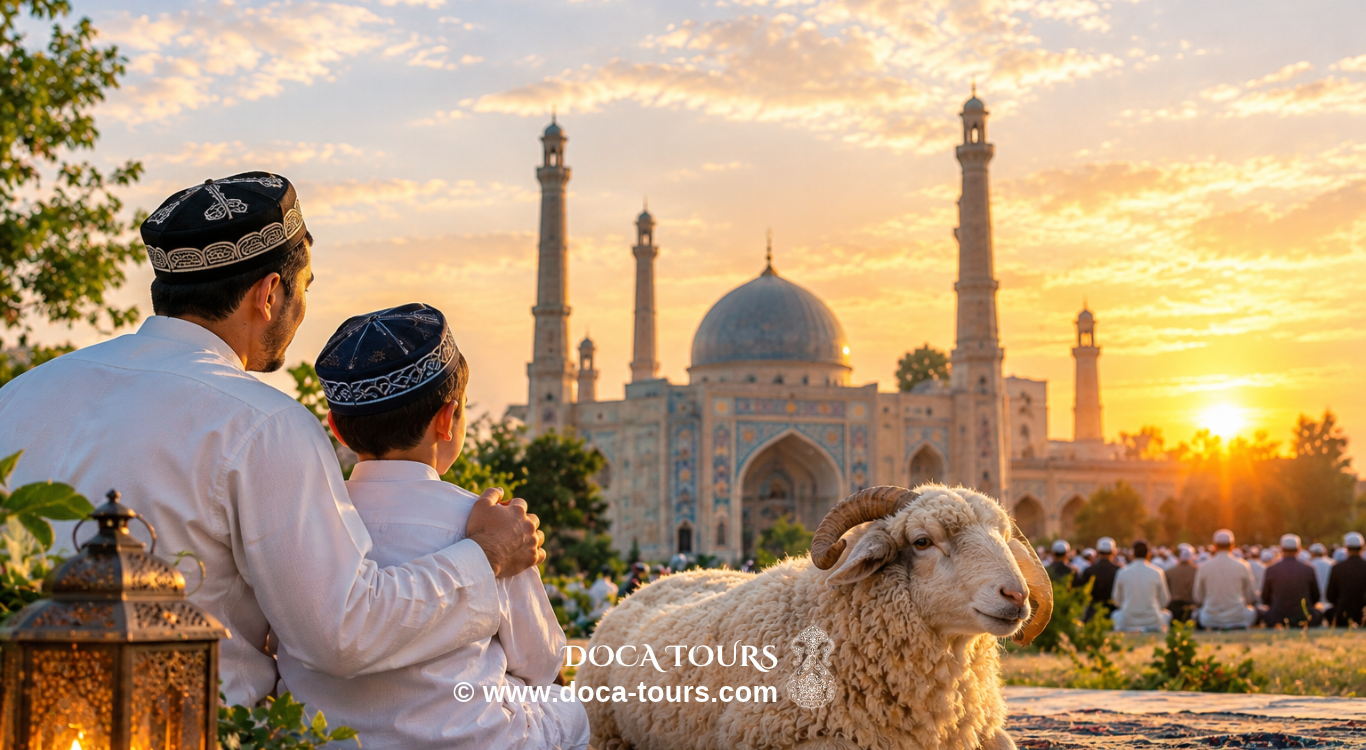
Qurbani (Sacrifice): Following the prayer, the ritual sacrifice takes place—usually in the form of a sheep,
less frequently cows or camels. The meat is strictly divided into three parts: for one's own family, for
relatives and friends, and at least one-third for those in need.
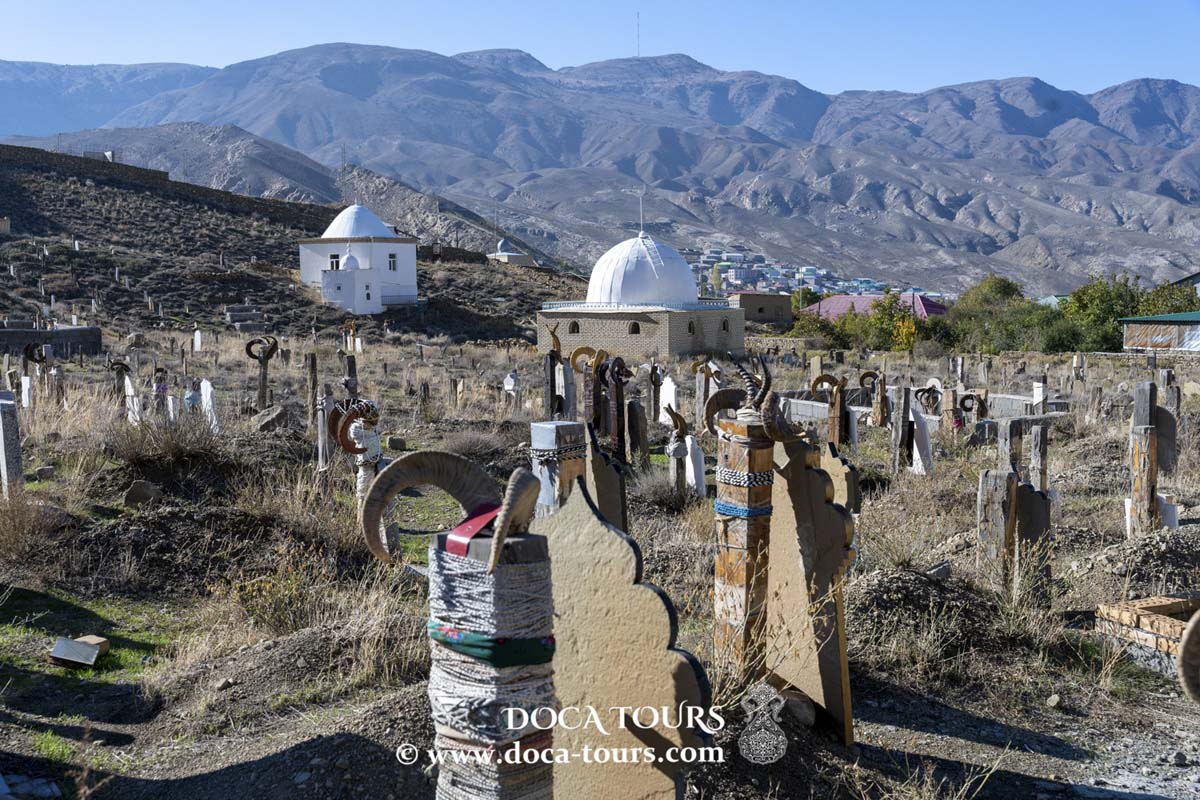
Care for Ancestors and Visits: A few days before the festival, cemeteries (mazars) are cleaned under the
supervision of local mahalla communities. During the holidays, people visit older relatives,
welcome guests, and host newlywed brides (kelin).
Festive Atmosphere: Children enjoy special toys and sweets offered exclusively during the
Hayit days (such as wooden rattles, clay whistles, popcorn towers, and kazinaki),
while cities host concerts, cultural programs, and charitable events.
Frequently Asked Questions (FAQ)
When is Kurban Hayit celebrated in Uzbekistan? It falls on the 10th day of the month of Dhu al-Hijjah in the
Islamic lunar calendar (approximately 70 days after Ramadan Hayit); the exact date depends on the sighting of the moon.
How long do the festivities last? Kurban Hayit is officially observed for three days,
with families receiving days of from work to come together, celebrate, and give alms.
How is the Qurbani meat divided? The sacrificial meat is divided into three equal portions:
one-third for the family, one-third for friends and neighbors, and one-third for people in need.
Planning your trip to Uzbekistan? DOCA TOURS organizes customized cultural tours, historical city tours,
and authentic experiences entirely in Tashkent, Samarkand, and throughout Uzbekistan.