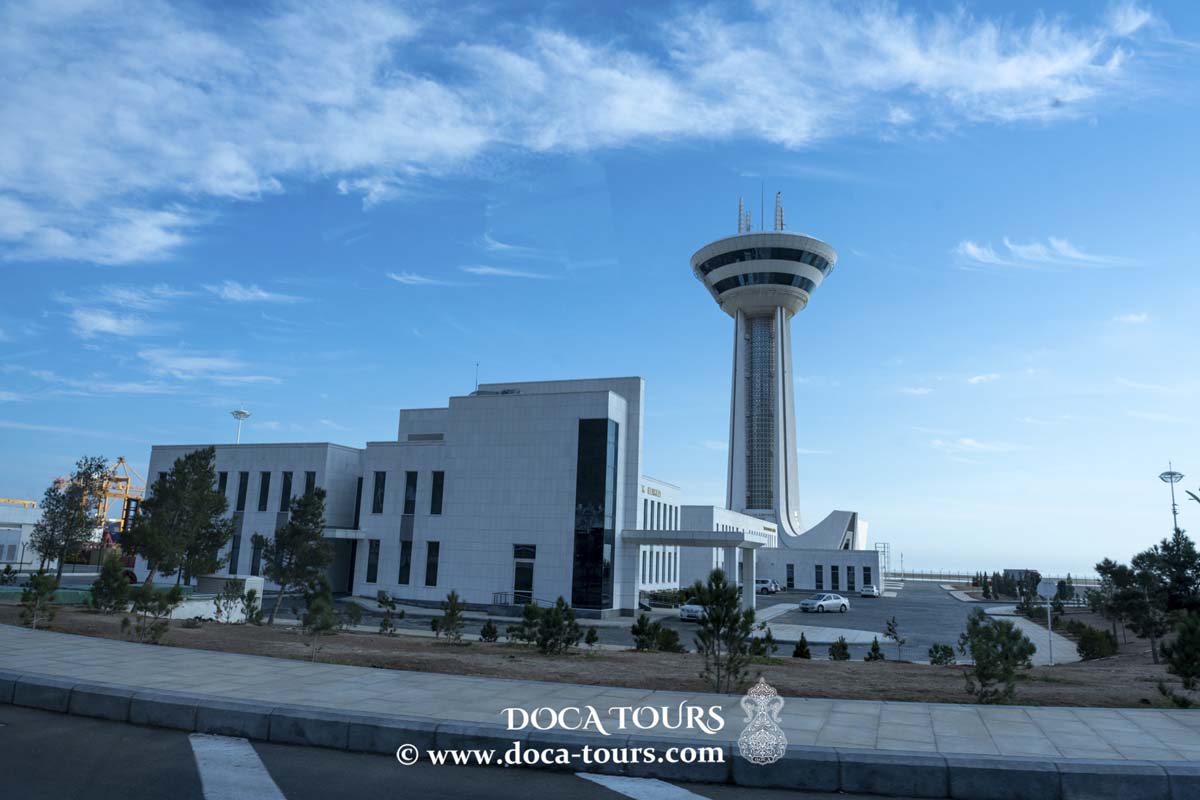
Moynaq, also known as Muynak (Karakalpak: Мойнақ; Russian: Муйнак; Uzbek: Moʻynoq), is a city situated in the northern region of Karakalpakstan, an autonomous republic of Uzbekistan. It serves as the administrative center of Moynaq District. Once a bustling seaport along the Aral Sea, Moynaq is now located 150 kilometers away from the water, in what is now the Aralkum Desert, making it a prime destination for disaster tourism. The city also hosts the largest electronic music festival in Central Asia.
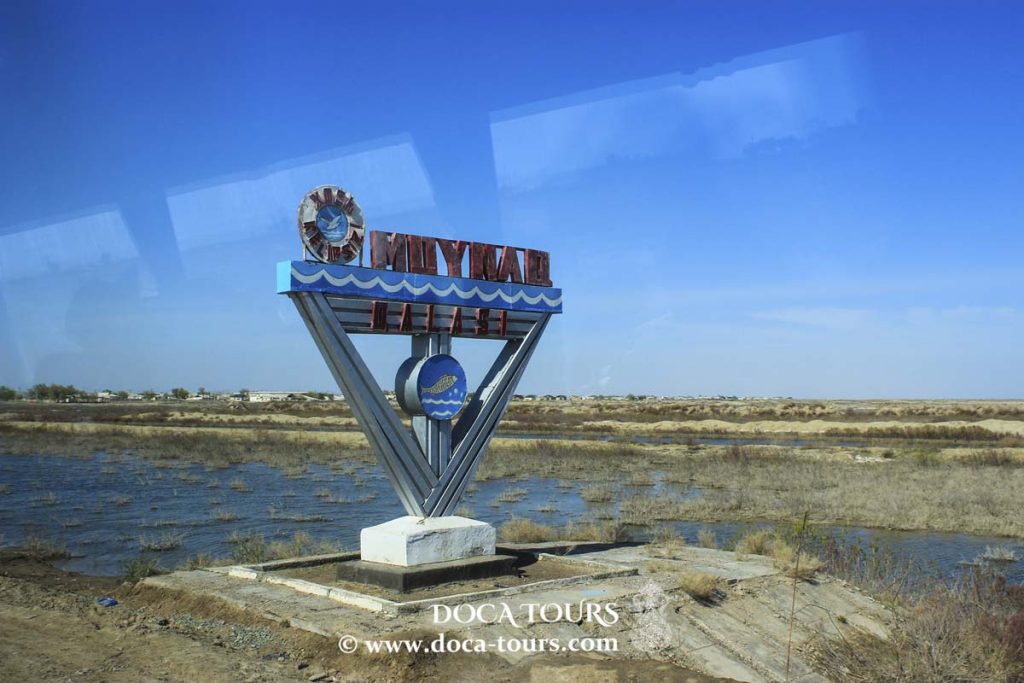
On November 15, 1933, a resolution by the All-Russian Central Executive Committee granted the village of Muynak the status of a workers' settlement. At the time, Muynak was part of the Kara-Kalpak Autonomous Soviet Socialist Republic, which itself belonged to the Russian Soviet Federative Socialist Republic (RSFSR).
In the 1950s, Muynak was designated as an urban-type settlement, and in 1963, it achieved the status of a city. It was one of only two cities located on the shores of the Aral Sea, alongside Aralsk.
During the 1960s, irrigation canals were constructed from the Amu Darya River to support cotton farming. This diversion of water significantly reduced the inflow to the Aral Sea, causing its rapid shrinkage.
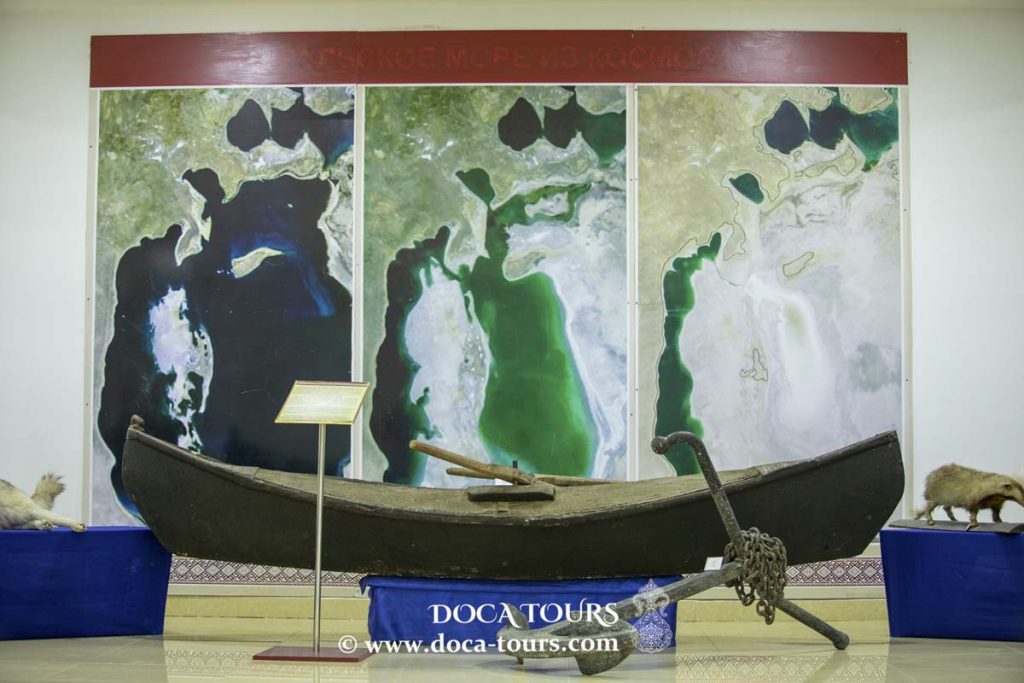
Until the mid-1980s, Muynak was a flourishing fishing port located on the southern coast of the Aral Sea. The city was home to the Muynak Fish Cannery, a key enterprise in the region and one of the largest fish processing plants in the former Soviet Union.
In the 1980s, to keep the cannery operational, frozen fish was transported to Muynak from Russia. However, by the early 1990s, the factory had shut down, leading to widespread unemployment. Many residents began leaving the city for Nukus, Kungrad, and other nearby towns.
Dust and salt storms became more frequent, causing numerous health issues among the population, including gastrointestinal diseases, as well as skin and eye problems. The water table dropped, accelerating desertification in the region.
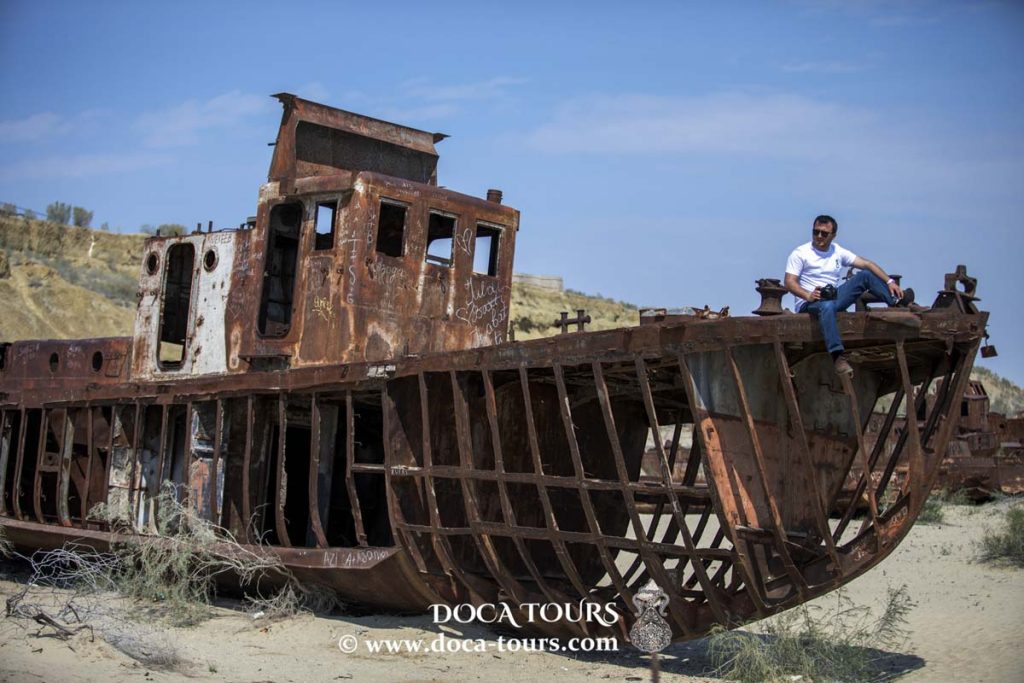
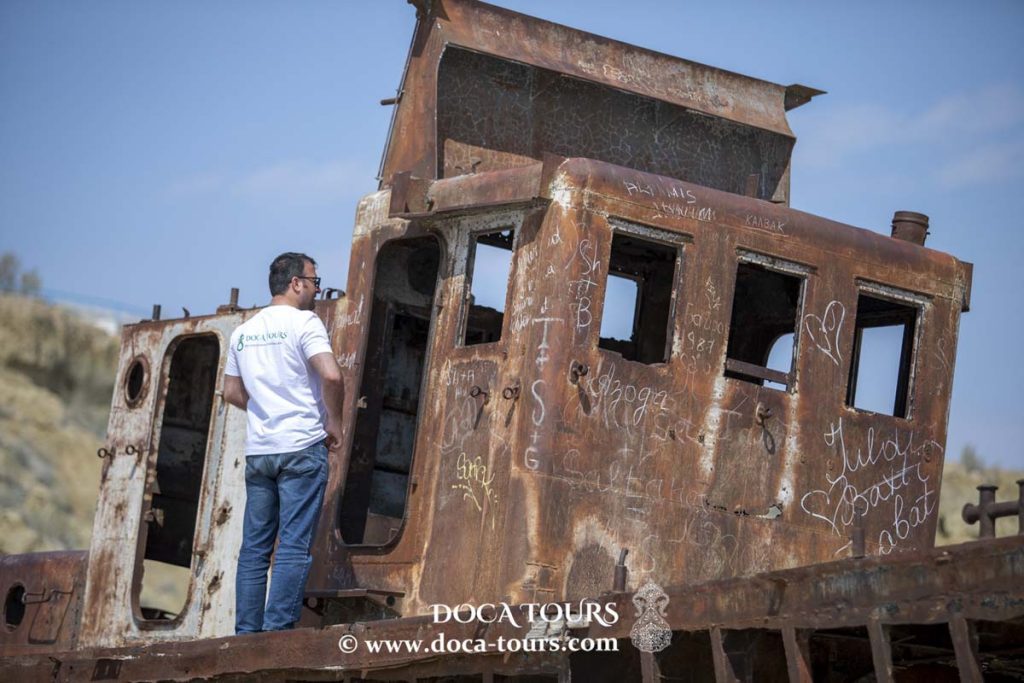
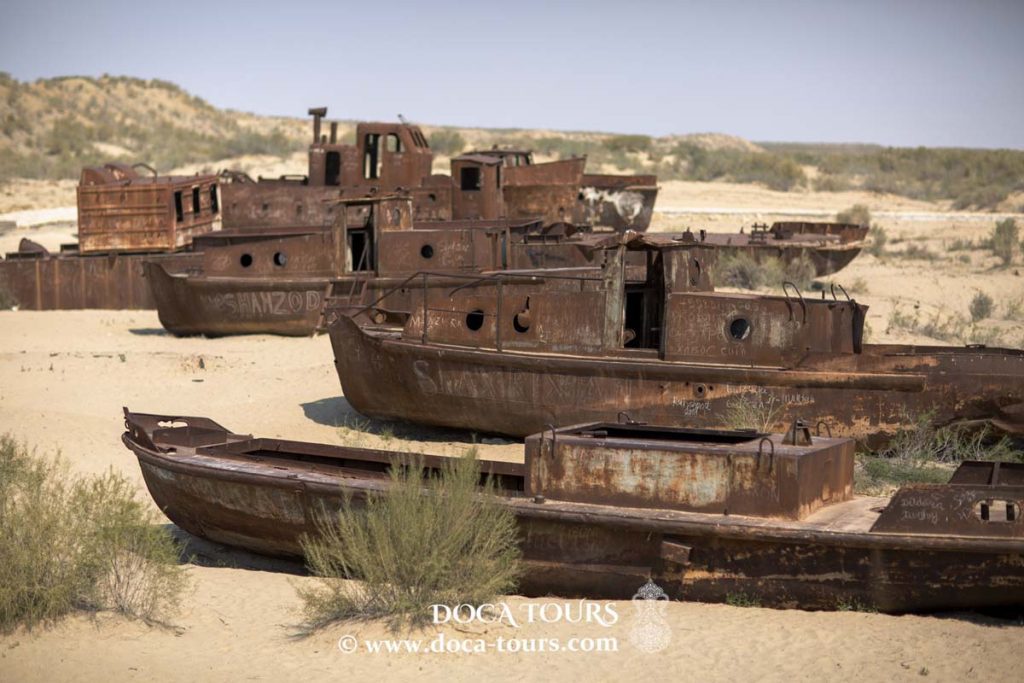
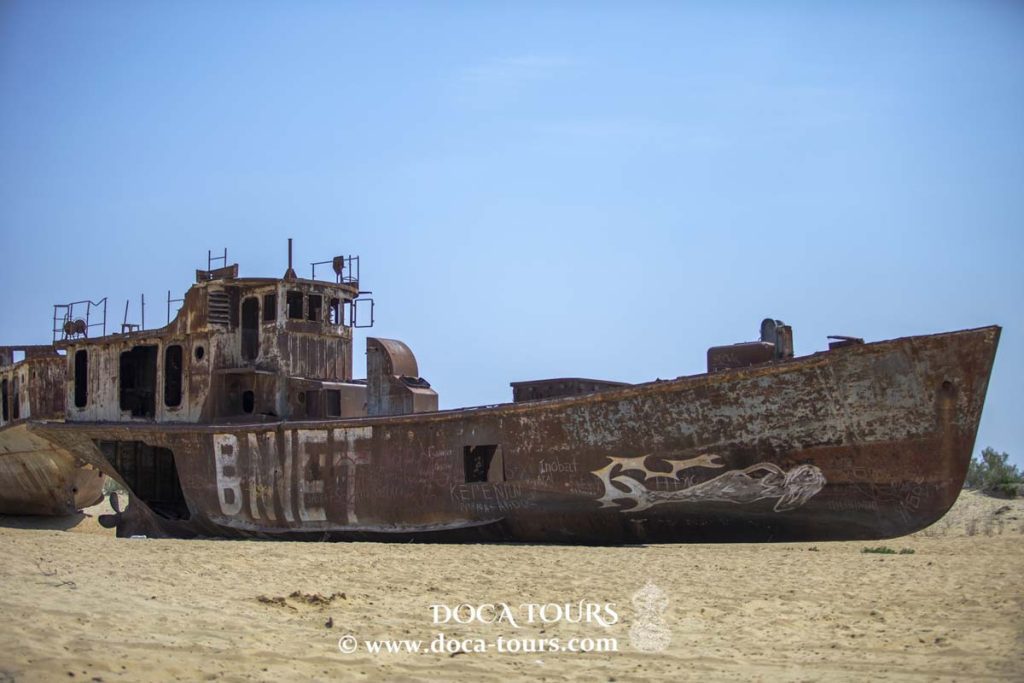
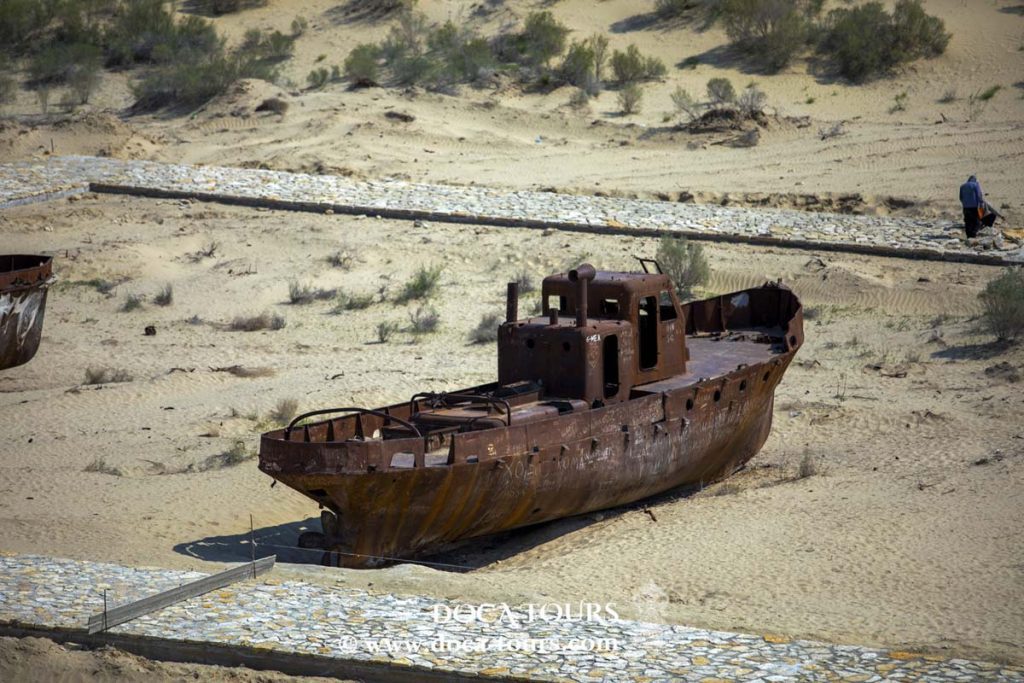
Natural springs in the area became undrinkable due to high levels of pesticides, which had been washed into the Amu Darya from cotton fields. Muynak’s once-thriving port transformed into a "ship graveyard," with rusting vessels scattered across the former seabed.
Due to the Aral Sea’s retreat, Muynak is now about 100 kilometers away from the shoreline. What was once the seabed, admired for its sandy beaches, rich fisheries, and vast expanse, has now turned into a desert, referred to by locals as the Aralkum—a counterpart to the Kyzylkum Desert. Once navigated by seafaring ships, the area is now littered with abandoned, rusting vessels stranded in Muynak's former harbor.
As of 2011, Muynak lies approximately 100 kilometers from the western (deep-water) portion of the southern Aral Sea and 180 kilometers from its shallow eastern portion. The eastern part of the sea, with its relatively shallow waters, has receded much faster. In the mid-1990s, the eastern shore was about 45 kilometers from the city, but by the early 2000s, it had withdrawn to a distance of 100 kilometers.
In 2008, the company Petro Alliance conducted exploratory drilling for oil and gas on the former seabed of the Aral Sea, yielding positive results. The gas discovered in the region is of high quality, with minimal hydrogen sulfide content.
On January 20–21, 2017, construction began on a water supply system connecting Kungrad to Muynak. The project, costing 26.6 billion Uzbek soms and spanning 101 kilometers, was completed within five months. It now provides clean drinking water to over 25,000 residents. An extension of the water pipeline from Muynak to Uchsay, an additional 1.51 kilometers, is also underway.
Since the mid-2000s, Muynak has gained popularity as a destination for tourists from around the world. The influx of visitors has significantly increased since 2016.
Today, Muynak serves as a crucial stop for tourists and researchers planning to explore the desolate regions of the former Aral Sea. The city also acts as a gateway for off-road expeditions to the northern and northwestern shores of the receded sea.
Since 2018, Moynaq has hosted the Stihia Festival, the largest electronic music festival in Central Asia. Described by Vice Media as "a techno rave in an abandoned ship graveyard," the festival has drawn thousands of attendees, including top DJs from Uzbekistan and Europe. Despite challenging weather conditions like sandstorms, the 2022 festival saw considerable success.
The word Stihia, meaning "an unstoppable force of nature," symbolizes both the ecological devastation of the Aral Sea and the unifying power of music. Alongside the festival, the Stihia N+1 initiative features discussions on topics related to arts, science, and technology, fostering collaboration among musicians, artists, scientists, engineers, and entrepreneurs.

Moynaq also features an Aral Sea Memorial at the northern end of the city, surrounded by the rusting remains of fishing vessels. This "ship graveyard" serves as a stark reminder of the catastrophic economic consequences of the Aral Sea’s disappearance. Additionally, the Moynaq Museum houses a collection of paintings, photographs, and artifacts that highlight the town's former prosperity, showcasing industries such as fishing, fur farming, and rush mat production.
Despite the ecological damage, wildlife still thrives in the area. The critically endangered saiga antelope can be spotted in the wild, although they face significant threats from hunting and poaching, as their translucent horns are highly sought after in traditional Chinese medicine.
Moynaq also lies along an important bird migration corridor for species traveling to and from Siberia. The brackish wetlands near the city, including the Sudochye Wetland—a globally recognized Important Bird Area (IBA)—are ideal for birdwatching, with around 230 bird species found in the region. Of these, 24 species are classified as rare or vulnerable, including the critically endangered slender-billed curlew.
Moynaq had a population of 13,000 in 1991, which increased to 18,196 by 2012. However, by January 1, 2018, the population declined to 13,500. Unlike most other cities in Uzbekistan, Moynaq has experienced a consistent trend of population decline. The majority of residents are Karakalpaks, with a significant presence of Uzbeks and Kazakhs. Smaller minority groups include Tatars, Turkmens, and others.
Both Uzbek and Karakalpak are official languages in Moynaq, as is the case throughout Karakalpakstan. Russian serves as a common language for interethnic communication. Additionally, English has become widely spoken among those working in the tourism and service industries, reflecting the city's increasing popularity among international visitors.
Moynaq no longer has functioning water transportation, and its port is inactive. To the southeast of the city, a small airfield operates irregularly. Public transportation is limited to infrequent Daewoo Damas shuttle buses, along with private taxis and cab services using passenger cars.
The annual "Stihia" ("Element") festival, a non-commercial event that combines electronic music, art, and science, is held in Moynaq. The festival’s mission is to bring attention to the ecological disaster of the Aral Sea and support the region's recovery. It unites musicians, DJs, producers, artists, and scientists in an effort to create a unique cultural and environmental attraction in this extraordinary location.

Since the drying up of the sea, the Stihia Festival has become the most prominent event in Moynaq. The festival takes place over two days at the iconic "ship graveyard" and has gained widespread popularity among electronic music enthusiasts. A highlight of the festival is the ceremonial burning of a 10-meter-tall installation spelling out the word "SEA," symbolizing reflection and renewal.