

























Day of Remembrance and Honors in Uzbekistan: History, Memorial Site, and National Traditions
Observed annually on May 9th, the Day of Remembrance and Honors (Uzbek: Xotira va qadrlash kuni) is one of
the most significant and revered national holidays in Uzbekistan. Formerly known as Victory Day, the
holiday was officially renamed in 1999 under President Islam Karimov to equally commemorate the fallen ("Remembrance")
and honor the surviving veterans ("Honors"). The date recalls the enormous sacrifices made by the Uzbek people during
World War II (the Great Patriotic War) honors the defenders of freedom and peace. During World War II, Uzbekistan made
a monumental contribution to the Allied victory. While hundreds of thousands of Uzbek men fought at the front—with an
estimated 1.5 to nearly 2 million citizens mobilized in total—over 450,000 to more than 538,000 soldiers and civilians lost their lives.
Furthermore, the republic served as a vital sanctuary, taking in hundreds of thousands of evacuees, refugees, and war orphans from the
combat zones of the Soviet Union and integrating them into local families.
The Square of Remembrance and the Monument of the Mourning Mother
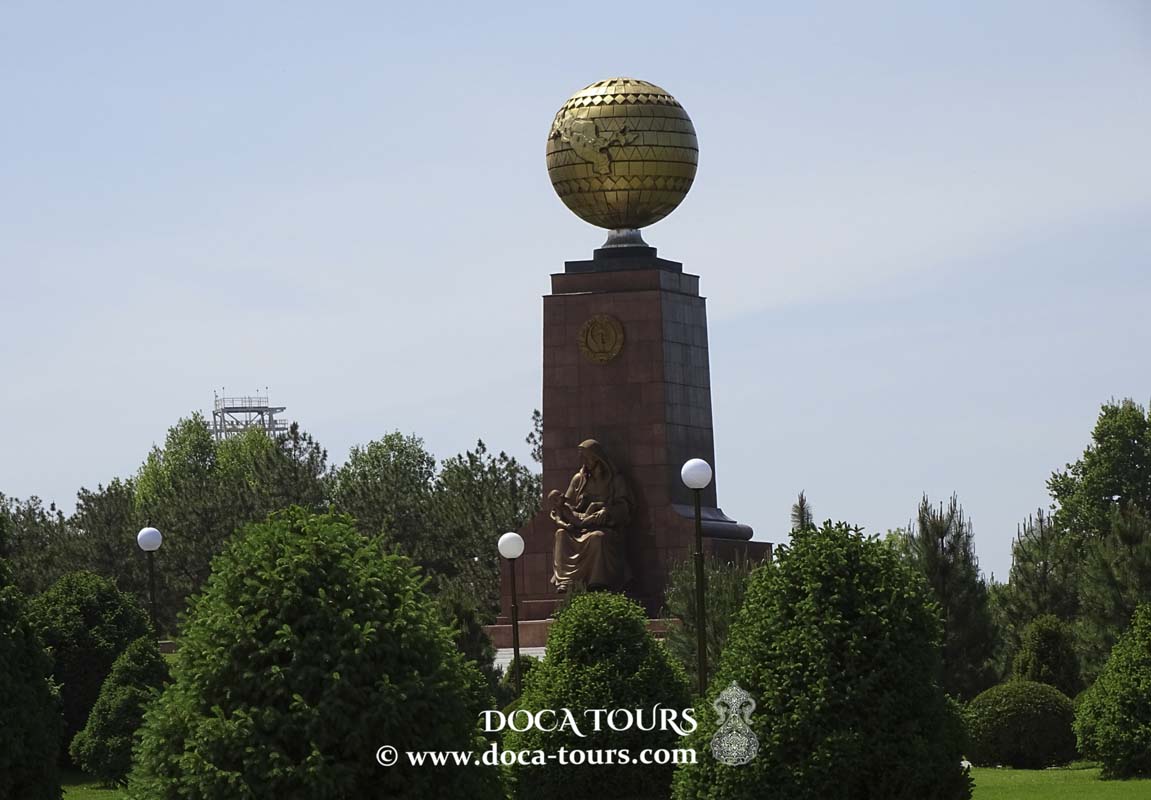
The center of nationwide commemorations is located in Tashkent at the Square of Remembrance (Xotira maydoni),
which directly adjoins Independence Square (Mustaqillik Maydoni).
Establishment: The memorial site was inaugurated on May 9, 1999, replacing the Soviet monument to the
Unknown Soldier to establish an independent national commemoration.
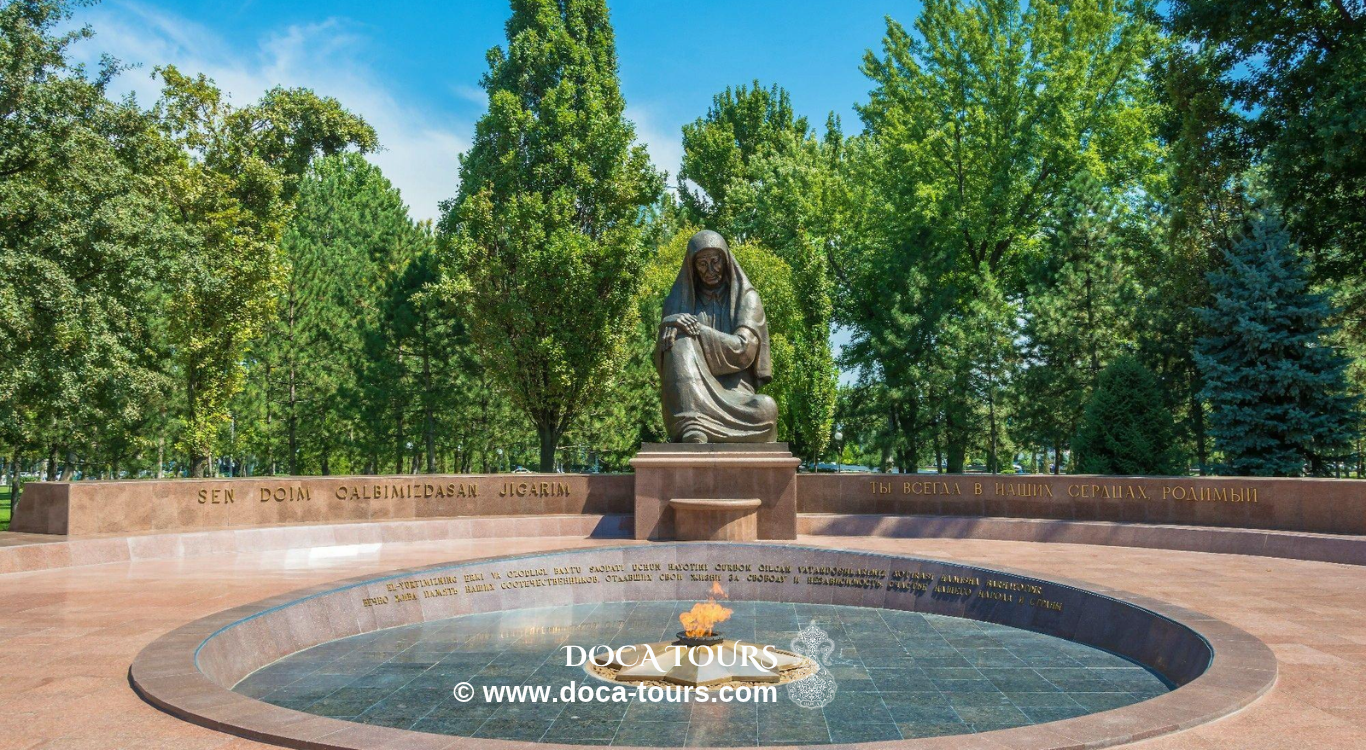
The Eternal Flame: An eternal flame burns day and night on the square within a water-surrounded niche
as a symbol of undying respect and eternal remembrance.
The Monument of the Mourning Mother: Created by sculptor Ilkhom Jabbarov, the bronze statue depicts a grieving
mother expressing profound sorrow and enduring hope. It stands symbolically for all mothers and families who lost loved ones in the war.
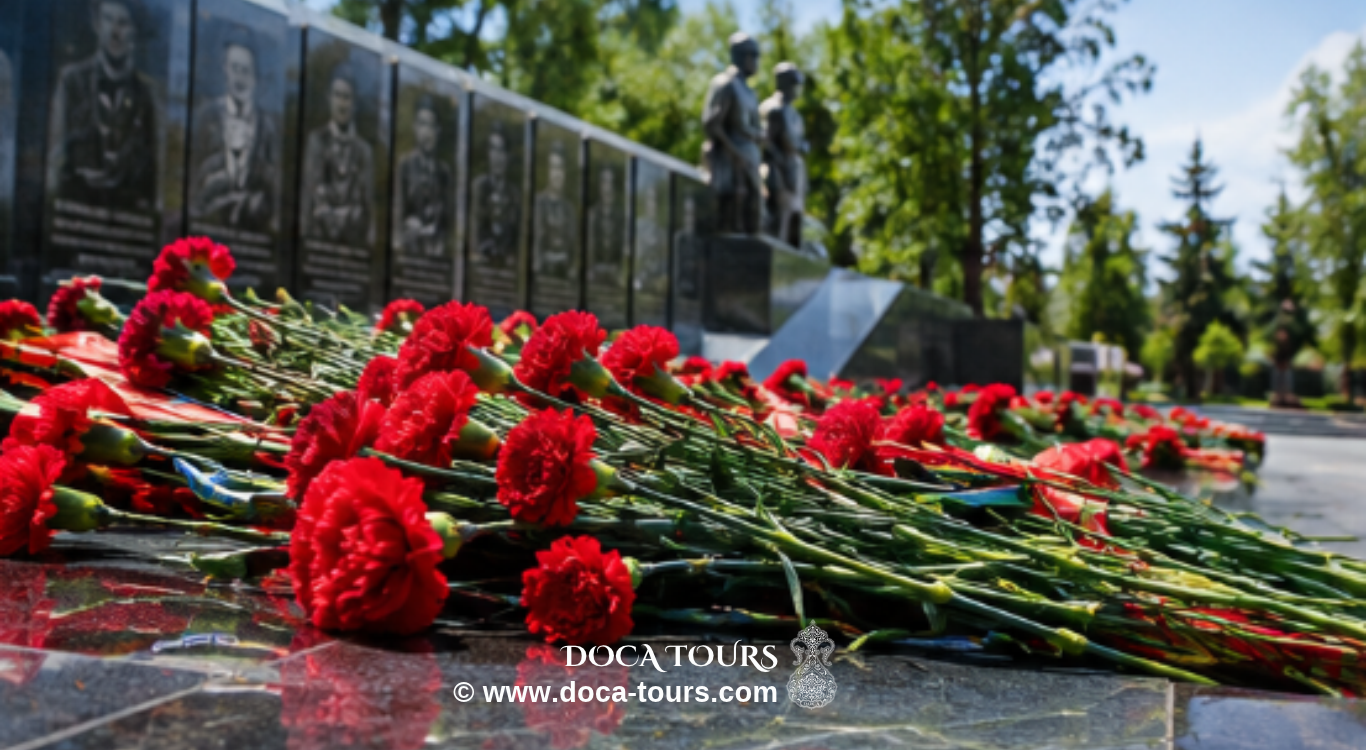
The Alley of Fame: Extending alongside the monument are 14 gallery sections—symbolizing the regions of
Uzbekistan—containing memorial books in which the names of fallen soldiers are engraved in gold letters.
National Customs and Official Commemorations
On May 9th, the entire nation comes together to honor veterans, visit memorials, and remember the victims.
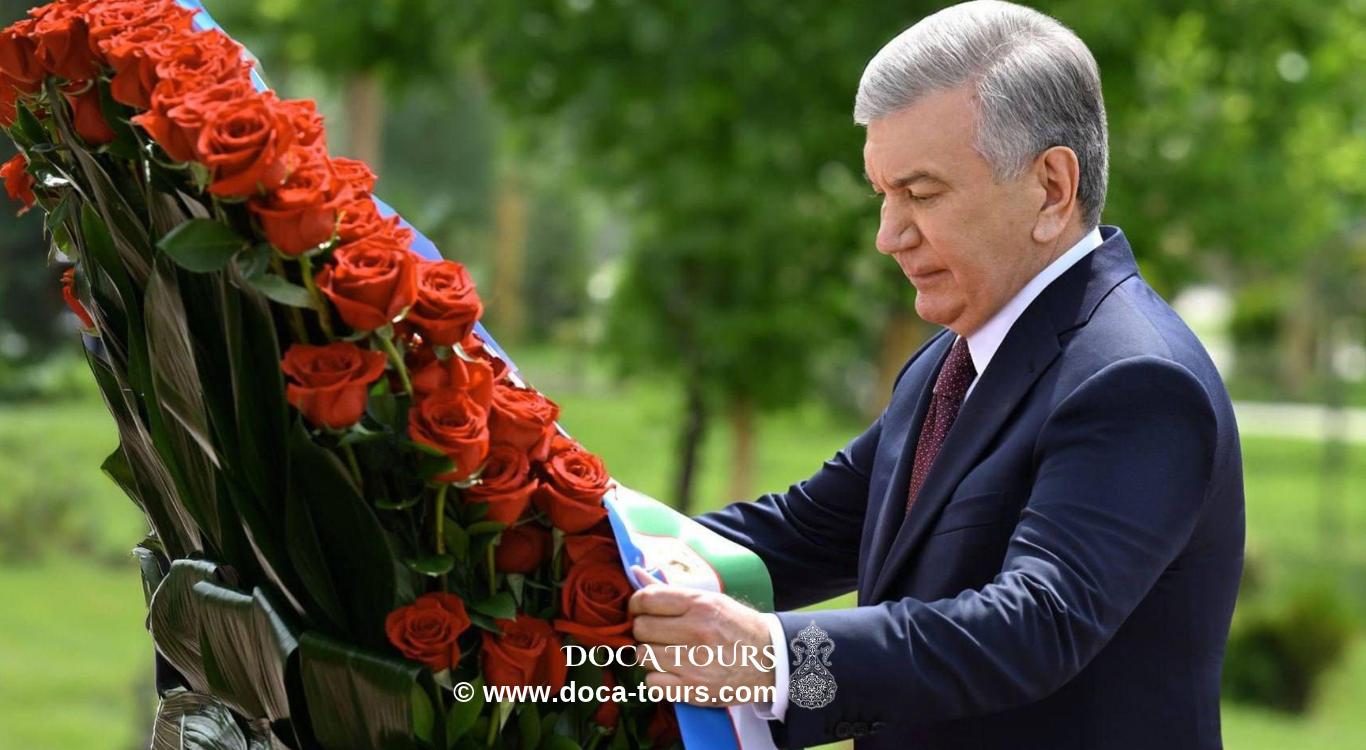
Laying of Flowers: Citizens, government representatives, and diplomatic missions gather at the Square of Remembrance,
the Victory Park (Gʻalaba bogʻi), and local monuments in all cities to lay red carnations and observe a moment of silence.
Honoring Veterans: Society places great importance on visiting and supporting surviving war veterans, homefront workers,
and military personnel, expressing respect through gift packages and personal gratitude.
Involvement of Youth: Students and young people actively participate in commemorative events, wear ribbons in the
colors of the national flag, and engage with family history.
Evening Festivities: The celebrations traditionally conclude with concerts and a grand evening fireworks display in
central squares, such as Friendship of Peoples Square in Tashkent.
Frequently Asked Questions (FAQ)
When is the Day of Remembrance and Honors celebrated in Uzbekistan? It is observed every year on May 9th, corresponding to
the historical end of the war in the Soviet Union.
What is the significance of the Monument of the Mourning Mother? The bronze statue on the Square of Remembrance in
Tashkent symbolizes the collective grief and inner strength of all mothers and families who lost loved ones in World War II.
What contribution did Uzbekistan make in World War II? Uzbekistan sent nearly 2 million people to the front (over 450,000 perished),
supplied the front lines with goods through evacuated industrial facilities and provided a new home to hundreds of
thousands of refugees and war orphans.
Planning your trip to Uzbekistan? DOCA TOURS organizes customized historical itineraries, cultural programs,
and guided visits to significant memorial sites in Tashkent, Samarkand, and throughout Uzbekistan.