
























Poet Alisher Navoi: The Literary Genius and Statesman of the Timurids
The Timurid era is considered the golden age of culture, architecture, and science in Central Asia.
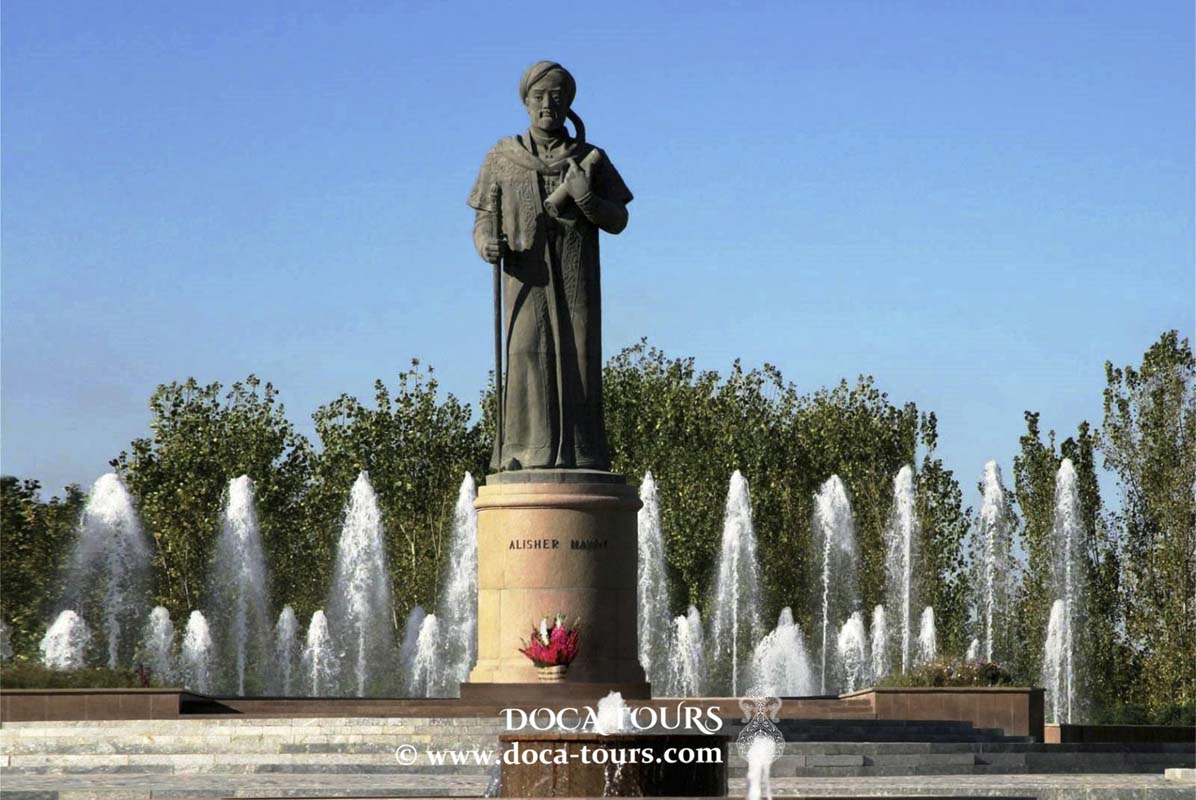
At the center of this glorious era stands a figure of overriding historical importance: the poet Alisher Navoi.
As a brilliant poet, experienced statesman, and generous patron, he created a literary foundation that continues
to shape the cultural consciousness of the entire region today. When you travel through the historic metropolises of
the Silk Road with DOCA TOURS, you encounter the traces of his humanistic work at every turn.
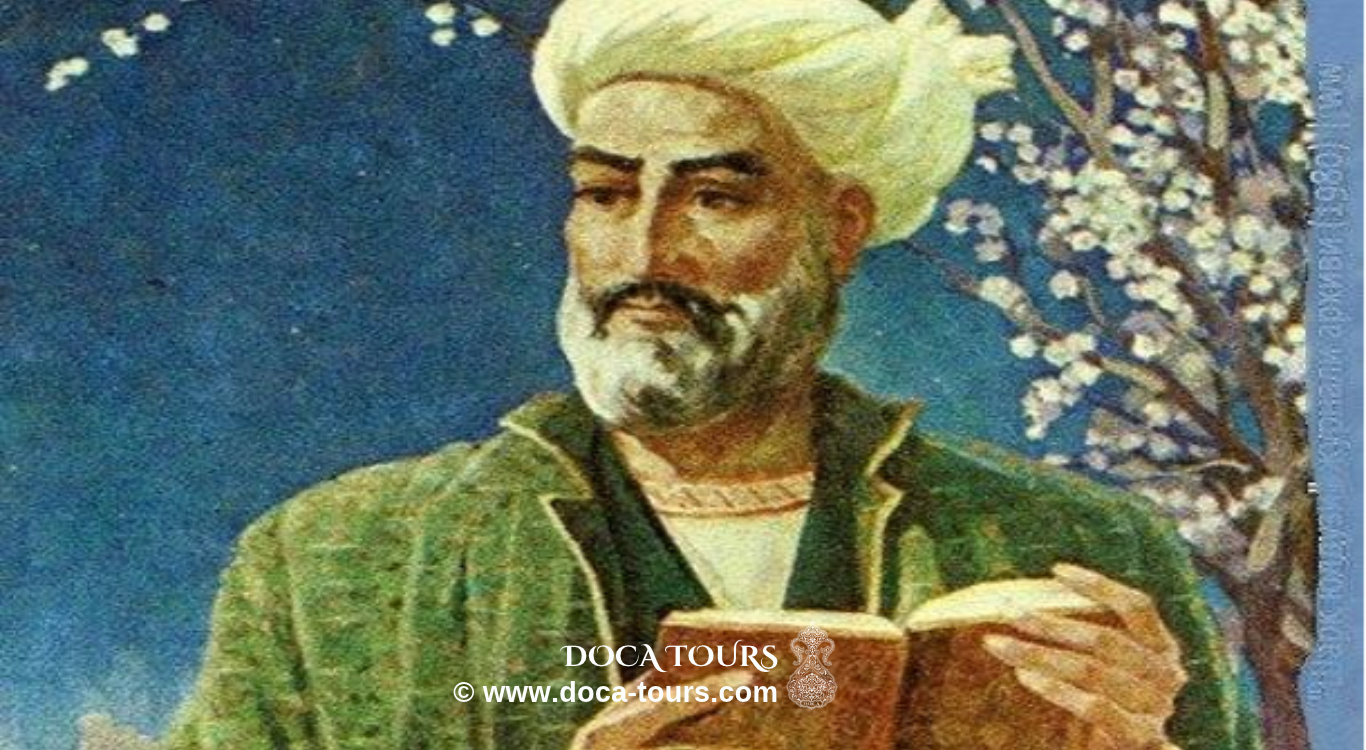
Early Years and the Path to Court
Nizamuddin Mir Alisher was born on February 9, 1441, in Herat.
His family maintained close ties to the Timurid ruling house, and his father served as a high-ranking official at court.
Even in his earliest childhood, the boy displayed an insatiable interest in education: reports note that by the age of seven he
could completely memorize the monumental epic works of Fariduddin Attar and quickly earned the respect of scholarly circles in his hometown.
In his youth, a lifelong friendship connected him with Husayn Bayqara, the future ruler of Khorasan.
Due to political turmoil and internal power struggles among the Timurid princes, Alisher Navoi spent part of his youth in exile and study stays,
including in Mashhad and Samarkand, where he deepened his knowledge of mathematics, philosophy, and languages.
When Husayn Bayqara ascended the throne in Herat in 1469, he summoned his loyal companion back to court, initiating a new era for the country's culture.
Political Work and Cultural Flourishing
At the court of Herat, the poet Alisher Navoi rapidly rose to the highest state offices—initially as keeper of
the seal and later as prime minister (Amir Kabir). Unlike many other rulers of his time, however, he did not use his
political power for personal enrichment but rather for the welfare of the population and the advancement of science and arts.
During his tenure, economic and social life blossomed, and no aggressive wars of conquest were waged.
He invested his private wealth in the establishment of hundreds of charitable institutions:
Education and Spirituality: He financed the construction of numerous madrasas, universities, and Sufi monasteries (khanqas).
Infrastructure for Travelers: Dozens of caravanserais, bridges, bathhouses, and irrigation systems were established under his direct patronage.
Healthcare: He had specialized hospitals and medical facilities built to help those in need. An academic and artistic elite gathered around him.
Painters like Behzad, historians like Khondamir, and fellow poets like the great Sufi master Abdurrahman Jami turned Herat into a pulsating center of the Renaissance in the Orient.
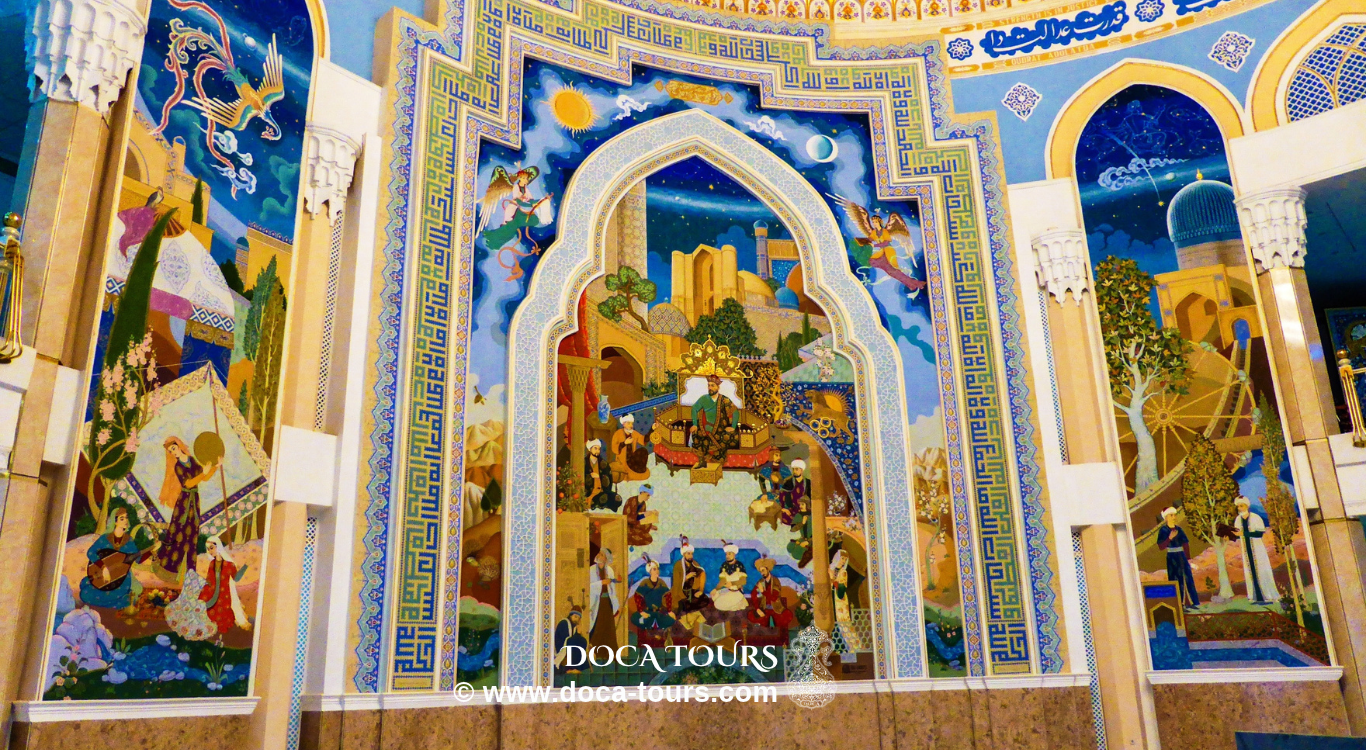
The Literary Legacy: The Father of Uzbek Literature
His most significant historical achievement was the literary elevation of the Turkic language (known historically as Chagatai).
At the time, Persian was considered almost exclusively the language of poetry among educated circles. With his works, Alisher Navoi
proved that the Turkic language possessed an equally rich expressive power, musicality, and depth. Using the pen name Navoi (the Melodious),
he composed countless ghazals in Turkic while publishing his Persian-language poems under the name Foniy (the Transient).
His undisputed masterpiece is the Khamsa (Five Epics), a collection of five major poetic works comprising over 50,000 verses that
address themes such as philosophy, human morality, love, and righteous governance. With his philological work, Muhakamat al-lughatayn
("Trial of the Two Languages"), he also provided brilliant scientific proof of the lexical and grammatical superiority of the Turkic language.
Frequently Asked Questions (FAQ) about the Poet Alisher Navoi
Who was the poet Alisher Navoi? He was an outstanding 15th-century poet, philosopher,
and statesman regarded as the founder of classical Turkic (Uzbek) literature.
What is his most famous work? His primary work is the Khamsa (Five Epics), a monumental
collection of five epic poems dealing with universal human and philosophical values.
What role did he play in politics? As prime minister at the court of Herat, he advocated for peace, social justice,
and the massive promotion of science, architecture, and art.
Planning your private tour? DOCA TOURS organizes fascinating cultural journeys along the historic Silk Road for you.
Contact us today to plan your customized tour!