




























Al-Biruni: The Historical Genius of Central Asia
Science needed centuries and countless conflicts to acknowledge the irrefutable fact that the Earth is a sphere and revolves around the Sun.
While European researchers during the Renaissance were still fighting bitter resistance, the polymath Al-Biruni
had solved these fundamental riddles 500 years earlier through pure mathematics. For travelers setting out today toward
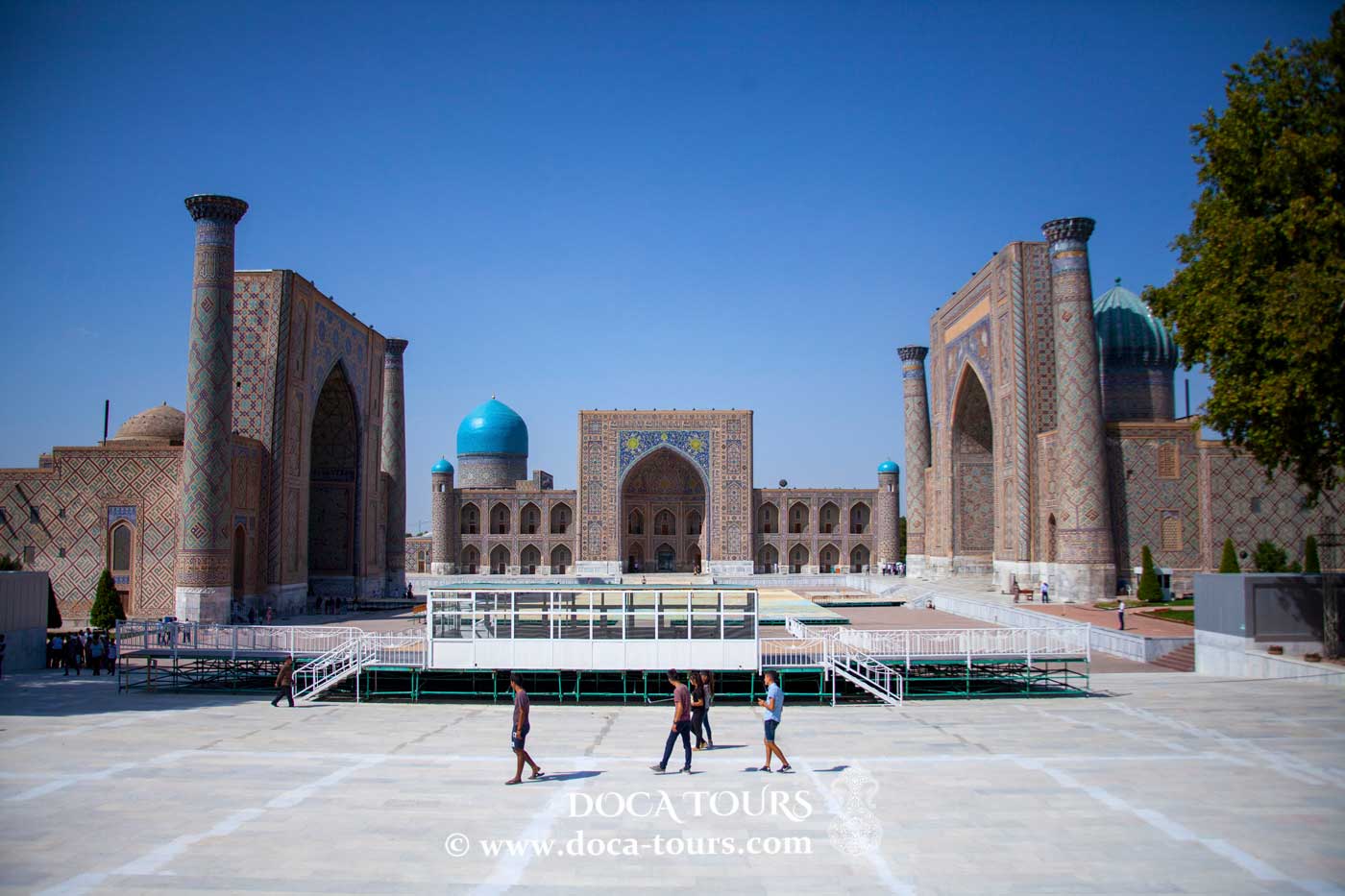
the historic oasis cities of Central Asia, the intellectual legacy of this man is omnipresent.
Discover the fascinating history of a thinker whom the philosopher Friedrich Nietzsche once called the "ideal human" with DOCA TOURS.
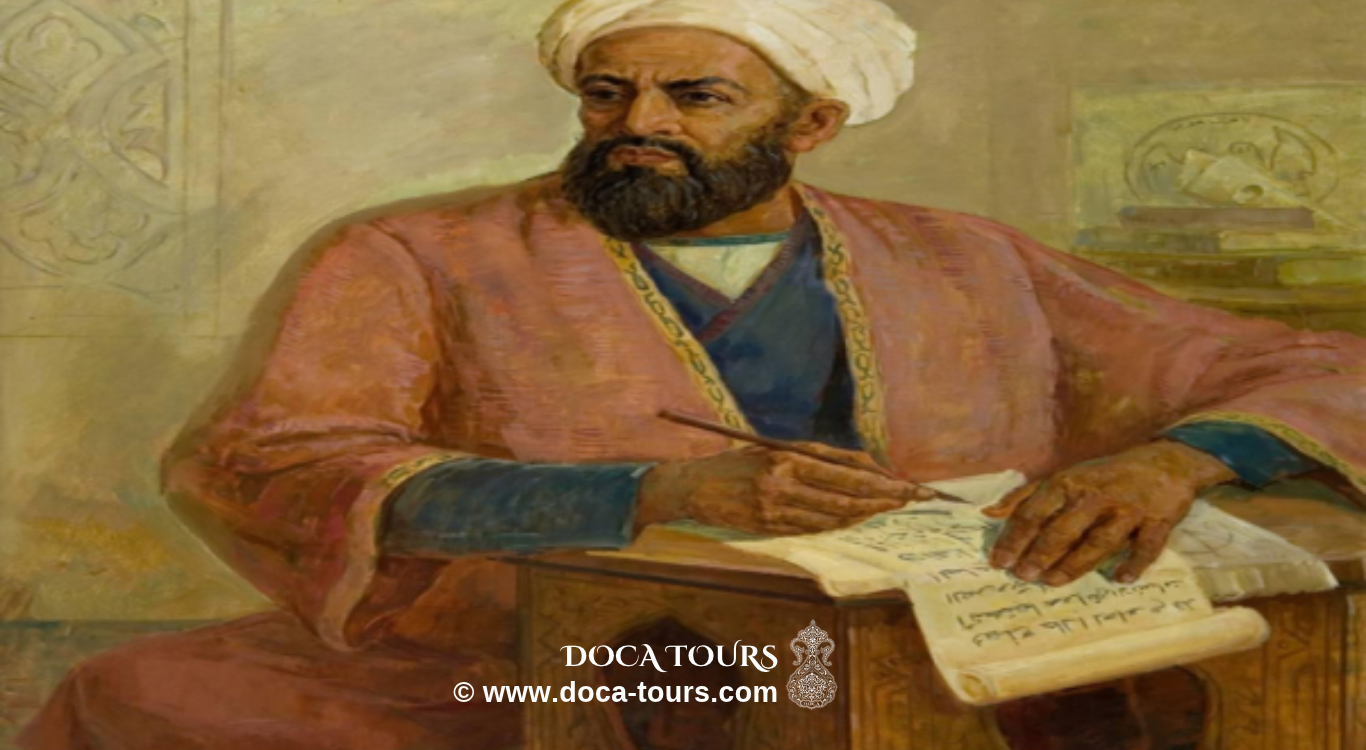
The Early Years of the Polymath Al-Biruni in Khorezm
His full name was Abu Rayhan Muhammad ibn Ahmad al-Biruni, born on September 4, 973, in the then-capital of the historical region of Khorezm.
His world-famous moniker derives from the fact that he was born in the suburbs of the city—the word roughly translates to "the one from outside."
Little is known about his early childhood, except that he grew up an orphan. Raised by a wealthy foster family, a renowned mathematician
and an astronomer of the time took the young talent under his wing. He awakened his deep love for the natural sciences and taught him intensively.
The young scholar was extremely inquisitive: he questioned passing Greek merchants about foreign plant names and, over the course of his life, mastered
Persian, Hebrew, Arabic, Greek, Syriac, and Sanskrit fluently.
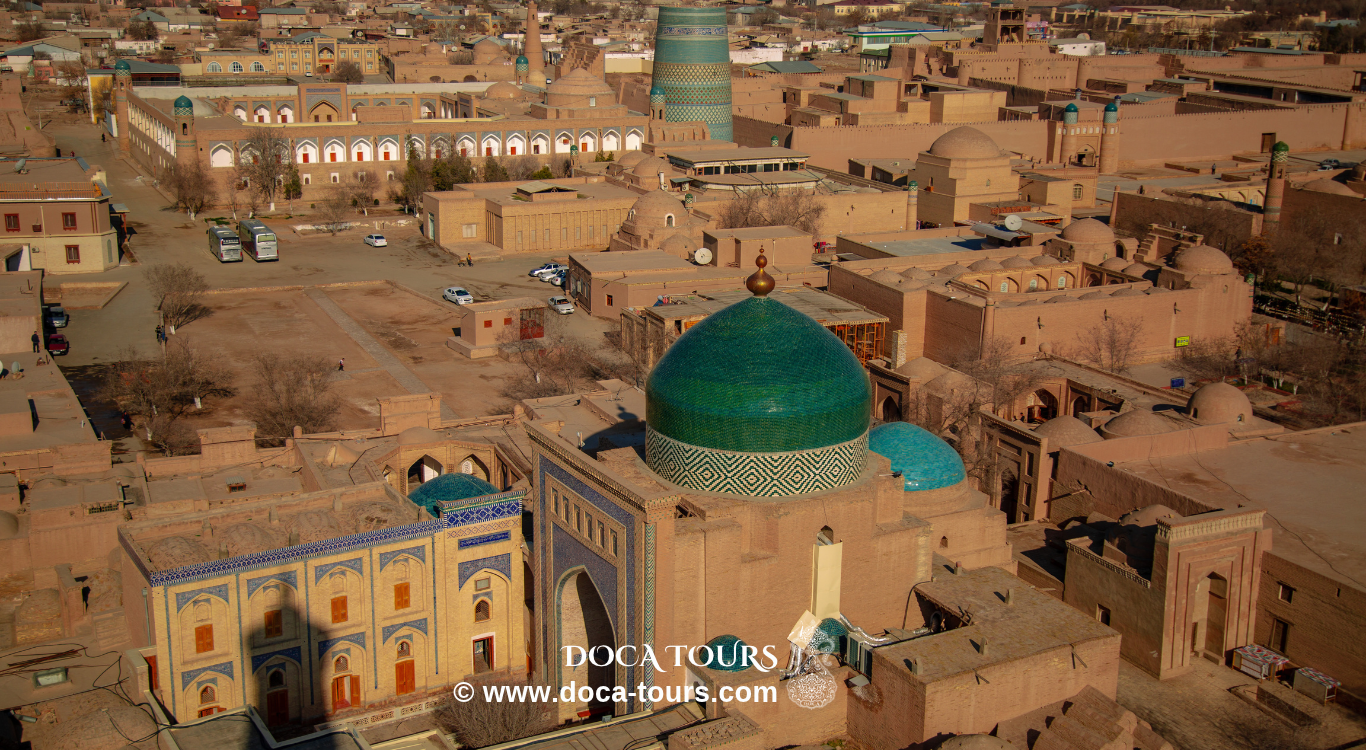
Groundbreaking Astronomical and Geographical Discoveries
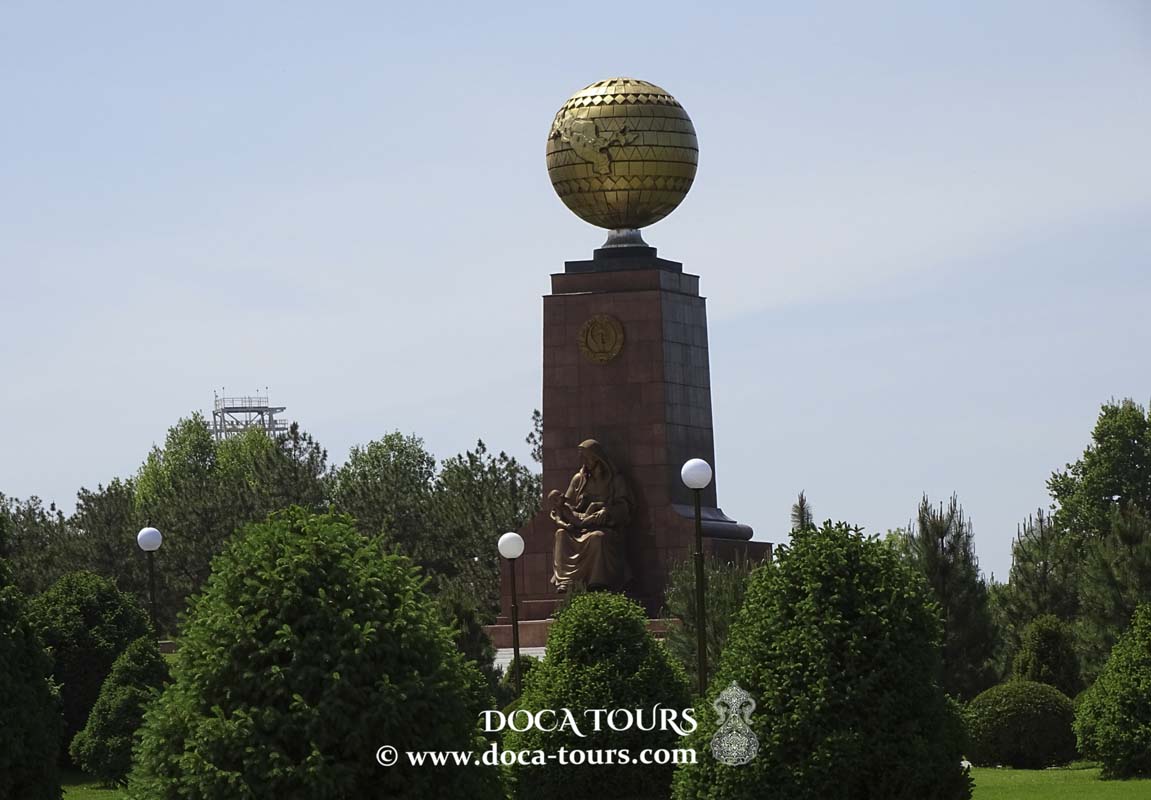
The polymath’s spirit of research knew no bounds. As early as 995, at the age of just 22, he constructed the first globe in Central Asia.
With this instrument, he determined the geographical coordinates of numerous settlements with an accuracy that was unprecedented at the time.
His scientific breakthroughs were far ahead of their time: The Measurement of the Earth: Based on the spherical shape
of the Earth, he calculated its radius to over 6,000 kilometers. His calculations of the coastlines differed only minimally from
modern satellite measurements—such precision was not achieved in Europe until the 16th century.
The Universe: He refuted the old geocentric theory and hypothesized that the Earth orbits the Sun.
Furthermore, he calculated the exact distance to the Moon and compiled a precise catalog of 1,029 stars.
Physics and Instruments: He was the first to recognize that evening twilight is caused by hidden dust particles in the atmosphere.
He also perfected astronomical instruments such as the astrolabe and constructed a gigantic, stationary quadrant with a radius of 7.5 meters for planetary observation.
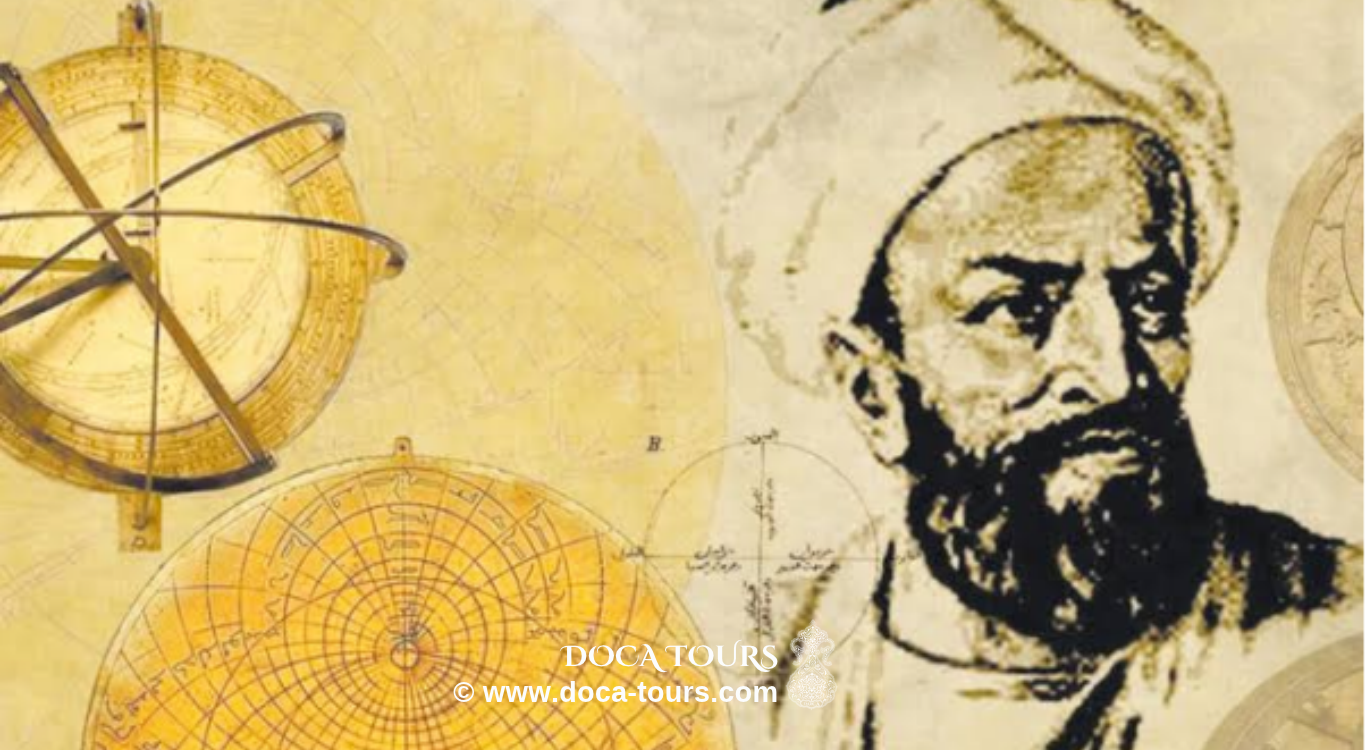
The Heyday at the Academy of the Wise
In 1004, he returned to his home region of Khorezm and settled in the new capital, Urgench.
The local ruler established a special scientific academy there, gathering over forty of the brightest minds of the contemporary world.
The polymath Al-Biruni led this venerable institution, working side-by-side with historical legends such as Avicenna (one of history's most famous physicians)
and the founder of modern algebra. Fascinating correspondences from this era have survived, in which the geniuses debated the expansion of
bodies through heat, gravity, and the refraction of light.
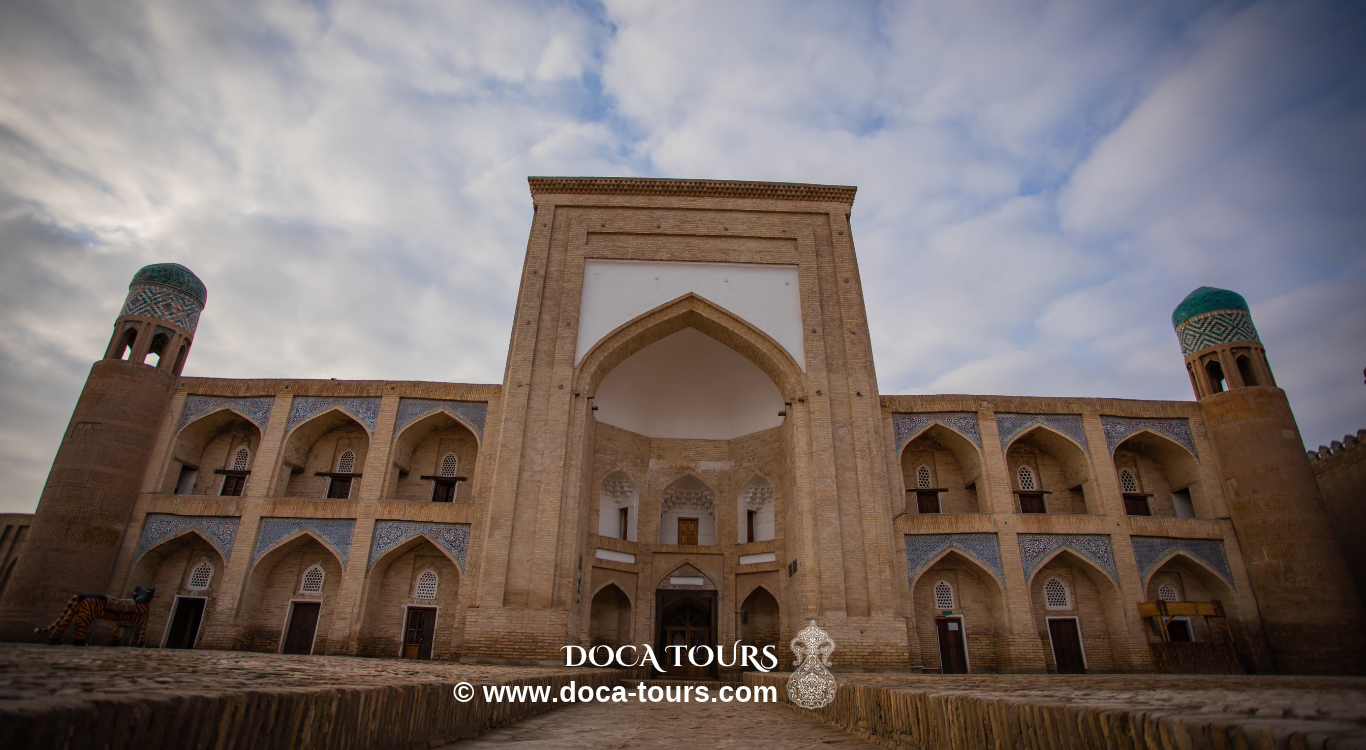
Imprisonment and the Monumental Work on India
Peaceful research came to an abrupt end in 1017. The powerful Sultan of Ghazni conquered the region of Khorezm,
devastated the city, and dragged away the academy's brightest scholars. As part of the royal entourage,
the scholar had to accompany the sultan on his military campaigns to India. Yet he made masterly use of these years in exile:
he learned the complex language Sanskrit and deeply immersed himself in Indian culture. In 1030, he completed his famous book on India.
In it, he described the lifestyle, religion, geography, and science of the subcontinent in such detail and with such objectivity as no one had before him,
brilliantly comparing Indian thought patterns with Greek philosophers like Aristotle and Plato.
The Late Years and an Immortal Legacy
Despite his enormous knowledge, the scientist always remained modest.
When offered great wealth, he declined, arguing that his true fortune was the insatiable thirst for knowledge.
Over the course of his life, he authored more than 150 fundamental manuscripts on mathematics, astronomy, geography,
mineralogy, history, and ethnography. Unfortunately, only about 30 of these works have survived the storms of time.
In his later years, he lost his eyesight, but his mind remained tirelessly active until his final breaths in 1048. Today,
he is indisputably considered one of the greatest universal geniuses in human history.
Frequently Asked Questions (FAQ) about the Polymath Al-Biruni
Who was the polymath Al-Biruni? He was one of the greatest scientists of historical Central Asia, born in 973 in the Khorezm region,
who made groundbreaking discoveries in astronomy, geography, mathematics, and physics.
What was his most important astronomical finding? He championed the revolutionary view of the time that the Earth revolves around the Sun.
He also calculated the radius of the Earth with near-exact precision and created the region's first globe 500 years before European researchers.
What is the significance of his book on India? During his exile, he authored a monumental work detailing Indian culture, philosophy,
and science, uniquely comparing them with ancient Greek and Islamic modes of thought.
Planning your private tour? DOCA TOURS organizes fascinating cultural tours to the ancient oasis cities of Khorezm, to Khiva, and into the centers of the Silk Road.
Contact us today to plan your customized historical journey!