

























Uzbek Metal Embossing: A Masterpiece in Copper and Brass
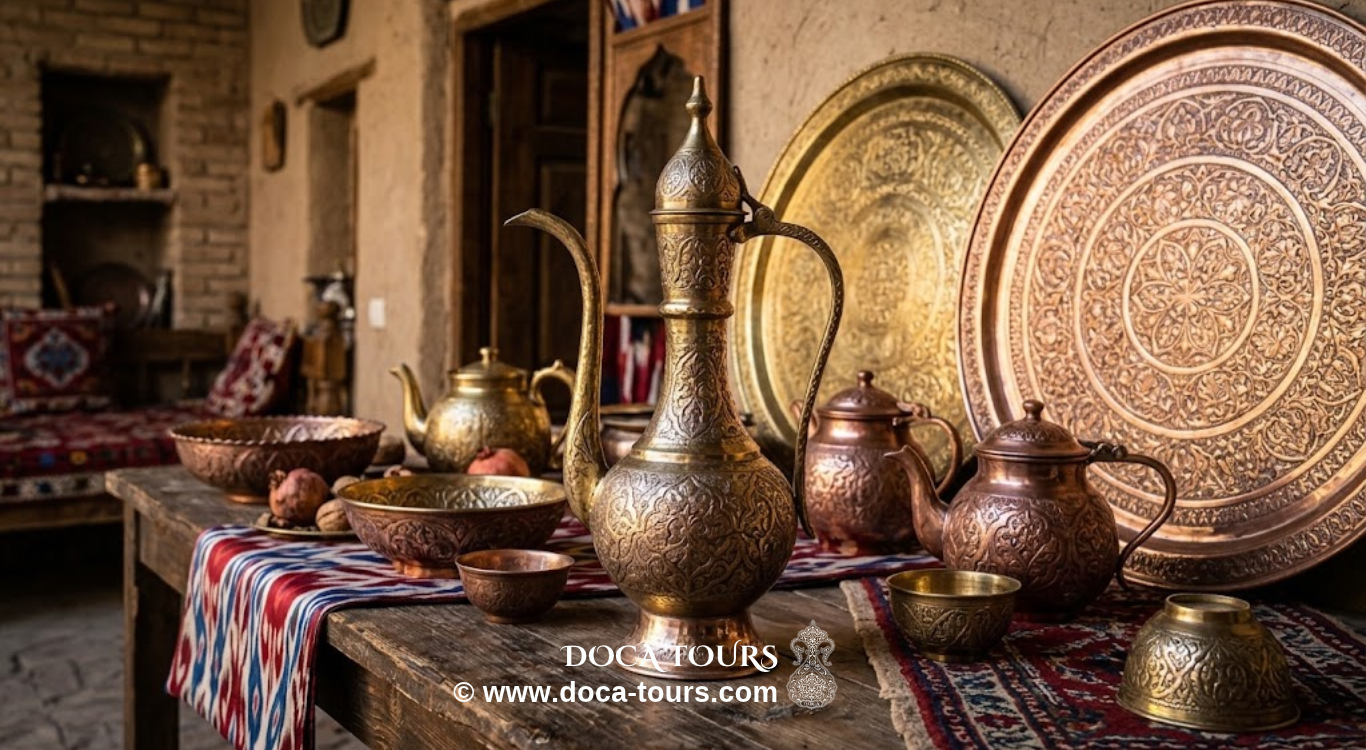
Uzbek metal embossing (also known as copper chasing or chiseling) is one of the oldest and most noble forms of applied arts in Uzbekistan.
It involves creating intricately carved ornaments to decorate handmade objects, primarily made of copper and brass.
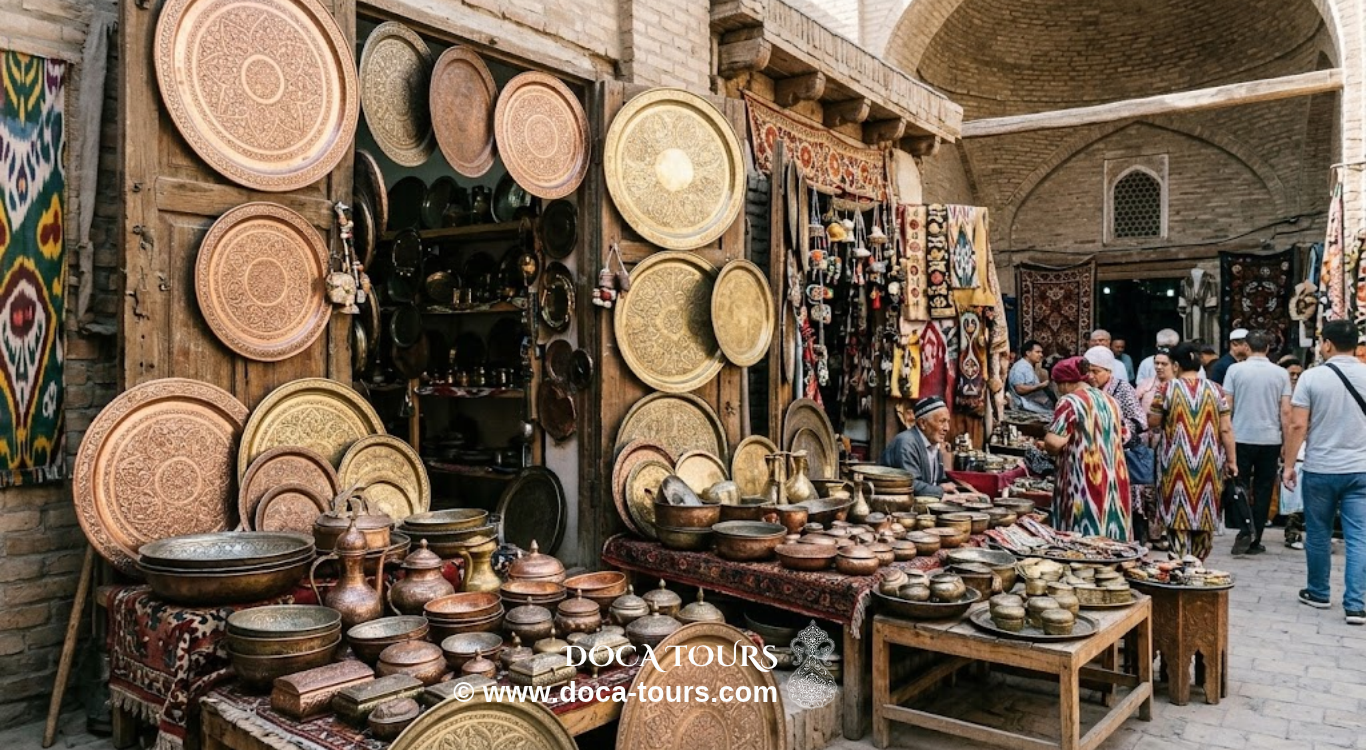
When you travel through Uzbekistan with DOCA TOURS, you will encounter beautiful objects everywhere, adorned with fine embossing and a rich variety of local folk motifs.
This craft is a highly respected profession. For example, to make a traditional pitcher (oftoba),
a master must combine the skills of a founder, blacksmith, chiseler, coppersmith, carver, and plumber all in one person.
A Millennia-Old History
The roots of this fascinating craft date back to the 4th millennium BC, with simple knives and pieces of jewelry having been uncovered during archaeological excavations.
In the 15th century, the art reached an extremely high level, and masters began producing a wide range of pitchers, plates, bowls, trays, and caskets.
Metal embossing experienced its absolute golden age in the 18th and 19th centuries.
During this period, chased copper vessels were no longer regarded merely as everyday items but as status symbols of wealth.
and luxury, proudly displayed in the homes of the nobility.
Techniques and Craftsmanship
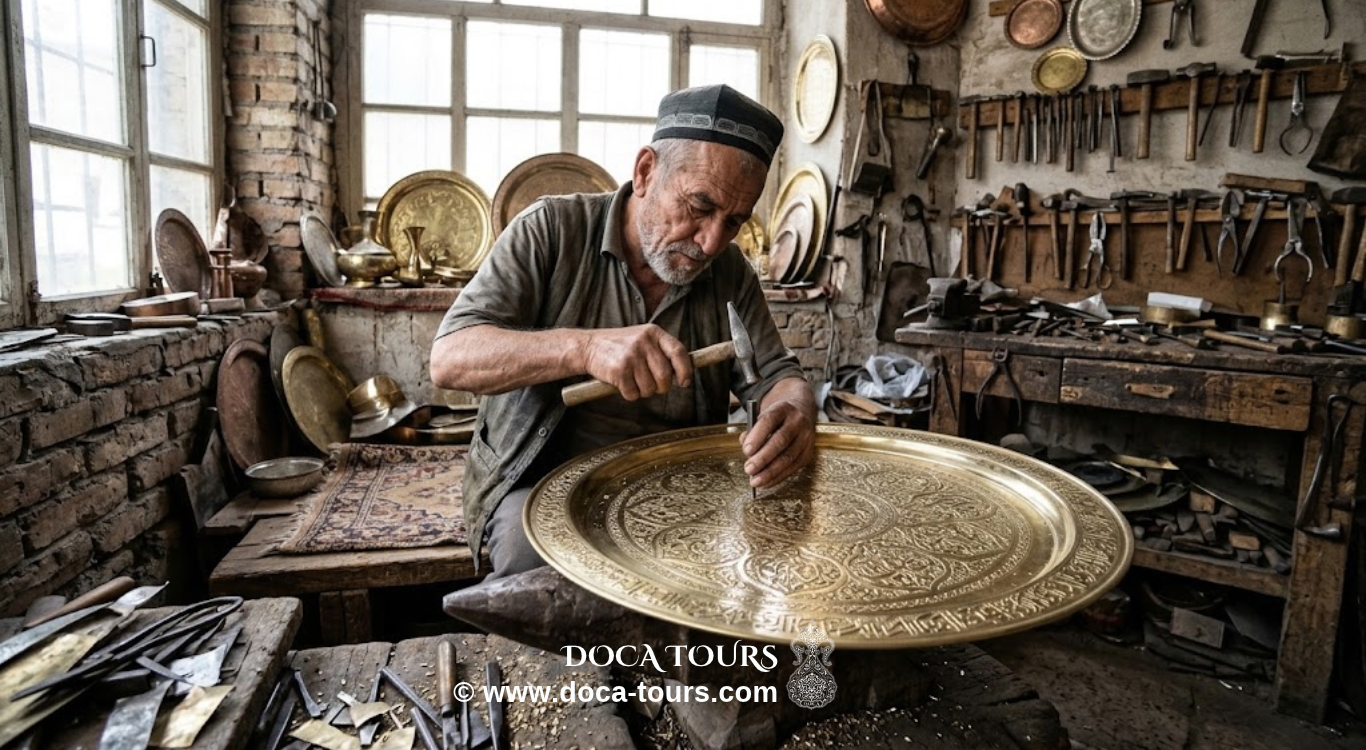
The creation of a traditional copper piece is a complex and extremely time-consuming process.
The tools used by Uzbek masters are surprisingly simple and differ hardly from those of the Middle Ages: small hammers, compasses, and various chisels (pulat kalam).
Over the centuries, Uzbek artisans have perfected several engraving methods:
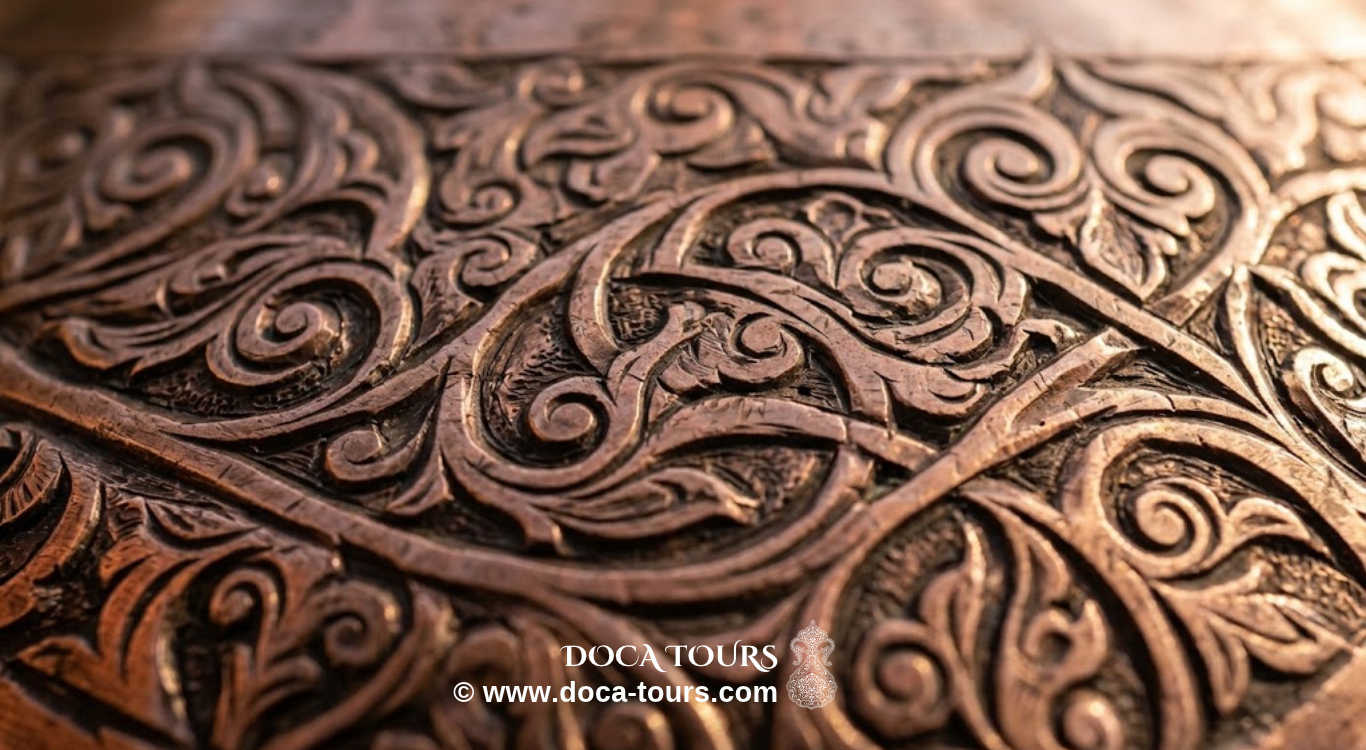
Kandakori: Deep, plastic carving of the metal.
Chizma: A flat, pure engraving.
Shabaka: A filigree openwork or cutout engraving. The core of the design consists of floral (plant-based)
and geometric motifs. In particular, the "Islimi" pattern—which realistically depicts flowers, leaves, and twining stems
(such as tulips or almonds)—holds an honored place in the composition.
The Great Regional Schools of Uzbekistan
Uzbek metal embossing is characterized by distinct local styles, each having developed unique shapes and techniques.
Bukhara and Samarkand: The Bukhara school, which peaked between the 15th and 19th centuries, is known for its traditional simplicity, strict shapes, and deep engraving (kandakori).
A free, matted background is often treated with a line or dots to make the polished designs stand out. Masters here frequently combine plant-based ornaments with elegant calligraphy.
Samarkand has also preserved the artistic traditions of past centuries, particularly in the unique shape of its tea vessels.
Kokand (Fergana Valley): Masters from Kokand pioneered detailed and flat floral designs, as the extreme complexity of their patterns made deep embossing impossible. They decorated their works with the "Kalampir" (almond-shaped) motif and were the first to emboss architectural motifs, fantastic animals, and humans onto their trays.
Khiva, Karshi, and Shahrisabz: Artisans from Khiva favored heavily flattened, deep engravings, often using black and red lacquer
to lift the background away from the complex medallions. In Karshi and Shahrisabz, masters moved away from pure embossing,
additionally decorating their works generously with colorful turquoise and colored glass medallions.
Frequently Asked Questions (FAQ) about Uzbek Metal Embossing
What metals are used for embossing? Traditional masters work primarily with red or yellow copper and brass.
Modern artists, such as Jurabek Sidikov, also use nickel silver today to create elegant yet affordable decorative pieces.
What is Kandakori? Kandakori is the term for the traditional technique of deep embossing and engraving, which is particularly applied in the Bukhara school.
Can one observe the manufacturing process? Yes, the art of metalworking is currently flourishing again in cities such as Shahrisabz, Kokand, Bukhara, and Khiva.
Visitors can watch artisans hammer and chisel away in their workshops.
Planning your private tour? DOCA TOURS organizes individual experiential journeys for you into the historical centers of Uzbek craftsmanship.
Contact us and plan your unforgettable trip to Central Asia!