

































Video: https://www.youtube.com/watch?v=YR4LYB5Rpg4
Ancient traditions have been honored in Central Asia since many centuries. Many of them are hundreds and thousands of years old, but they are still observed and passed down from generation to generation.
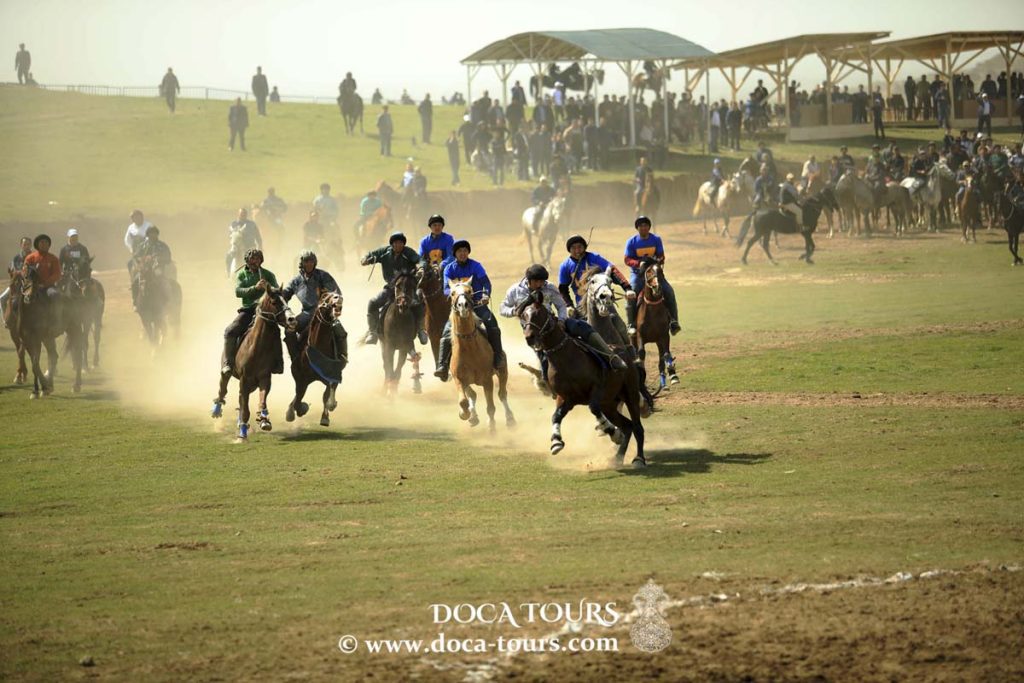
Today I would like to tell and show you one of the games typical for this region, which was inherent in nomadic peoples. This game requires not only strength but also intelligence, agility, endurance, professional horsemanship and much more.
This game is called differently by different peoples. The Uzbeks call it Kupkari or Ulak, the Kirghiz call it Kyok Beru or ulak-tartysh, and in Kazakh – Kekpar. This game is called Buzkashi in Tajik.
Chingiz Aitmatov in his story “Farewell, Gyulsary!” describes this equestrian game as follows: “Goat-grabbing is a kind of equestrian football, in which the headless carcass of a goat serves instead of a ball. The goat is convenient because its wool is long, strong and it can be picked up from the horse by the leg or by the skin.”
I will call it Kupkari, since the footage that you will see was filmed in Uzbekistan, in the Zhambay district of the Samarkand region, at one of the largest playgrounds organized specifically for such competitions.
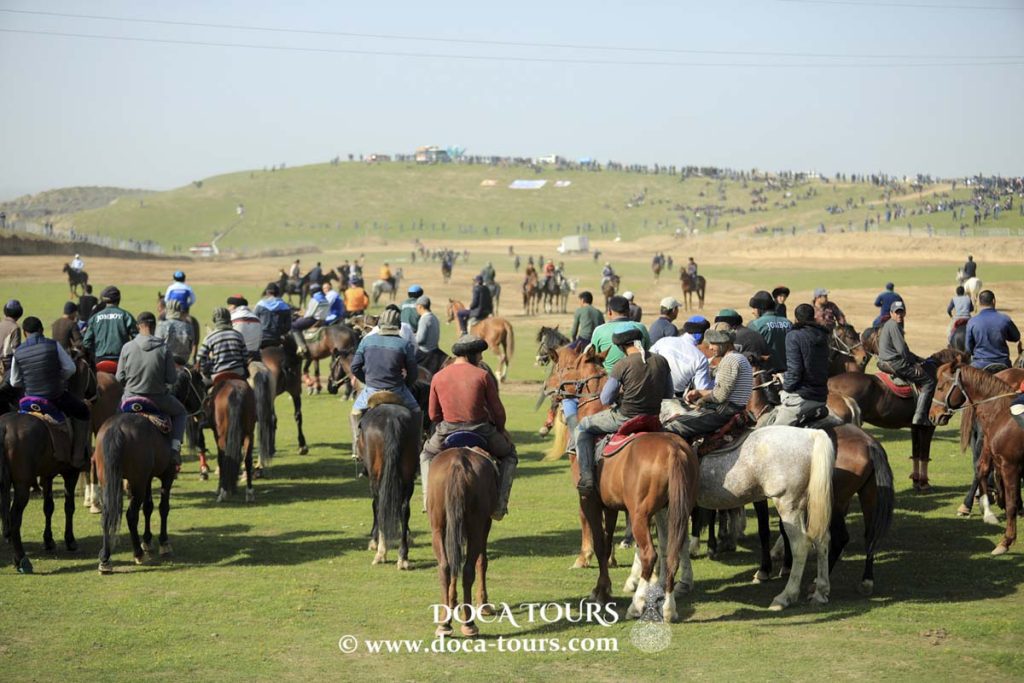
But first I would like to tell you about the basic rules, meaning and history of the emergence of this unusual game.
The rules of the game are very simple. Indeed, as strange as it may sound, the carcass of a previously slaughtered ram or goat used as a ball in this game. The players, that is, the riders, are fighting for the carcass of the animal. The main goal is: to take possession of the carcass, hold it and throw it into the cauldron or the opponent’s gate as many times as possible.
Competitors are allowed to lift the carcass of a goat or ram from any place inside the field, take it away from an opponent, throw or pass it to the members of their team, unhand the carcass, pinch it with their feet, hold it on the side or between the legs of the horse, help their team ride with the carcass and throw into the opponent’s goal. If a rider or horse falls, the game is stopped and resumed after the situation is cleared up. If the players violate the sidelines, an out is declared.
In ancient times, Kupkari participants were even allowed to use physical force, to whip opponents, but today, in official competitions there are restrictive rules for players, and penalty points are prescribed for their violations, they can even reach the disqualification or removal of a player from the field.
It should be noted that sometimes the rules of this game differ from each other in different countries.
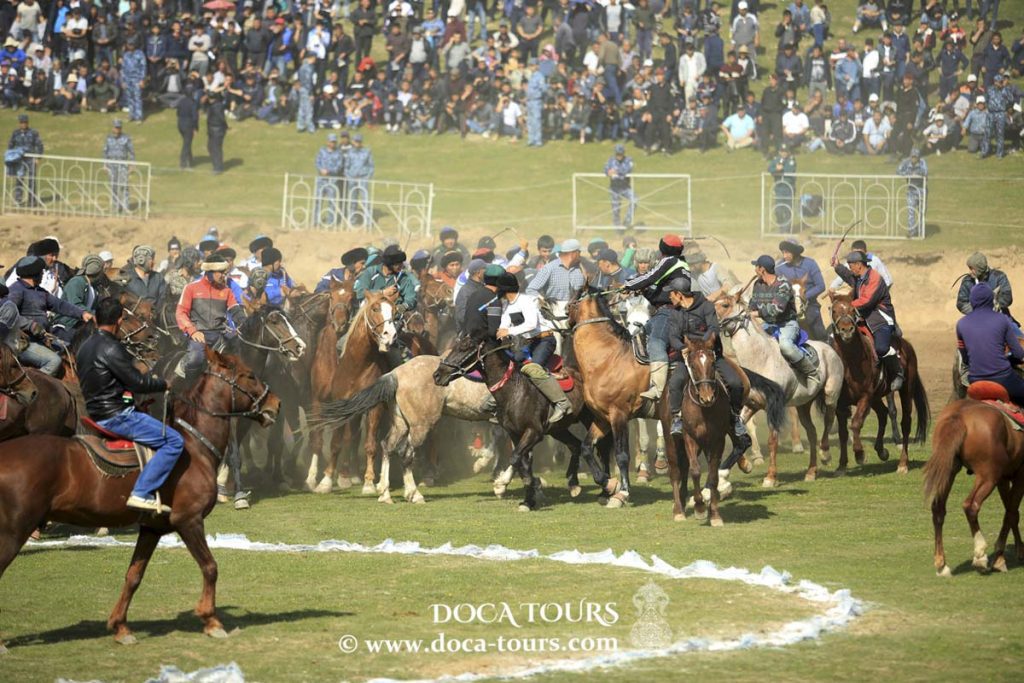
There is also a rule of the game, where you need to jump with a carcass to a certain place or line. This game can be played in teams or solo. Today, the game is usually supervised by special referees who are veterans of this type of game.
For example, the modern rules of this game in Kyrgyzstan were developed in 1996 by the famous film director Bolot Shamshiev. In 2001, the International Kok Boru Federation was founded. The Kyok Beru rules were also recognized and adopted by all participating countries at the founding congress of the International Federation in Bishkek in 2001. National federations of Kupkari were also created in Kazakhstan, Uzbekistan, Russia, China, Tajikistan, Mongolia, Afghanistan, Pakistan and Turkey.
Of course, the rules and all conditions are agreed in advance before each competition in each country.
By the way, in 2016, Kyrgyzstan submitted a proposal to include this equestrian game in the representative list of the intangible cultural heritage – UNESCO. And in December 2017, it was included in this list.
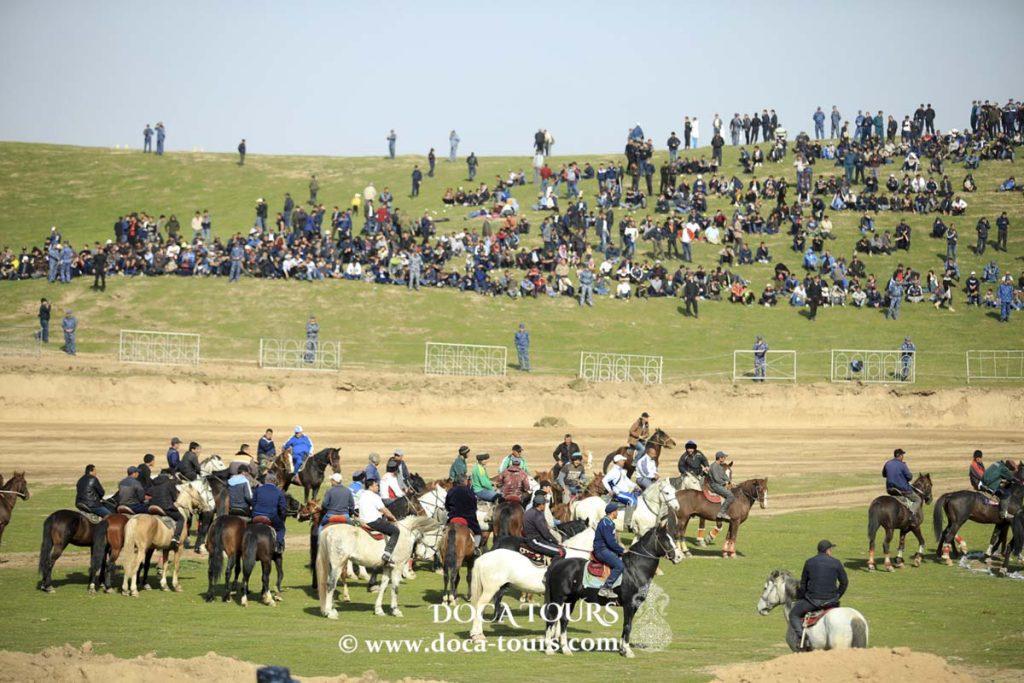
If we compare the field of play in Kupkari with a football one, it is about twice as large (length is 200 meters and width is 70 meters), since horses can accelerate a lot and this requires a large, spacious place.
The distance between the cauldrons-gates is 140 meters; from the center to cauldrons 70 meters; the penalty area is limited to a distance of 15 meters from the cauldrons.
Each of the competing teams has its own gates in the form of a cauldron. This is a large ring-shaped earthen rampart with a diameter of more than three meters, its height is more than one meter, the width of the curb is 80 centimeters, and the depth is about fifty centimeters.
The main rules of the game are:
• One team has eight to twelve riders, but only four riders from each team play at a time. Teams have the right to change their members and even change their horses. The team that releases an undeclared player or horse onto the field is considered a defeat;
• Teams have the right to change players during the game (that is, the game does not stop for this);
• The game lasts 60 minutes and consists of three periods of twenty minutes each. Breaks last 10 minutes.
• The team that throws more goals into the opponent’s cauldron wins;
• Players must not consume alcoholic beverages or drugs before the game.
The beginning of the game looks like this:
The team captains determine their goal by a lot. The goat carcass should lie in the center of the field. After the referee’s whistle, all players rush to grab the carcass. If no one manages to capture the goat carcass within two minutes, the game stops and starts anew. At the same time, one player from each team is included in the circle and they fight one on one. Until the goat carcass leaves the circle, other players are not allowed to enter the game. If, after one minute, the players do not grab the carcass and leave the circle, the referee replaces them with other players. If the carcass falls near the cauldron, the game continues for one minute, after this minute the game is on the circle that is closer to the goal.
Game process
Carcass grabbing and other techniques are carried out according to the rules of the Kupkari game. The game continues until the “ball” is thrown into the cauldron by one of the teams or because of a rude violation of the rules by the players. To score a point, the carcass must be thrown exactly into the cauldron. If the carcass is on the edge of the cauldron, or, having got into it, jumps out of it, then this is not counted as a goal. The rider can throw the carcass when falling, but his feet should not touch the ground. After a goal is scored in the cauldron, a new round begins from the center of the field.
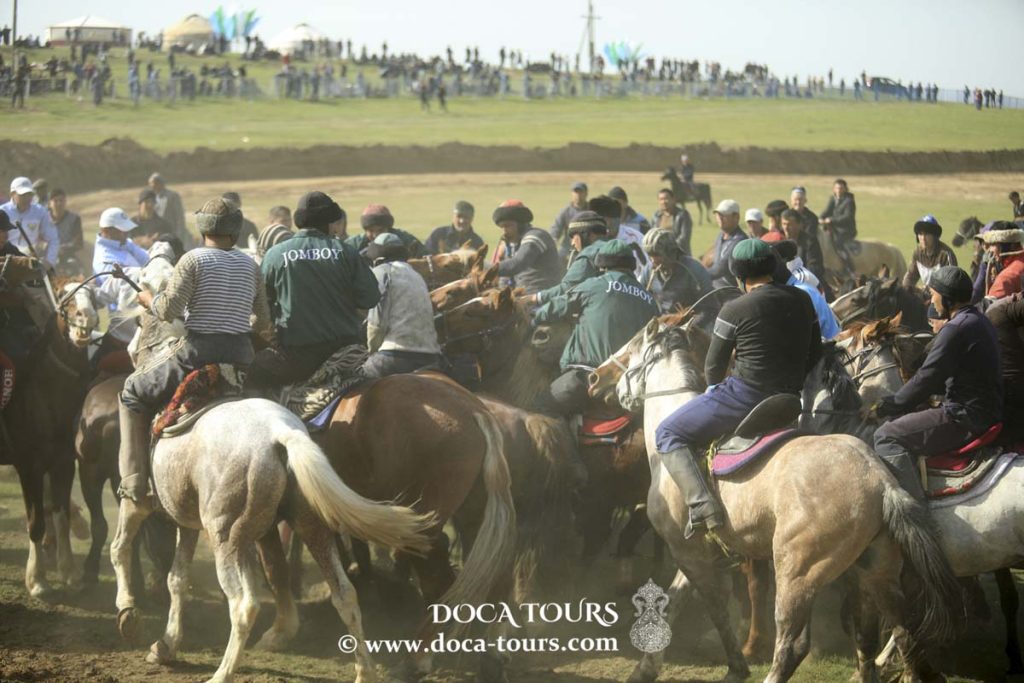
If the game ends in a draw before the semifinals, additional playing time is not given, but a “Bullitt” is assigned. If there is a draw in the semifinals and final of regular time, then additional time is given – 10 minutes, that is, it lasts until the “golden goal”. If during the extra time the winner is not revealed, then a “Bullitt” is assigned. Each team has four players who play a bullitt.
How does Bullitt happen in Kupkari? – One of the players with a carcass jumps towards the cauldron, where one of the opponent’s players chases after him at a distance of 30 meters to prevent him from throwing the “ball” into the goal. They must start at the same time on the referee’s whistle.
Each of the four-team players has the right to catch up with the opponent only once. It is prohibited to change horses during Bullitts. If the attacking player goes beyond the axis of his gate, then he has no right to throw the carcass into the cauldron. If neither team succeeds in Bullitts, then one player from each team enters the game, and this lasts until victory.
For excitement in the game, some strength techniques are allowed, used by both the participants and their horses, but they should not violate the generally accepted rules of the game. It is strictly forbidden to run into the participant lifting the carcass.
Also prohibited
• Beat an opponent with a hand, foot or whip. The player who violated these rules is sent off the field with the horse for two minutes. There is a special penalty spot on the pitch.
The team whose player is penalized must continue playing in the minority, that is, with three players. If the team that played with its full complement scores a goal, the offending player immediately re-enters the game.
• It is also not allowed to argue and insult the judges – there is a threat of removal for 2 minutes for this.
• You cannot ram an opponent at speed, regardless of whether he is with a carcass or not – 2-minute removal is also prescribed for this.
• It is impossible to break the size of the team – that is, if one team instead of four has five players – then this is also punishable by removing one of the players for 2 minutes.
• A team that voluntarily stops the game and does not obey the decision of the head referee is declared a loser.
In case of rude violations of the rules of the game, a player may be sent off the field for 5 minutes.
There are also requirements for teams.
The equipment of horses participating in the game must not contain metal jewellery made of silver, copper or iron, from which the players may be injured. The ends of the stirrups should be straight and the horseshoe should not be sharp-pointed.
The refereeing brigade consists of three people. There is a referee in the field and two side judges. In addition to the refereeing brigade, the protocol commission may serve the game. It reviews the requests and claims of the teams. In controversial moments, it makes a decision.
It is noteworthy that there were attempts to replace the carcass with a moulage, but in the end, this idea was abandoned due to the inconvenience of the moulage and its inconsistency with ancient traditions.
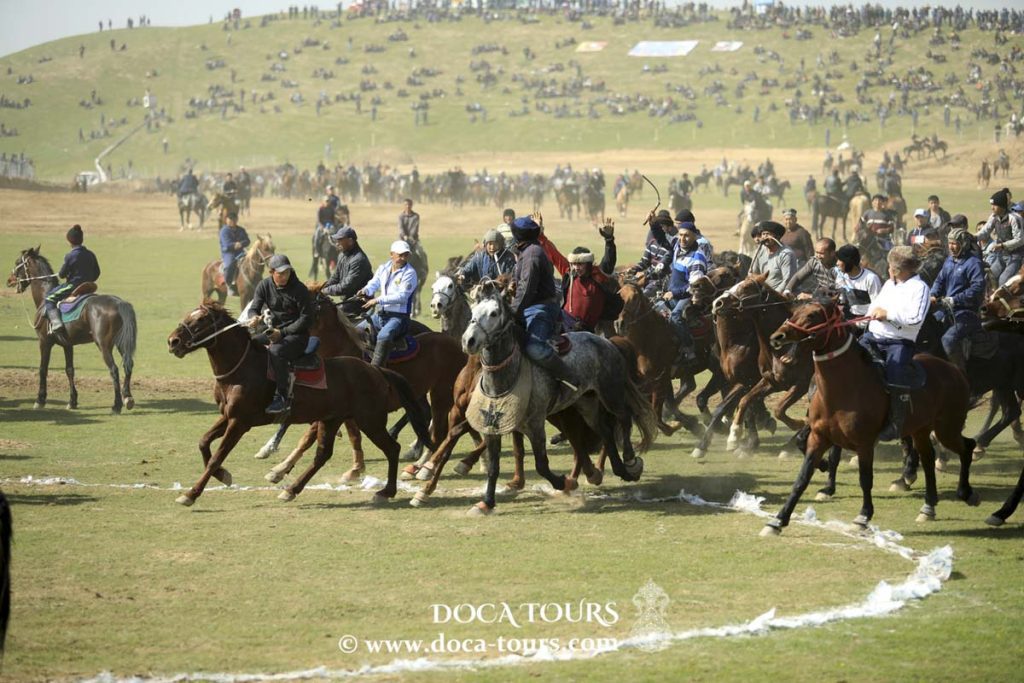
Kupkari is a tough sports game; it requires a lot of strength and dexterity from athletes, so the average age of participants in official competitions is about 20 years.
Cauldrons are used as gates. They are convenient for clearly fixing the goal. The ingress or non-ingress of the carcass into the cauldron is clearly visible and this eliminates controversial points. In addition, these gates-cauldrons are convenient for playing in all weather conditions – whether it is snow, slush, loose soil, etc. when it is almost impossible to draw markings on the ground.
According to tradition, after the game – the meat of the goat, which served as a “ball” for the game, is eaten, having prepared some traditional dish from it. According to ancient beliefs, this meat has healing properties and helps against infertility. It is believed that among the many hands that touched the carcass during the game, there could be a hand of a saint, which endows it with healing properties.
As for the awarding of the winners, I would like to note that the prizes vary according to the scope of the competition. If these are local games, then, for example, a horse, a ram or a camel is used as a prize for the winners. There are also prizes such as carpets and household appliances. But if this is a larger-scale competition, then the main prize is, for example, a car, as in this competition.
Since the late Middle Ages, the game of kupkari or ulak has become a part of the culture of Samarkand. A certain synthesis of nomadic and urban customs took place. Uzbek-mangyts – representatives of the ruling dynasty of the Bukhara Emirate often participated in the Kupkari and thus showed their closeness to the semi-nomadic Uzbeks, who were the mainstay of their power.
There is a relatively similar equestrian sport in Europe called Horseball. And in South America, there is a similar game called Pato. Also, Polo is considered one of the similar games, which is still popular both in Asia and in Europe. And, as you know, Polo was brought to Europe by the British from India.
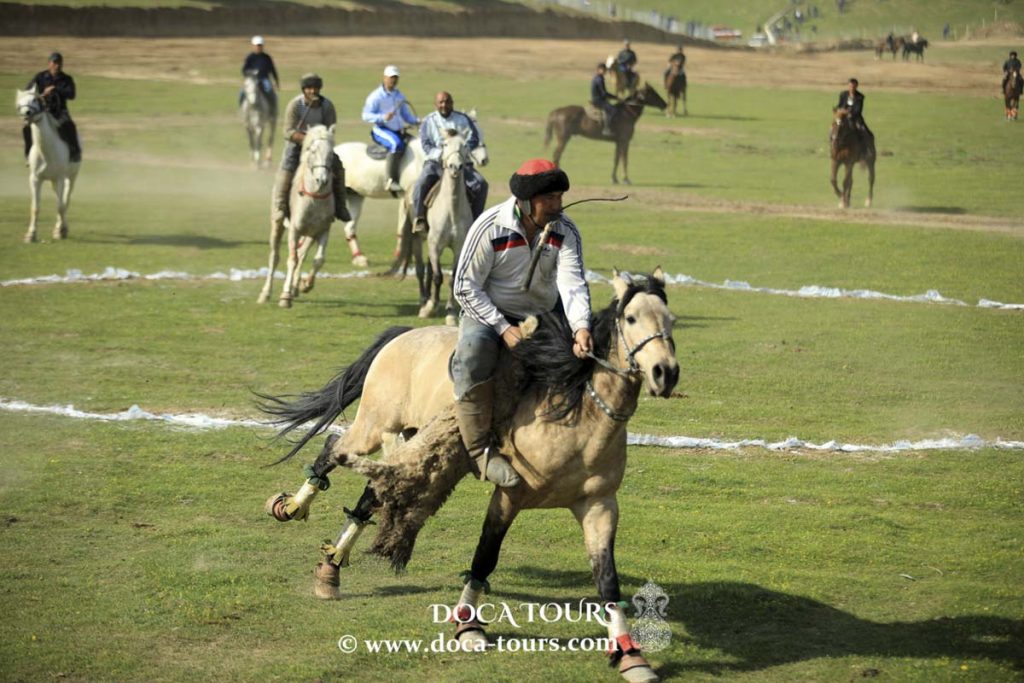
Today, the countries of Central Asia organize both local and international competitions in this sport. One of the striking examples is the World Nomad Games, initiated by Kyrgyzstan.
This is an international sports competition in traditional nomadic sports. The first World Nomad Games were organized in the city of Cholpon-Ata – Issyk-Kul region of Kyrgyzstan in September 2014.
At the opening of the second World Nomad Games in 2016, one thousand komuz players played one melody together. This fact was entered as a record in the Guinness Book of Records.
The goals and objectives of these games are:
• Preservation and revival of the culture of the nomadic peoples of the world, by strengthening cultural ties between the participating countries.
• Preservation and access to the international level of national sports of the nomadic peoples of the world.
• Supporting organizations whose activities are related to the development and promotion of ethnosport in the world.
Also, the purpose of these games is to increase the tourism potential of the host countries.
Athletes from 19 countries took part in the First World Nomad Games: Azerbaijan, Austria, Afghanistan, Belarus, Brazil, Germany, Kazakhstan, Kyrgyzstan, Lithuania, Mongolia, Russia, USA, Tajikistan, Turkmenistan, Turkey, Uzbekistan, France, Sweden, South Korea …
A total of 771 people took part in the sports part. There were 583 athletes and 188 coaches and judges among them
There were 230 horses involved in equestrian sports.
1200 people took part in the cultural program.
The television broadcast covered 40 countries with a potential audience of 230 million people.
At the second World Nomad Games in 2016, there were already 60 participating countries and 1000 athletes, and in the third 66 countries and 1500 athletes.
All three international competitions were held in Kyrgyzstan. In 2020, they were supposed to be held in Turkey, but due to the pandemic related to Covid2019, the games did not take place.
Thank you very much for your attention.
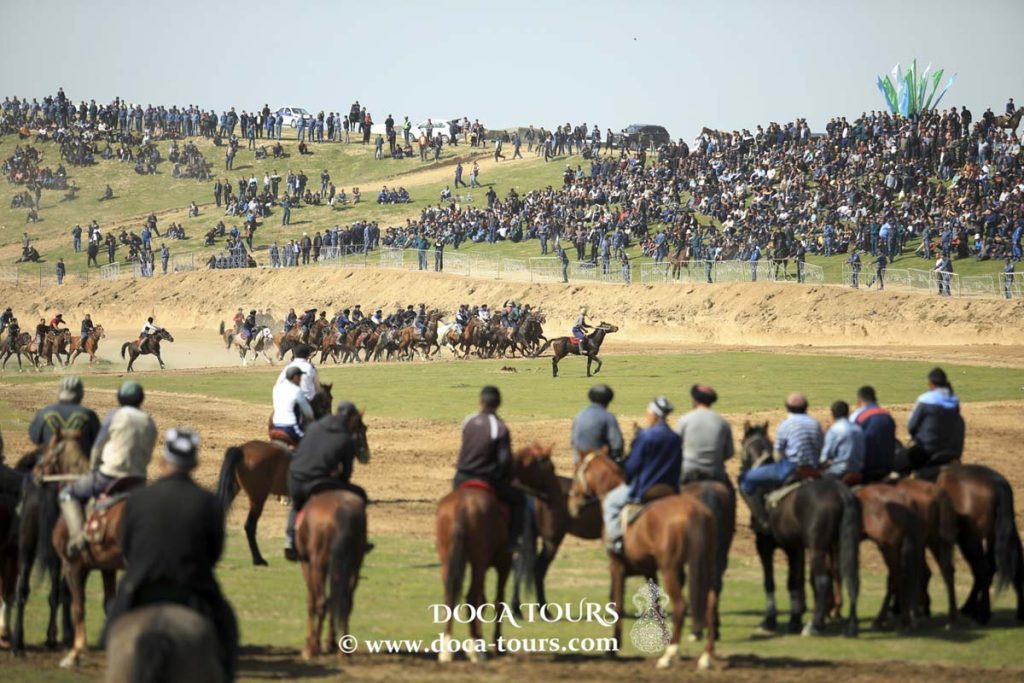
Subscribe to the channel and don’t forget to like our videos.
#horsemen, #cowboy, #ulak, #culture, #horseback, #zhabagly, #traditional, #horse, #people, #nomad, #kupkari, #excitement, #goat, #betting, #asia, #uzbekistan, #kul, #tradition, #buzkashi, #national, #action, #games, #men, #grass, #central, #carcass, #rider, #prize, #nomadic, #competition, #sport