
























Video: https://www.youtube.com/watch?v=K1o2sRHp2O4&t=169s
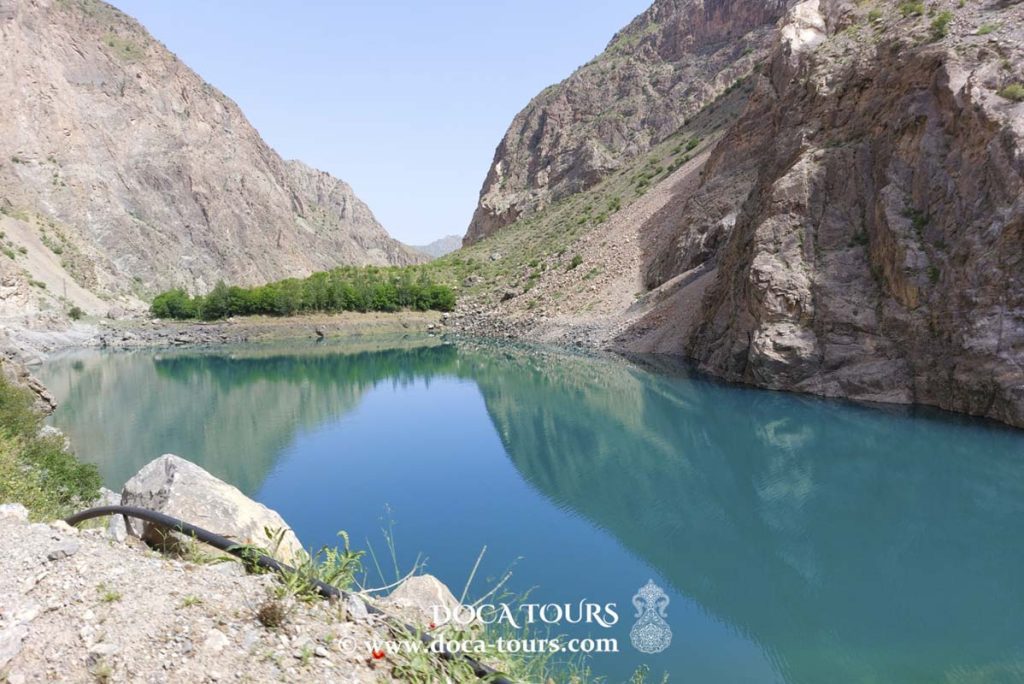
There are many beautiful places on our planet, but it is rare to find such places where, among the wonderful mountains covered with snow, surrounded by forests, stand multicolored lakes in which the water shimmers with all kinds of colors from green to purple.
From Samarkand, it takes only 40-45 minutes to drive to the border with Pendzhikent – a city in Sughd Province, Tajikistan.
Here you can find the famous Haftkul Lake – seven lakes. You can get there from Penjikent. On the way, you can see the peaks of the legendary Fann Mountains. They are the highest part of the Zarafshan range.
Yuri Vizbor sang the following about these mountains:
“I left my heart in the Fann mountains, now I walk heartlessly across the plains, and in quiet conversations and in noisy feasts I dream silently of the blue peaks.”
The peculiar crossing of ridges and melting of glaciers, the formation of moraine ramparts, were the reason for the formation of lakes in the gorges of the Fann Mountains of Tajikistan. There are about 30 lakes with transparent water in the Fann Mountains. Among these lakes, the Marguzor Lakes, also called “Seven Beauties of Shinga”, stand out. There are seven turquoise lakes cascading down the wide valley of the Shing River.
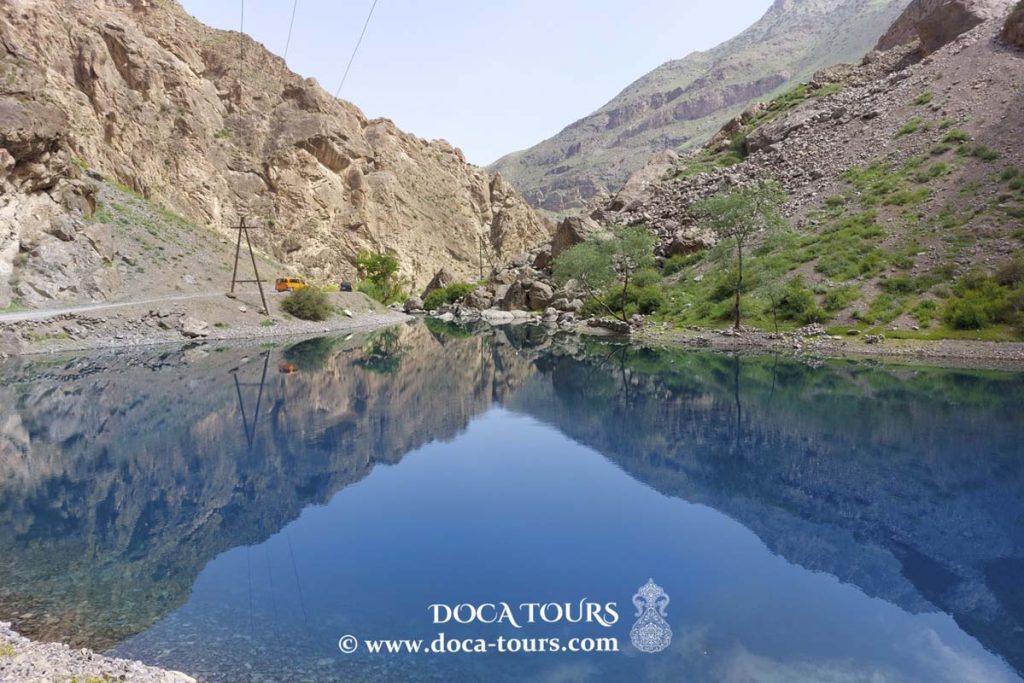
The first lake is called Mizhgon, that is (“eyelash”). It is located at an altitude of 1640 meters above sea level. A distinctive feature of this lake is its multicolor: the shades of water in it are constantly changing, depending on the weather conditions and time of day.
In the morning, the lake is usually dark blue, and after a while the lake is already green, then blue, and in the evening it is orange.
There is a legend about the appearance of these lakes. A long time ago in this valley there lived a blacksmith and he had seven beautiful daughters. One day, the local ruler saw the youngest daughter of the blacksmith and fell in love with her. Her father agreed to marry his daughter, but the girl did not want to marry the old ruler.
And the girl decided to make a condition: she would marry the ruler if he built a golden palace. The girl was somehow sure that he would not succeed. But, obsessed with love, the old man did the impossible and built the palace within 40 days.
The condition was met. And the beautiful girl had no choice but to agree to the wedding. But it was on the wedding day that the girl jumped down from the roof of the palace in her wedding dress.
Where she crashed, Lake Mijgon appeared, and the other lakes were formed from the tears of her sisters, who mourned her.
Another legend says that seven divas, fairy-tale man-like giants, fell in love with seven beauties from the valley of Marguzor. The girls tried to run away from them, but the divas gave chase. And then the beauties begged the god to save them, and the god turned the girls into lakes and the divas into mountains.
The next lake is called Soya (“Shadow”). It is located between two high rocks and really remains in their shadow. Water seeps into it from the rubble that separates it from the third lake on the list. Locals often come here for a picnic.
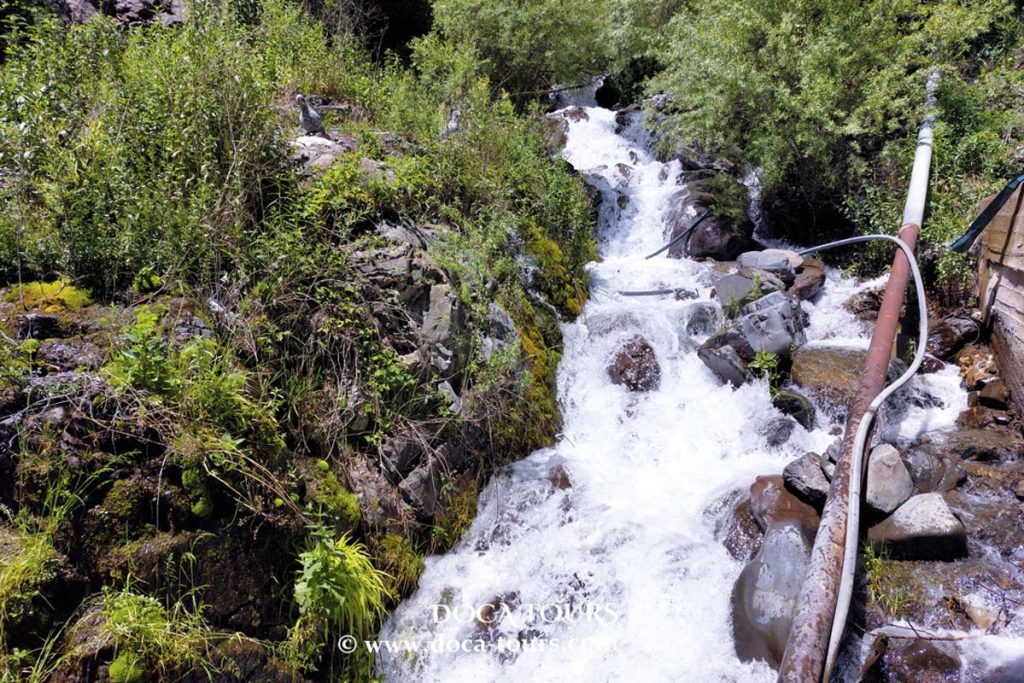
The third lake on the account is called Khushyor, that is (“Vigilant”). It is said that once there were many poisonous snakes here. The locals warned travelers of the danger.
Nowadays, no one has seen snakes in the lake. Another version of the appearance of the name “Khushyor” is the winding, narrow road to the fourth lake. That is, in this way, travelers were urged to be vigilant.
The path extends even higher, to Lake Nofin, translated as (“Umbilical cord”). This name indicates that the lake is in the middle of the cascade. Locals tell us that Nofin sometimes takes on a reddish color, but returns to its emerald color after a while.
According to local beliefs, the blood of innocent people was once spilled here, and if the color of the water in the lake does not return to its normal color for a long time, the elders believe that a goat or a rooster should be sacrificed.
After the fourth lake begins the most beautiful part of the valley. Here is the small village of Padrud. Traditionally cattle breeding and farming is practiced here.
Behind Padrud is the smallest of the Seven Lakes. Its name is Khurdak, which means “the baby”. The length of this lake is only 240 meters. But the surroundings here are indescribably beautiful. The lake seems to be filled not with water, but with milk. The water here is a pale milk color.
The sixth lake is called Marguzor, that is (“Meadow”). This is the largest of the seven lakes. Its length is 4.5 km, the depth is up to forty-five meters. If a large steamer could by some miracle get here, it could easily sail here.
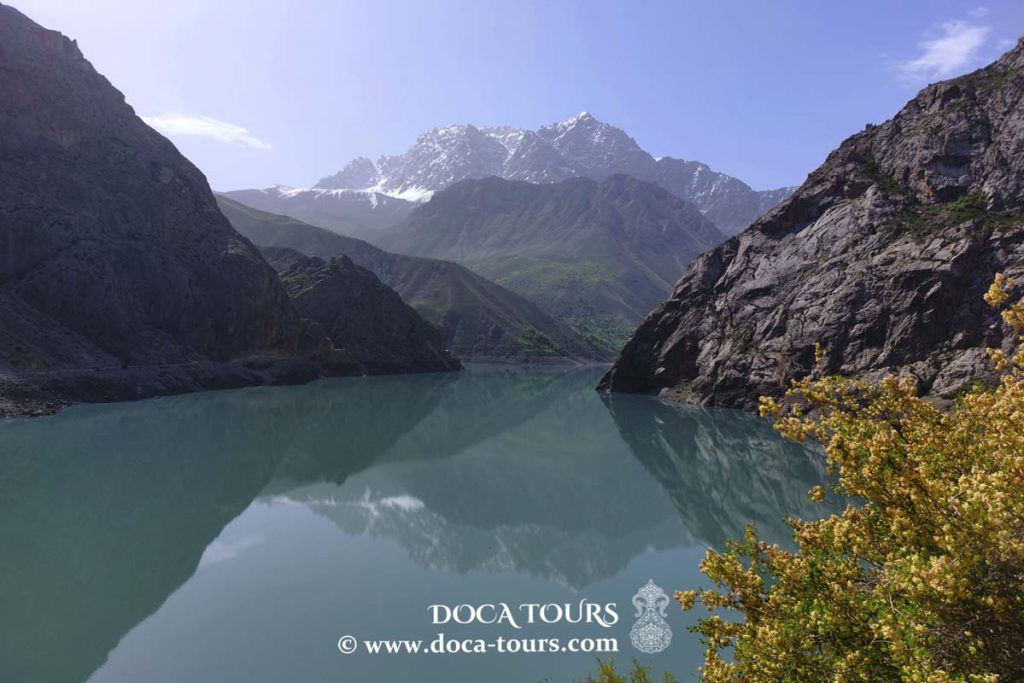
Marguzor is considered the most beautiful lake of the seven. It even surpasses Mizhgon in the variety of color shades. The water in Margusor comes in all kinds of hues, from blue to turquoise, and sometimes it even turns reddish in color. Hydrologists say that underwater currents saturated with different minerals can influence the color change.
The blue color is caused by minerals dissolved in the water, despite the foam of the turbulent Shing River. When the unruly Shing River turns into a calm smooth lake after a spill, the water takes on a special color from blue to purple.
Between Margusor and the seventh, the highest lake of the cascade – Hazorchashma, which means (“Thousand Springs”) – the distance is about six and a half kilometers, but the ascent to it is very steep.
There is a legend that Hazorchashma grants the wishes of anyone who gets to this lake. The most cherished dreams come true, and one finds happiness and prosperity in the future.
There are birch trees growing around this lake. It is believed that the seeds of these trees were scattered in these places by birds. In ancient times, the Great Silk Road passed through this lake.
The Zarafshan and Shing rivers flow through narrow deep gorges and canyons. The flow of rivers is regulated by these lakes.
The local flora includes: poplar, birch, buckthorn, barberry, rose hips, currants. Slopes and valleys are covered with meadow and steppe vegetation. Here grows: astragalus, chaire, wormwood, eremurus, mint, thyme.
Haftkul valley attracts not only mountains, rivers and lakes, but also its history and places of pilgrimage. Through the Tovasang Pass from Haftkul valley, the way to Kulikalon and Iskandarkul lakes.
Thank you very much for your attention.
Subscribe to the channel and don’t forget to like our videos.
#asian, #summer, #scenery, #scenic, #seven, #seven lakes, #sightseeing, #silk road, #stone, #sughd, #sunny, #river, #tajikistan, #tourism, #travel, #trekking, #turquoise, #valley, #water, #zeravshan, #beautiful, #rock, #penjikent, #lake, #blue, #cloud, #clouds, #dirt road, #fann, #fann mountains, #haftkul, #panoramic, #hiking, #lakes, #landmark, #landscape, #mountain, #mountains, #nature, #outdoor, #panjakent, #panorama, #clear, #dirty road, #donkey, #barrack, #house