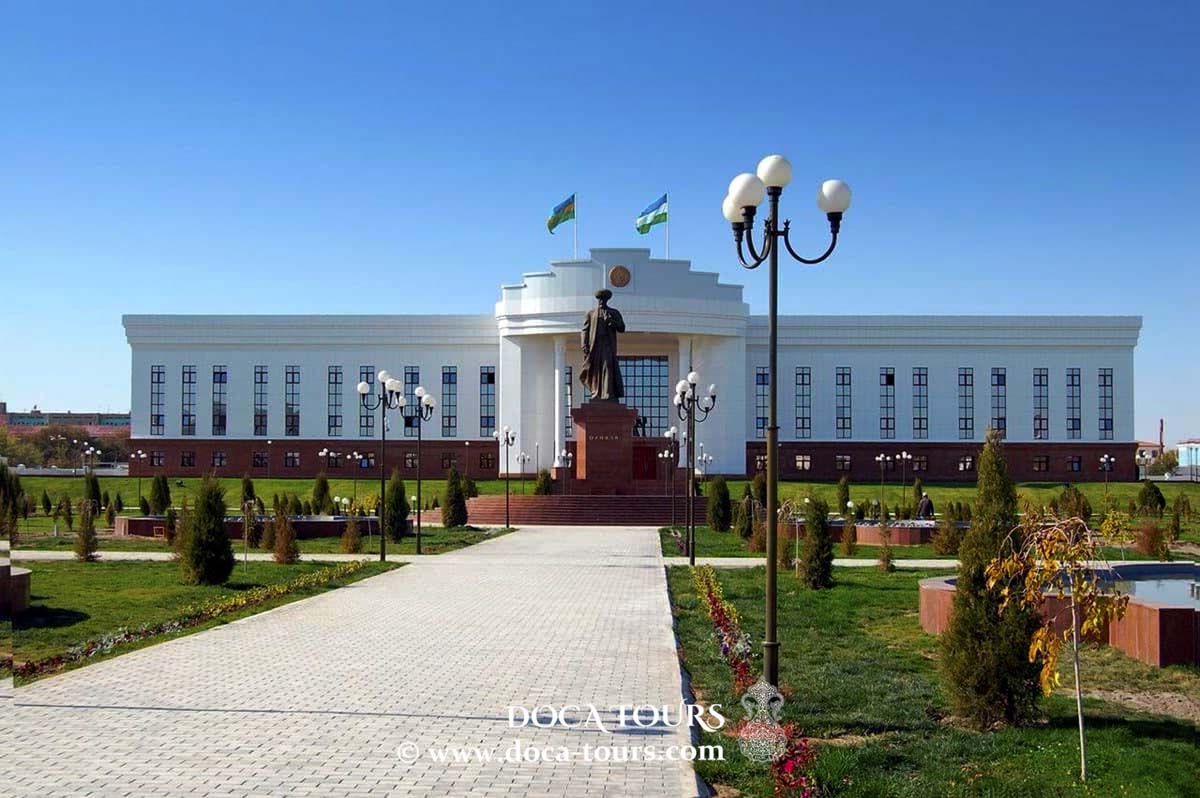
Karakalpakstan, officially the Republic of Karakalpakstan, is an autonomous republic in Uzbekistan, occupying the country’s northwestern region. Its capital city is Nukus (Nókis / Нөкис). Karakalpakstan covers an area of 166,590 km² (64,320 sq mi) and is home to approximately 2 million people. Historically, the region forms part of the classical land of Khwarazm, referred to as Kāt (کات) in classical Persian literature.
The name “Karakalpakstan” translates to “land of the Karakalpaks.” While most Karakalpaks reside in Uzbekistan, their culture and language share closer ties with the Kazakhs and Nogais than with the Uzbeks.
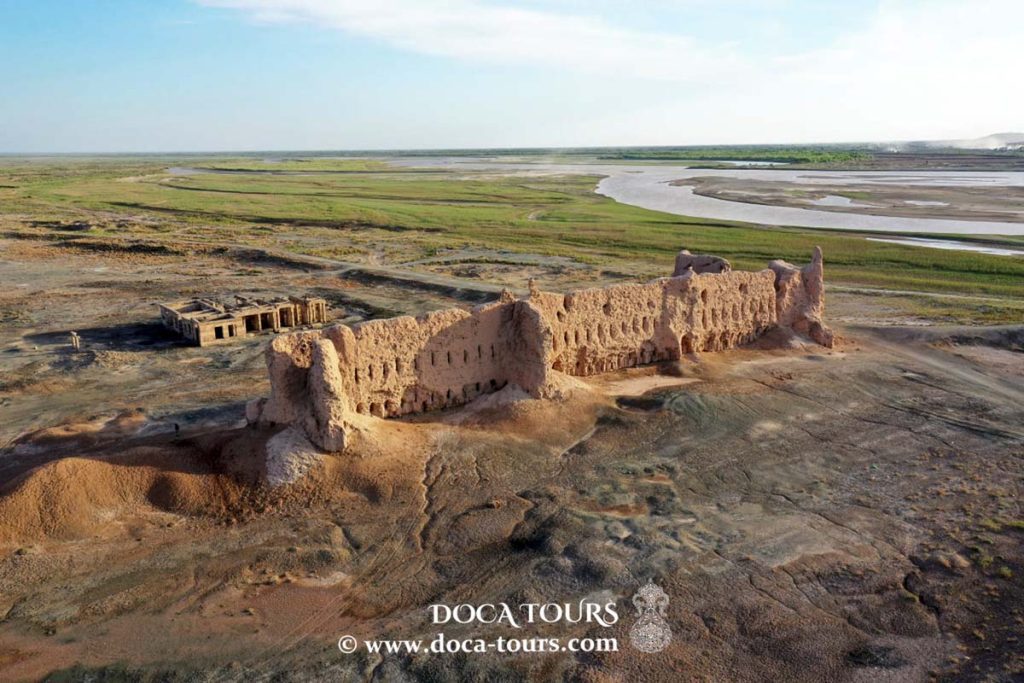
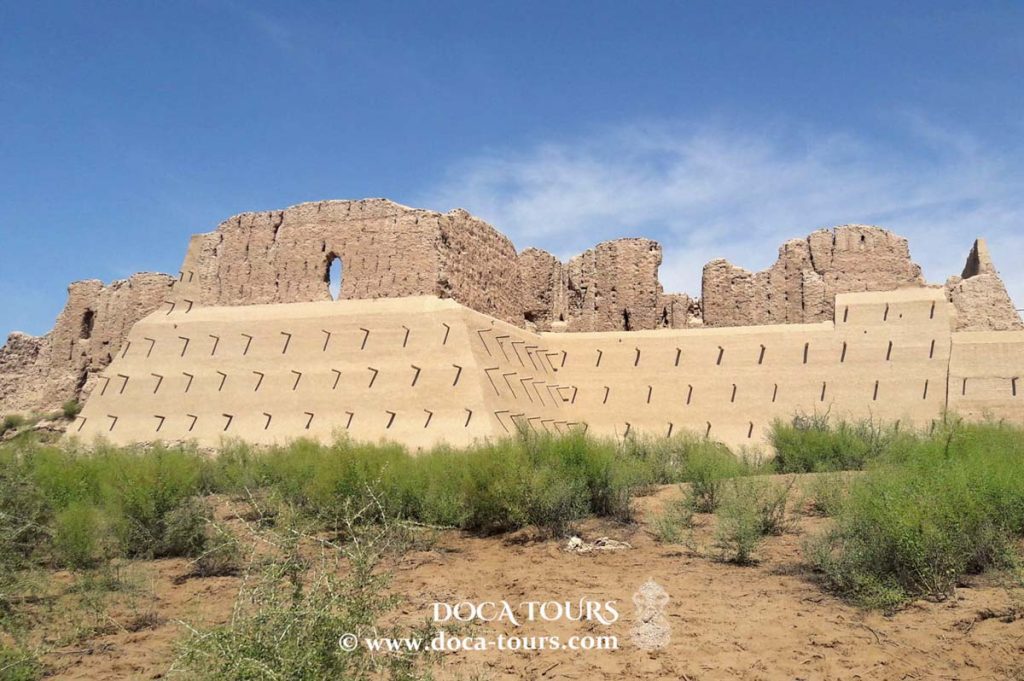
From around 500 BCE to 500 CE, Karakalpakstan was a flourishing agricultural region supported by advanced irrigation systems. Strategically important, it saw frequent conflicts and was fortified with over 50 Khorezm fortresses. The Karakalpak people, traditionally nomadic herders and fishers, were first documented by outsiders in the 16th century.
The region was ceded to the Russian Empire by the Khanate of Khiva in 1873. Under Soviet rule, Karakalpakstan was initially an autonomous region within the Russian Soviet Federative Socialist Republic before becoming part of Uzbekistan in 1936 as the Karakalpak ASSR.

Karakalpakstan experienced relative prosperity during the 1960s and 1970s, as irrigation from the Amu Darya river expanded. However, the ecological disaster caused by the shrinking of the Aral Sea has made the region one of the poorest in Uzbekistan. Widespread drought, caused by both climate change and excessive diversion of the Amu Darya and Syr Darya rivers, has devastated agriculture and led to crop failures. Nearly 48,000 people have lost their main source of income, and water shortages have led to a surge in infectious diseases.
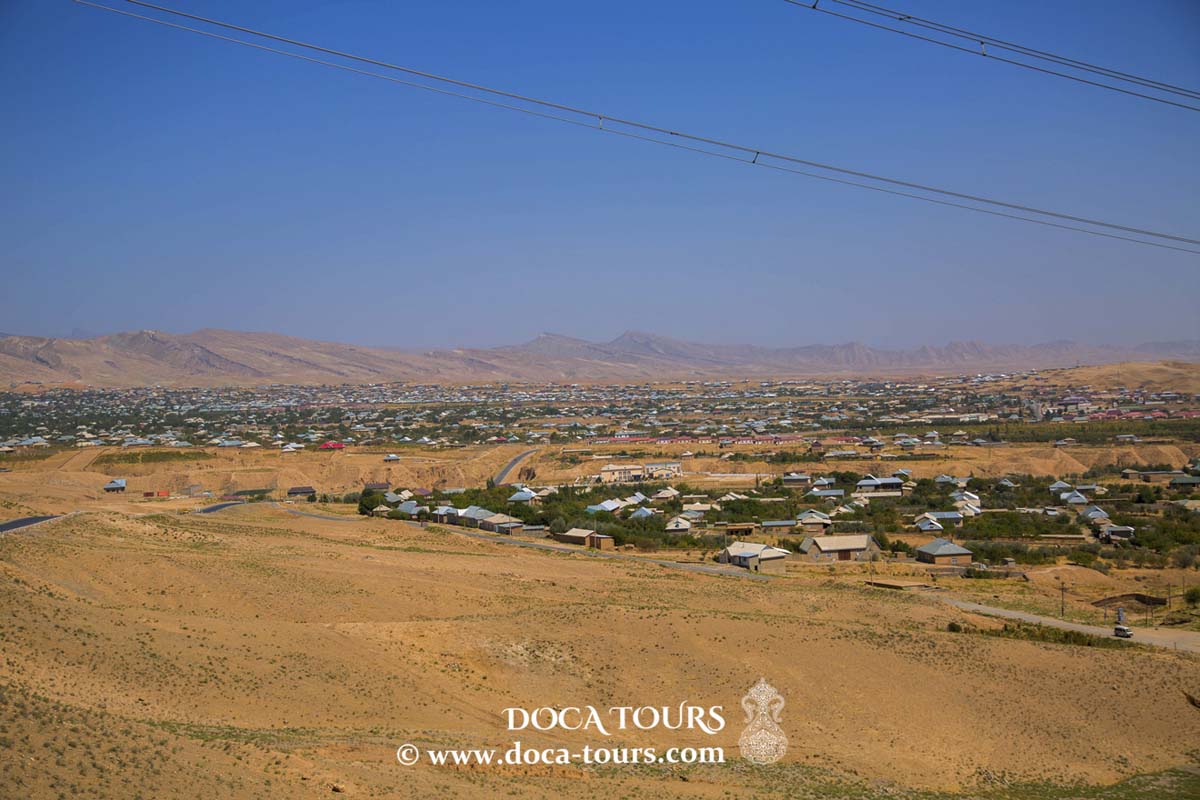
Karakalpakstan is largely a desert region located in western Uzbekistan near the Aral Sea, occupying the lowest area of the Amu Darya basin. The surrounding landscape includes the Kyzyl Kum Desert to the east, the Karakum Desert to the south, and rocky plateaus stretching westward toward the Caspian Sea.
Karakalpakstan's autonomous status has its roots in its predecessor, the Karakalpak Autonomous Soviet Socialist Republic, which existed until 1932 when it was incorporated into the Uzbek SSR. After Uzbekistan gained independence in 1990, Karakalpakstan retained its autonomy under Uzbekistan’s constitution.

The region’s relationship with Uzbekistan is governed by treaties, and disputes are resolved through reconciliation. According to Article 89 of Uzbekistan’s constitution, Karakalpakstan has the right to secede through a region-wide referendum, although Uzbekistan’s legislature holds veto power over such a decision.
In July 2022, widespread protests erupted in response to a proposed constitutional amendment that sought to revoke Karakalpakstan’s autonomy. The proposal was ultimately withdrawn following the unrest.
The head of Karakalpakstan is the Chairman of the Supreme Council (formerly referred to as the "President" from 1991 to 1992). The executive branch is led by the Chairman of the Council of Ministers of Karakalpakstan. Additionally, one of the deputy chairmen of Uzbekistan’s Senate represents Karakalpakstan.

As of July 2023, Karakalpakstan’s population was 1,986,900, a 1.2% increase from 2022. The population is nearly evenly split between women (989,100) and men (997,800), with slightly more residents in rural areas (1,015,500) than urban areas (971,400).
In 2007, the population was estimated to include around 400,000 Karakalpaks, 400,000 Uzbeks, and 300,000 Kazakhs. Though most Karakalpaks live in Uzbekistan, particularly in Karakalpakstan, their language—written in Cyrillic during Soviet times and switched to the Latin alphabet in 1996—is linguistically closer to Kazakh than Uzbek.
Apart from the capital Nukus, other significant cities in Karakalpakstan include Xojeli, Taqiyatas, Shimbay, Qońirat (Kungrad), and Moynaq.
Key statistics:
Historically, Karakalpakstan’s economy relied on fisheries in the Aral Sea and extensive irrigation-based agriculture. Today, its economy revolves around cotton, rice, and fruit production (plums, pears, grapes, and melons). Hydroelectric power is supplied by a Soviet-era station on the Amu Darya.

The desiccation of the Aral Sea, however, has created a severe ecological and economic crisis. Fertile lands have turned into deserts, and the dried Aral Sea bed releases toxic salt and pesticide residues into the air, causing environmental and health issues. Summers are now 10°C (18°F) hotter, while winters are 10°C (18°F) colder. Rates of anemia, respiratory diseases, and other health conditions have sharply increased as a result.
Karakalpakstan is home to the ancient Khorezm region, once a powerful and prosperous center of civilization. The area’s history is marked by its significant contributions to irrigation, trade, and culture. Despite its ecological challenges, Karakalpakstan remains a unique region of Uzbekistan with a rich cultural heritage and a resilient population.

The autonomous Republic of Karakalpakstan is divided into 16 districts and one district-level city, Nukus (marked as number 1 on the map).
Taqiyatas District: Established in 2017 from a section of the Xojeli district.
Bozataw District: Created in September 2019, formed from portions of the Kegeyli and Shimbay districts.
Karakalpakstan contains 12 cities, including Nukus, Mańģit, Beruniy, Xaliqabat, Qońirat, Moynaq, Taqiyatas, Tórtkúl, Xojeli, Shimbay, Shomanay, and Bostan. In addition, the region is home to 26 urban-type settlements.

Journalists in Karakalpakstan often face challenges and intimidation. For example, Lola Kallikhanova, a journalist, has been questioned by police and faced legal action, drawing criticism from the Coalition for Women in Journalism, which condemned the treatment of Kallikhanova and others.
In 2009, Karakalpakstan launched its first radio station, Nukus FM, broadcasting from Nukus on frequency 100.4 MHz.
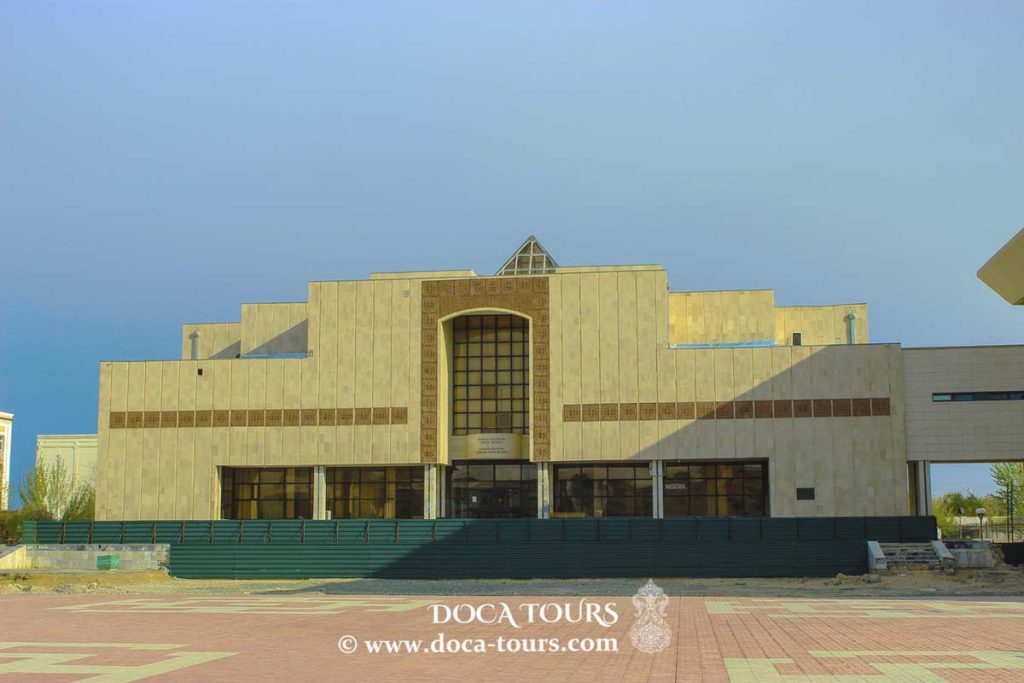
Qaraqalpaqstan tеlеvideniesi is the main television channel of Karakalpakstan. The channel broadcasts in four languages: Karakalpak, Uzbek, Kazakh, and Russian, catering to the diverse population of the region.