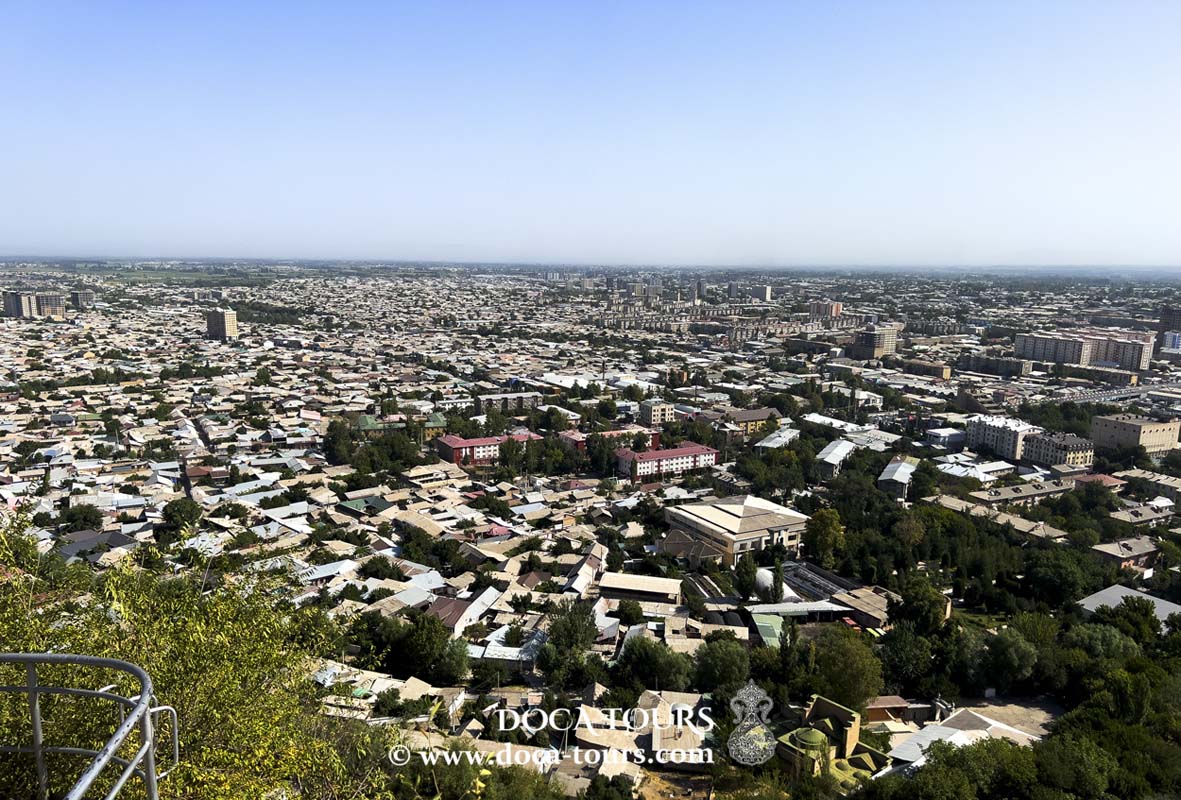
Andijan, located in Uzbekistan, serves as the administrative, economic, and cultural hub of the Andijan Region. With a land area of 74 km² (29 sq mi), it is a district-level city and the most densely populated urban center in Uzbekistan, hosting 747,800 residents in 2024 and a population density of 10,000 people per square kilometer. Positioned at the southeastern edge of the Fergana Valley, Andijan is near Uzbekistan's border with Kyrgyzstan, in a geopolitically sensitive region.
With a history spanning over 2,500 years, Andijan is not only Uzbekistan's oldest city but also among the most ancient in the Fergana Valley. Archaeological evidence from parts of the city indicates human activity dating back to the 7th and 8th centuries BCE. Historically, Andijan was a key Silk Road city, facilitating trade and cultural exchange.
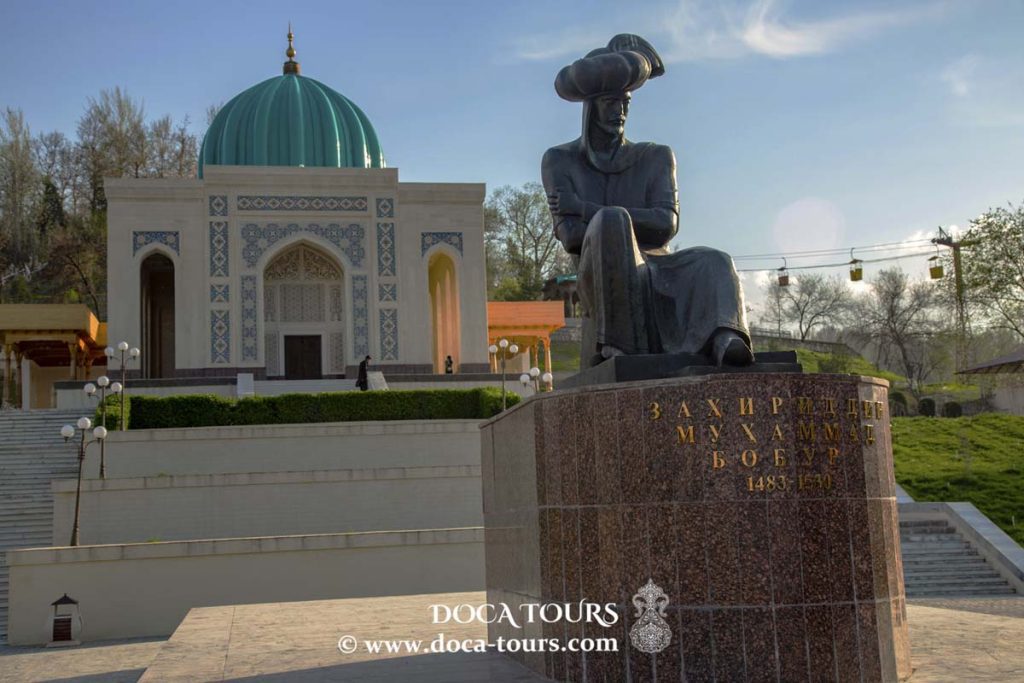
The city is renowned as the birthplace of Babur, the founder of the Mughal Empire in the Indian subcontinent, who overcame numerous obstacles to establish the dynasty and become its first emperor. However, Andijan is also infamous for the 2005 tragedy known as the Andijan Massacre, when government forces opened fire on demonstrators, resulting in hundreds of deaths.
During the Soviet era, Andijan emerged as a vital industrial hub, producing goods such as chemicals, domestic appliances, electronics, furniture, food products, farming machinery parts, plows, pumps, tools, shoes, and wheelchairs. The city lies in a seismically active zone and suffered catastrophic destruction in 1902 due to the most severe earthquake recorded in Uzbekistan during the 20th century.

The etymology of "Andijan" remains uncertain. Tenth-century Arab geographers referred to the city as "Andukan," "Andugan," or "Andigan." Some theories link the name to Turkic tribal names such as Andi or Adoq/Azoq.
As one of the oldest cities in the Fergana Valley, Andijan holds archaeological significance, with artifacts from the 7th and 8th centuries BCE discovered in parts of the city. Its strategic location made it a critical Silk Road trading center.
The city is most notable as the birthplace of Babur, who laid the foundation of the Mughal Empire in South Asia. During the 18th century, the capital of the Khanate of Kokand was relocated from Andijan to Kokand. In the mid-19th century, Russian forces began their conquest of Central Asia, annexing the Khanate of Kokand, including Andijan, by 1876.
In 1898, the city became the epicenter of the Andijan Uprising, when followers of Sufi leader Madali Ishan attacked Russian barracks, killing 22 soldiers and injuring 16–20 others. In response, 18 participants were executed, and 360 exiled.
On December 16, 1902, a devastating earthquake struck Andijan, destroying nearly 30,000 homes in the area and claiming the lives of approximately 4,500 people. After Soviet authorities established control over the city in 1917, Andijan quickly transformed into a key industrial hub within the Uzbek Soviet Socialist Republic (Uzbek SSR).
During the Soviet reorganization of Central Asia, the Fergana Valley was divided among three different Soviet republics, isolating Andijan from its historical hinterlands. Despite this, Andijan remained an important part of the Uzbek SSR.
In World War II, Andijan, along with other nearby towns, became a refuge for evacuees from other parts of the Soviet Union. Among these were Jewish refugees who had fled Nazi-occupied Poland and were later relocated to Siberia and Central Asia, some settling in Andijan as early as 1941.
The 1990s were marked by political instability in Andijan and its surrounding areas. Following the collapse of the Soviet Union in 1991, the local economy suffered greatly due to recurring border closures, compounding the region’s poverty. The economic downturn, coupled with rising Islamic fundamentalism, contributed to increasing tensions in the region.
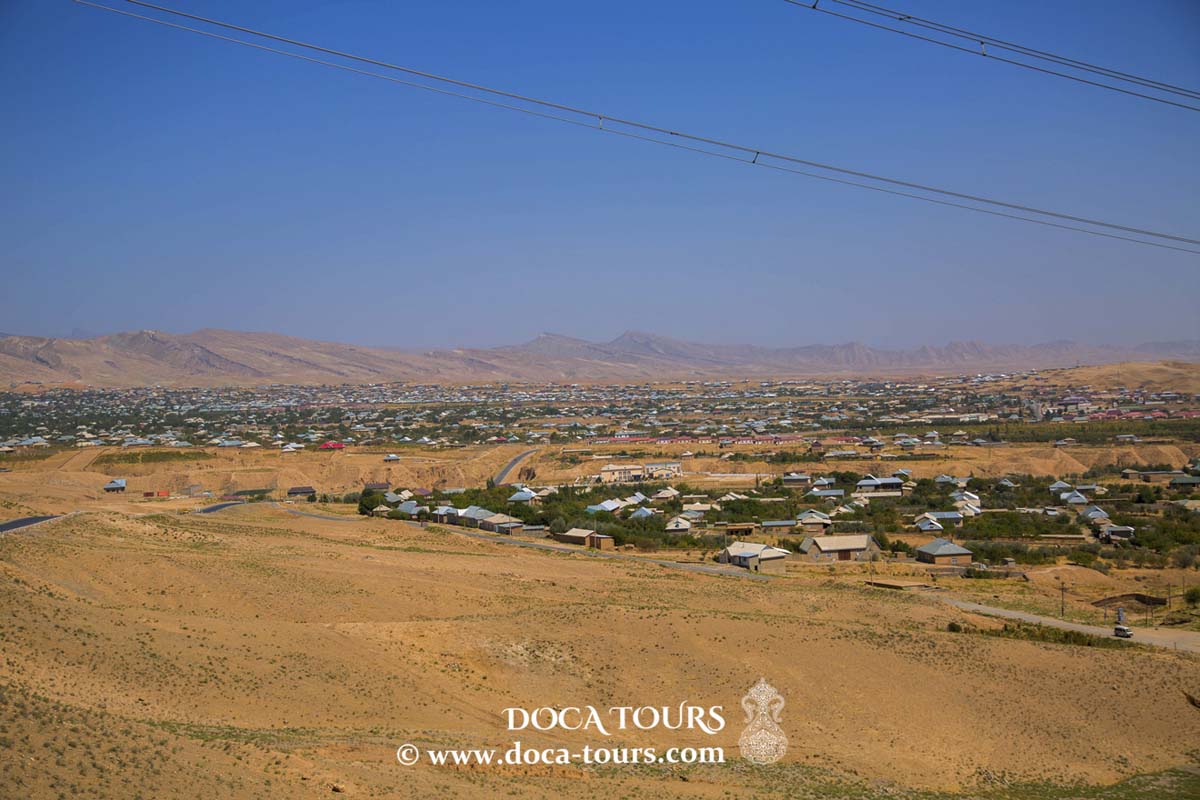
Situated 450 meters (1,480 feet) above sea level, Andijan lies on the southeastern edge of the Fergana Valley, close to Uzbekistan’s border with Kyrgyzstan. By road, it is located 22 kilometers (14 miles) northeast of Asaka and 68.6 kilometers (42.6 miles) southeast of Namangan.
Andijan experiences a cold semi-arid climate (Köppen BSk) characterized by cold winters and hot summers. Its continental climate is moderated somewhat by milder winters compared to other parts of Central Asia. The region receives light, irregular rainfall, with an annual average of 232 mm. Summers are arid and slightly cooler than other Central Asian locations. The area enjoys long frost-free periods of approximately 210 days annually, making it ideal for cultivating crops such as cotton, mulberries, citrus fruits, and other subtropical plants.
The city is surrounded by the foothills of the Pamir and Tian Shan mountain ranges. These mountains remain snow-covered in summer, while their lower elevations are blanketed with walnut groves and coniferous forests.
Andijan’s primary water sources include:
Andijan’s plant life is diverse, with the city adorned by a variety of exotic, ornamental, subtropical, and fruit-bearing trees and shrubs. Over the years, particular attention has been given to landscaping, replacing older plane trees (chinar) with more exotic and subtropical species.
The city’s green spaces feature:
As of 2022, Andijan had a population of 458,500, comprising representatives from various ethnic groups, with Uzbeks forming the majority.
Andijan has served as a significant hub for crafts and trade in the Fergana Valley since the 15th century. Following its annexation by the Russian Empire in 1876, the city experienced notable economic growth. The construction of a railway connecting Andijan to Russia in 1889 spurred the establishment of industrial plants, hospitals, pharmacies, banks, and printing houses. Under Soviet rule, which began in late December 1917, the city saw rapid development of both light and heavy industries and became the first in Uzbekistan to have full access to natural gas.
In modern Uzbekistan, Andijan remains a critical industrial center. The city is home to 48 large industrial plants and roughly 3,000 small and medium-sized enterprises. Products manufactured in Andijan include chemicals, electronics, household appliances, furniture, foodstuffs, farming equipment, engineering tools, and wheelchairs. Over 50 international companies operate in the city, with five producing spare parts for GM Uzbekistan.
The origin of Andijan's name is complex and tied to multiple theories, including folklore and historical speculation:
Legend of Adinajan: According to local folklore, the city’s name originates from Princess Adinajan, the daughter of Afrosiab, the legendary ruler of Turan. The princess recovered from a chronic illness in the valley near the foothills of Takht-e Soleymān. To honor her miraculous recovery, Afrosiab built a castle and lush gardens there, naming the area Adinajan, which later evolved into Andijan.
Turkic Tribes: Some scholars suggest the name derives from Turkic-speaking groups like "Adok," "Azok," or "Andi," with others speculating that the area was once home to the "Andi" tribe or Hindus, leading to the name "Andukan" (meaning “Hindu refuge”).
Historical Figures: Another theory connects the name to a person named Andi, believed to be the city’s founder.
Scholarly Perspectives: Russian historian V.P. Nalivkin attributed the name to the Turkic tribe Andi. In contrast, Vasily Bartold argued the city was founded by Mongol Khans in the late 13th century and later became predominantly Turkic by the 15th century.
Andijan is a regional educational hub, home to four higher education institutions:
In 2022, the Andijan State Institute of Foreign Languages was founded, becoming the only state institution in the city specializing in foreign language education. Additionally, the city hosts four colleges, one academic lyceum, 21 vocational schools, 47 secondary schools, three music and art schools, nine sports schools, and 86 kindergartens.
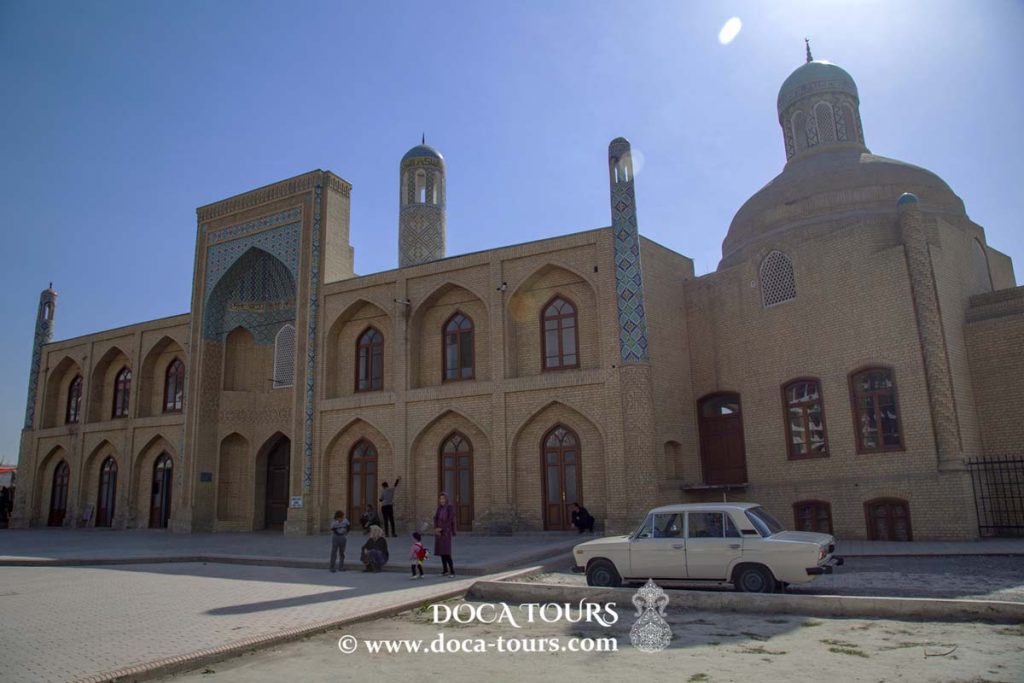
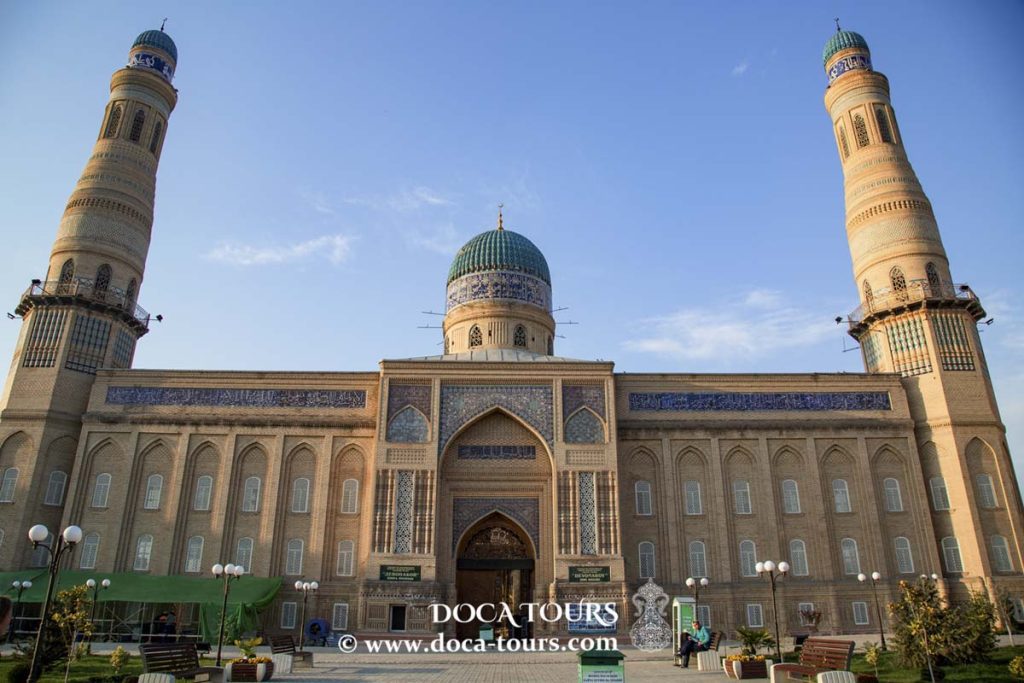
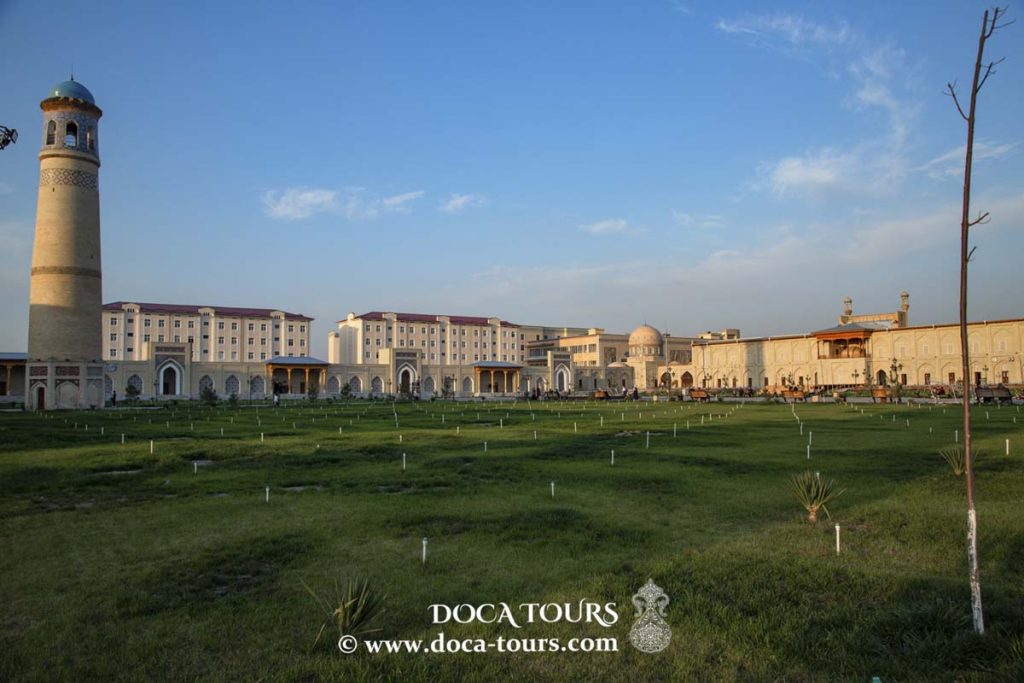
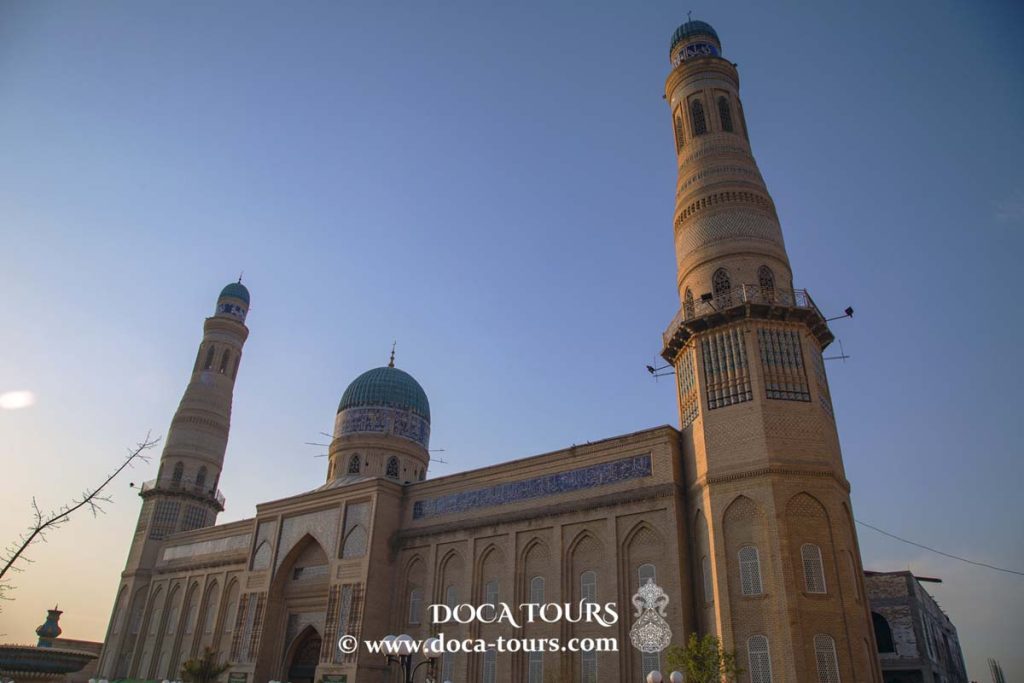
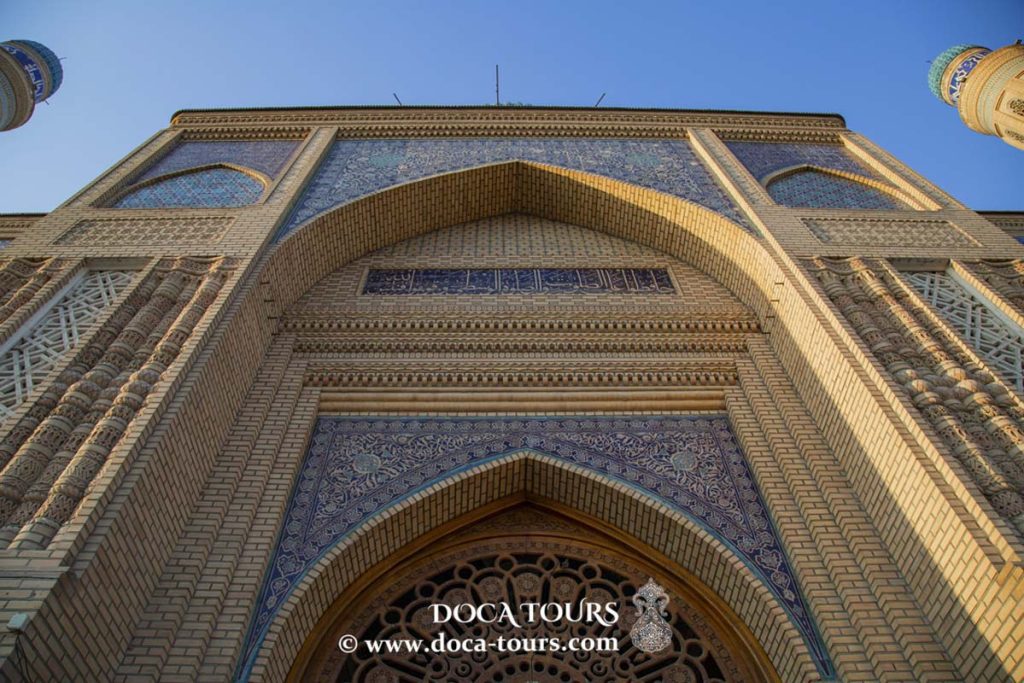
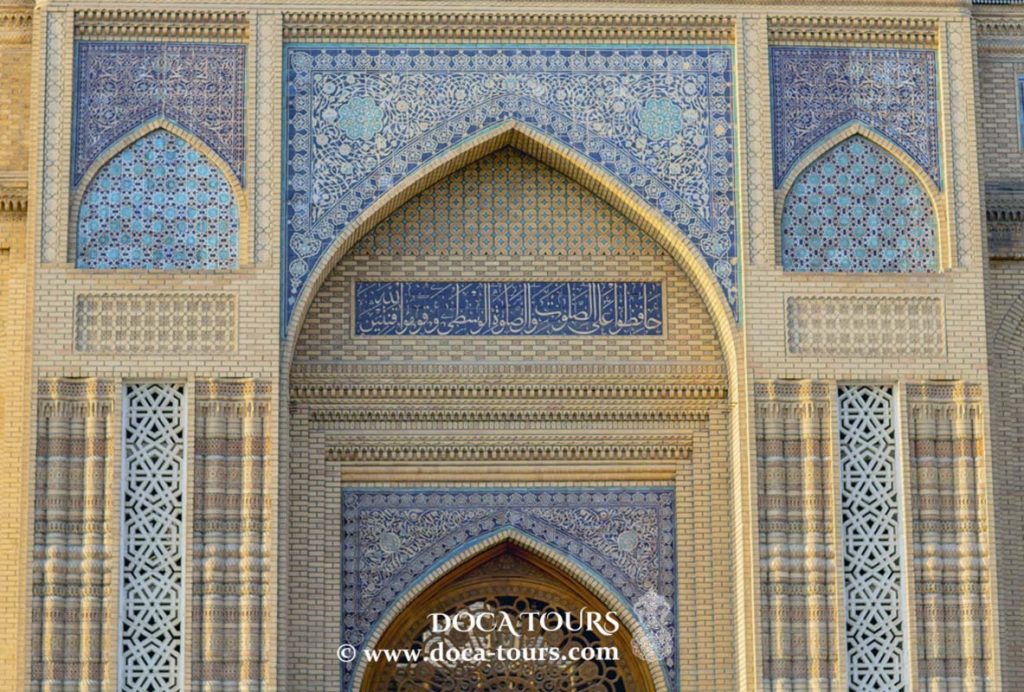
One of Andijan’s architectural landmarks is the Jame Mosque Complex, constructed between 1883 and 1890. This historical site covers 1.5 hectares and includes a mosque, madrasa, and minaret. The city was historically granted status based on the presence of a mosque, highlighting the significance of the complex.

Most residents of Andijan are Sunni Muslims. The city also has a notable Christian heritage, including the Church of All Saints and the Chapel of St. George the Victorious. Historically, it was home to other churches, such as the Church of St. Nicholas the Wonderworker and the Church of St. Sergius of Radonezh.
Two prominent figures of the Russian Orthodox Church were connected to Andijan:
Saint Luka (Voino-Yasenetsky): A future archbishop and saint who worked in Andijan as the head of a department in the city hospital during 1933–1935.
Patriarch Pimen: The head of the Russian Orthodox Church (1971–1990) who spent time in administrative exile in Andijan from 1937 to 1941.